Bulldozer drive in BJP-ruled Uttar Pradesh targets Muslim religious sites, triggers outrage

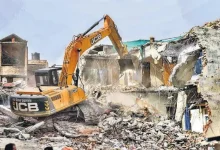
Lucknow: In a move seen by residents as part of an ongoing pattern of selective targeting of Muslim religious sites, authorities in the BJP-ruled Uttar Pradesh state have demolished a mosque, an Eidgah and an Imambara in Sambhal district over the past two days, sparking tension and fresh debate over discrimination under the guise of anti-encroachment drives.
According to Kashmir Media Service, the demolitions were carried out under heavy police deployment as part of an ongoing campaign claimed by authorities to remove “encroachments”, but widely viewed by locals as disproportionately targeting Muslim places of worship and community life.
On Friday, the administration razed a mosque in Mubarakpur village, including its 35-foot-high minaret, which was pulled down using two Hydra machines.
Officials claimed the mosque had been constructed about 15 years ago on approximately 600 square metres of government land. District Magistrate Rajendra Pensia said the action is part of a broader initiative to create a “land bank” for public use.
The mosque, reportedly built at a cost of around INR 1 crore, had been regularly used by hundreds of worshippers, making its demolition a major blow to the local Muslim community.
A day earlier, the administration demolished an Eidgah and an Imambara in Bicholi village under the Kotwali Sambhal area. The operation involved four bulldozers to bring down the Imambara.
Officials said the Eidgah had been constructed on about 7 bighas of grazing land, while the Imambara stood on land designated for a manure pit. Authorities claimed the land, valued at around INR 6.5 crore, had been under illegal occupation for nearly 12 years.
Villagers who gathered at the sites were dispersed by the authorities amid fears of protests.
The demolitions have drawn sharp criticism from residents, who questioned both the timing and the apparent selectivity of the action. Many expressed distress, stating that the structures were central to community life, serving not only as places of worship but also as venues for social gatherings, including marriages and annual religious events.
Locals also raised concerns over what they described as discriminatory enforcement, questioning why similar action is not taken against Hindu temples built on government land, and calling for equal application of the law.