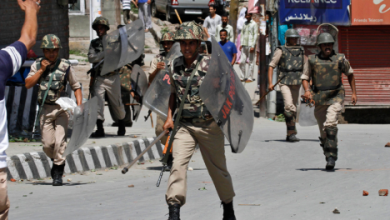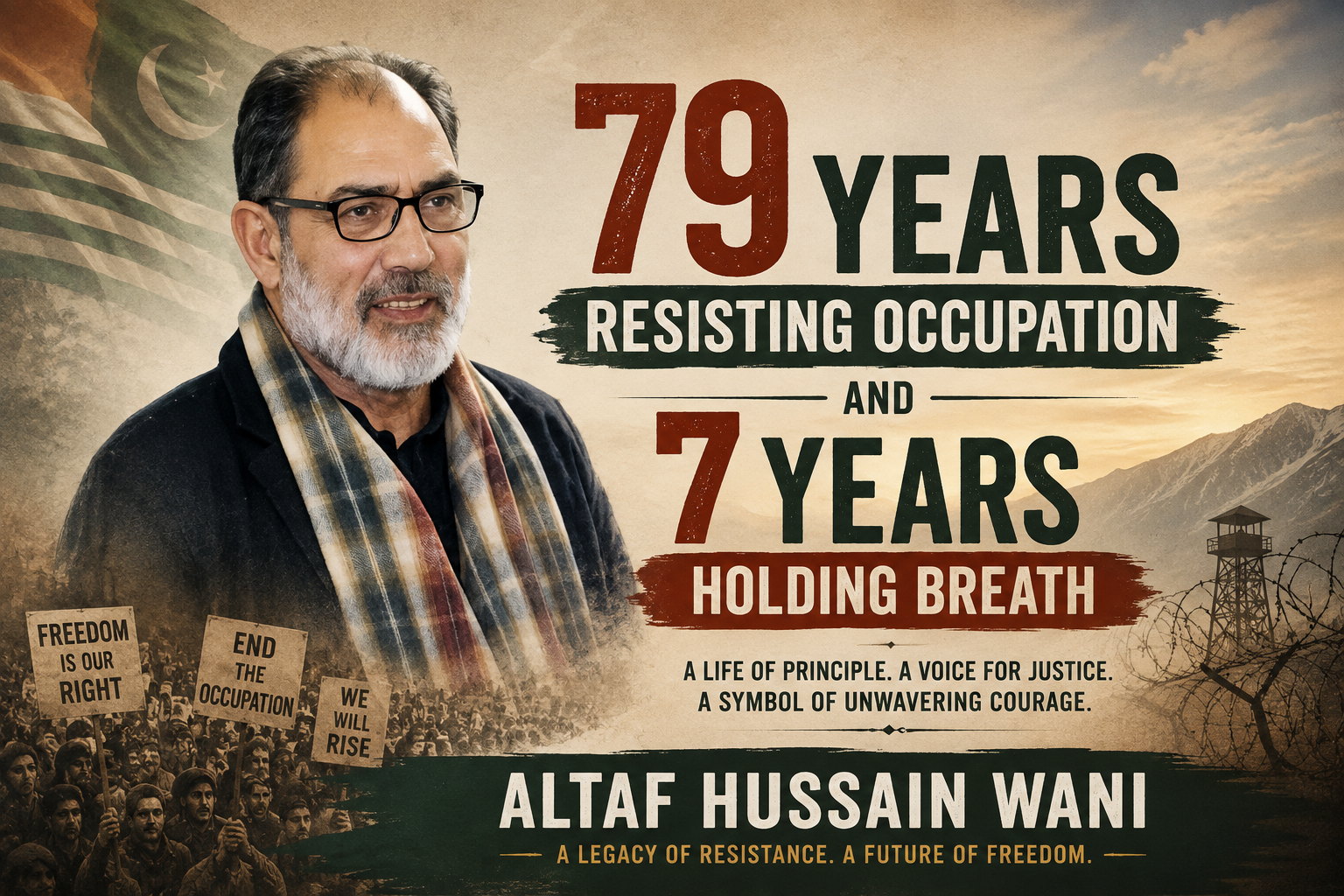
From 1947, when the subcontinent was partitioned and the princely state of Jammu and Kashmir became the site of competing claims, accession, and war, Kashmiris have resisted the Indian occupation. The instrument of accession, the subsequent wars, the unfulfilled promise of a plebiscite under UN resolutions, and the progressive erosion of autonomy formed the early chapters. Armed rebellion gathered force from 1988–89 onward; through the 1990s and after, Kashmiris sustained political, armed, and civil resistance by every available means—despite mass killings, enforced disappearances, torture, rape as a weapon, pellet-blinding, collective punishment, and one of the densest military occupations on earth. They did not surrender the demand for self-determination.
On 5 August 2019 that long resistance met its most sweeping constitutional assault. On the anniversary of August 5, 2019—when a people were sealed inside their homes while their constitution was dismantled—a reckoning with what was taken, and with what refuses to be taken. On the day Kashmir woke to a silence that had been manufactured for it. The phones were dead. The internet was dark. The streets belonged to Indian soldiers. In Delhi, hundreds of miles away, a parliament in which the Valley had no meaningful voice was rewriting the political existence of millions who could not even telephone a neighbour. Article 370—the constitutional covenant that tied Kashmir’s accession to the consent of its people—was read down. Article 35A, which guarded their land and their livelihoods, was erased. The people most concerned were not consulted. They were contained.
History should record precisely how it was done: not by a dictator’s midnight decree, but in the full glare of a legislature, in the impeccable language of law. There ought to be a name for this. If terrorism is violence against the innocent for a political end, what shall we call violence done to a people’s constitution—the only covenant protecting their land, their jobs, their identity—while they sat imprisoned in their homes? Call it constitutional terrorism: the use of legality’s forms to annihilate legality’s substance, for one people alone.
The abrogation was the oldest item on the Hindutva movement’s programme, promised for decades by the RSS and its political arm long before they had the numbers to deliver it. Its purpose was never administrative. It was civilizational: to demonstrate that a Muslim-majority people occupied by India could be torn up at will, and that no one would pay a price.
Consider the method. Before a single clause was read out, tens of thousands of additional troops poured into what was already one of the most militarized places on earth. Three former chief ministers—leaders who had sworn by India’s constitution and staked their careers upon it—were detained. Thousands more, from leader to schoolboys, were swept into prison under the Public Safety Act. A full state was dissolved into two Union Territories—the first demotion of a state in the history. The communications siege that followed lasted 553 days, the longest internet shutdown ever imposed in any democracy. India’s own Supreme Court eventually declared indefinite shutdowns impermissible. Kashmiris received that ruling the way prisoners receive news of their rights: late, and from behind bars.
Seven years on, the architecture of that August endures—and its first casualties have been the witnesses. Journalists have been jailed under the Unlawful Activities (Prevention) Act, a law under which bail is nearly impossible: Irfan Mehraj; Aasif Sultan, held for years. Khurram Parvez, Kashmir’s most prominent human rights defender, was imprisoned for documenting abuses, over the public protest of United Nations experts. Offices of JKCCS, APDP and other civil society groups were raided and sealed. Travel ban imposed on journalists and human rights defenders. The Kashmir Press Club was seized by police. Amnesty International was hounded out of India altogether. A people can survive the loss of many things so long as someone records the loss. That is why the recorders had to go first.
Then there are the bodies. Torture in custody—documented for three decades by Kashmiri civil society and international monitors alike—did not end with “integration.” Families still collect sons from police stations marked by beatings; some collect no one. When four men were killed in the Hyderpora raid of 2021—including a building owner and a trader whose families insisted they were civilians—it took days of public anguish for one family to exhume and reclaim their father’s corpse. Since 2020, slain are denied to their families, buried by police in remote mountain graves. In Kashmir today, grief itself requires permission.
If law has disciplined the body, it has gone next after the land. New domicile rules issued in 2020 opened residency to outsiders for the first time, and certificates have since been issued by the lakh—including to soldiers, officials, and labourers with no prior claim on the soil. Land laws were rewritten so that non-residents may buy property in Jammu and Kashmir for the first time in living memory. An “anti-encroachment” drive has bulldozed homes and shops with minimal notice and rare recourse. Delhi calls this development an equal citizenship. Kashmiris hear the oldest word in the lexicon of conquest: settlement. The flood has not yet come, they are told. But the gates have been built, the channels dug—and the people of the Valley are not meant to notice the water rising.
Beneath the land lies memory, the final frontier. July 13, the day Kashmir mourned its martyrs of 1931, has been struck from the official calendar. The face of Sheikh Abdullah—flawed, towering, the man who negotiated the accession’s terms—has been removed from the police’s highest gallantry medal. Roads and institutions are renamed in a slow campaign of substitution. In Kashmir, history is not debated. It is deleted.
To every charge, Delhi answers with a single word: development. It points to tourists and investment summits, to cinema halls and falling graphs of stone-pelting. It held assembly elections in 2024 and let a popular government take office. But the arithmetic of power tells the truth the speeches conceal. Kashmiris voted overwhelmingly for parties promising restoration—and received a government denied control of its own police and civil service, subordinate to an unelected Lieutenant Governor, in a territory whose statehood remains, in the Supreme Court’s own careful words, a promise awaiting a date. An assembly without authority is not self-rule; it is administration by ventriloquy. And a quiet kept by hundreds of thousands of troops is not peace. It is the stillness of a held breath.
This is what it means to be made a subject from a citizen. A citizen holds rights as a birthright; a subject receives them as alms, revocable at the sovereign’s pleasure. A citizen’s consent is the source of law; a subject’s silence is mistaken for consent. A citizen is remembered by his constitution; a subject is required to forget. By these measures, Kashmiris today are subjects of the world’s largest democracy—and the distinction is the whole story.
They have taken the constitution, the land laws, the calendar, the dead. What remains is memory—and memory, in Kashmir, has outlasted every power that tried to govern it by erasure. The architects of August 5 confused a people’s silence for surrender. But silence in Kashmir has never meant consent. It means the sentence is still being written. And it will be read aloud one day, in a court of history that no parliamentary majority can adjourn.
The writer is Chairman of the Kashmir Institute of International Relations and writes on human rights, Kashmir and India-Pakistan relations and can be reached at; X @sultan1913 and email; [email protected]