UN slams India’s restrictive ICT framework as ‘model of digital tyranny’
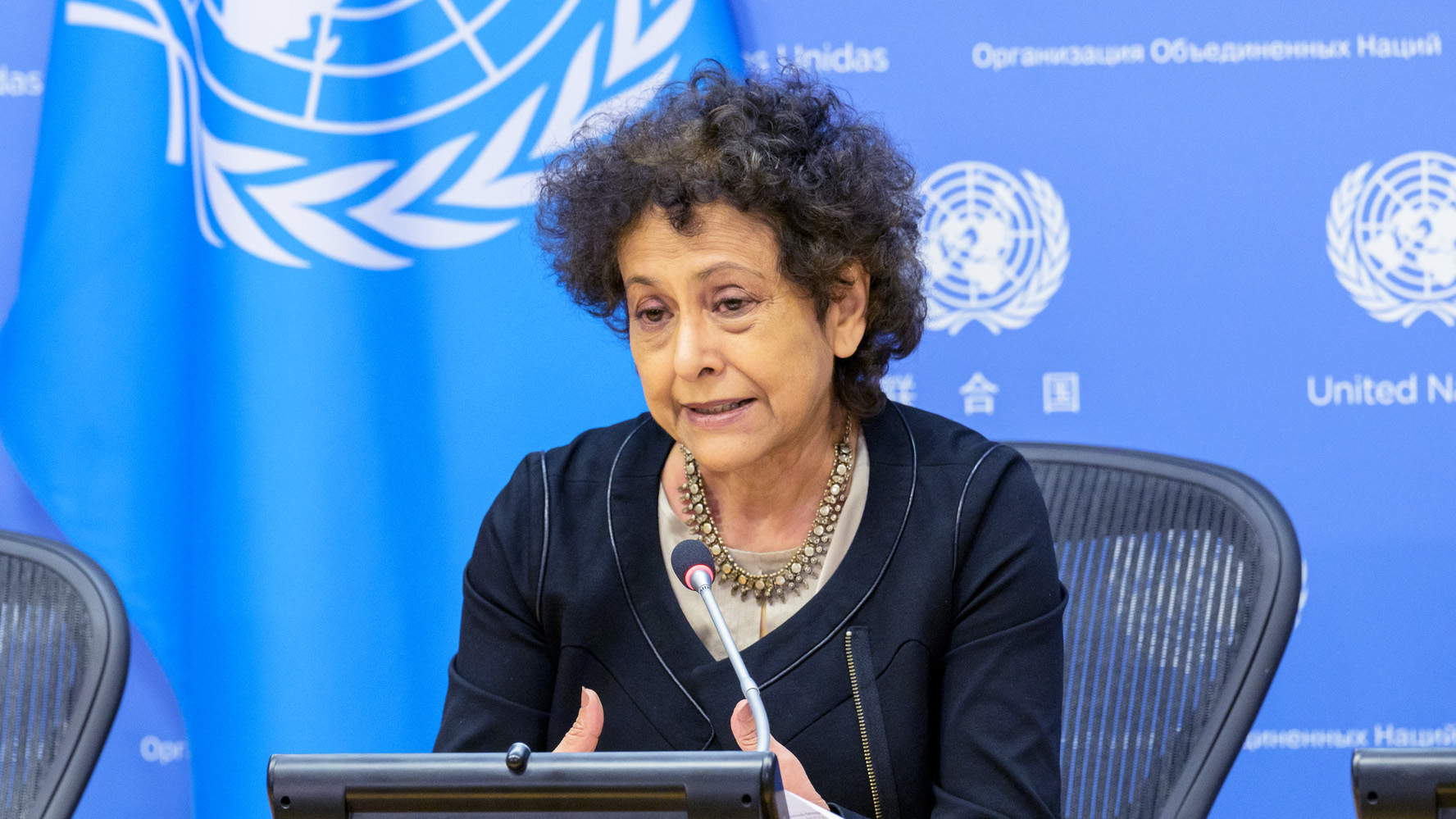
Geneva: United Nations Special Rapporteur Irene Khan has delivered a scathing indictment of India’s restrictive Information and Communication Technology (ICT) framework at the 62nd Session of the United Nations Human Rights Council, warning that New Delhi’s digital laws enable authoritarian control, suppress accountability, and silence legitimate criticism.
According to Kashmir Media Service, addressing the Council on June 18, 2026, Khan cited India’s ICT framework, including the 2021 Information Technology Rules, as a “deeply troubling example” of legislation that has caused more harm than good. She said concerns regarding India’s digital regulations had already been raised by her predecessor, but the situation had continued to deteriorate.
“Available empirical evidence demonstrates that India’s ICT regime has neither curbed disinformation nor reduced hatred,” Khan stated. Instead, she said, the framework has “fuelled both disinformation and hate speech” while giving authorities “vague and expansive powers to control online content.” Citing civil-society monitoring data, Khan said India recorded 1,318 verified hate-speech events targeting religious minorities in 2025 — a 13 percent increase from 2024 and a 97 percent rise from 668 incidents in 2023. Nearly 98 percent of the documented hate-speech incidents in 2025 reportedly targeted Muslims either exclusively or alongside other minority communities.

“These figures expose the spectacular failure of India’s digital regulatory regime,” she said, noting it was publicly justified as a mechanism for combating harmful content but has instead coincided with the rapid expansion of religious hatred, polarization, and politically motivated disinformation. Khan said disinformation intensified during India’s 2024 general elections, demonstrating how loosely defined digital regulations are “selectively weaponized against government critics” while “coordinated propaganda and majoritarian hate narratives remain unchecked.”
She further highlighted that India imposed 65 internet shutdowns in 2025, following 84 in 2024 and 116 in 2023. Since 2012, the cumulative number of shutdowns has exceeded 900, reinforcing India’s reputation as “a leading global practitioner of state-imposed digital blackouts.” “A bad law is often more dangerous than having no law,” Khan declared, adding that India’s ICT regime has “poisoned the information environment, amplified social division, shielded powerful actors, and undermined the fundamental right to freedom of expression.”
She warned that other governments were now copying India’s flawed digital legislation, transforming the Indian model into “a dangerous international blueprint for censorship and authoritarian control.”
The UN expert called for immediate international scrutiny, transparent legal reform, independent judicial oversight, and stronger safeguards for journalists, minorities, activists, and ordinary internet users to halt what she described as an “accelerating assault on freedom of expression.”