India’s aviation boom faces turbulence amid safety concerns
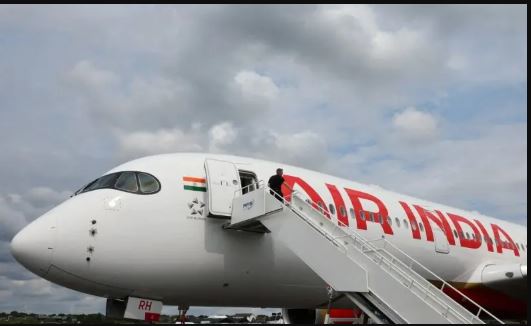
New Delhi:A series of crises at India’s two main carriers, Air India and IndiGo, has exposed safety and regulatory shortcomings in the world’s third-largest domestic aviation market.
According to Kashmir Media Service, the turmoil has been compounded by geopolitical shocks that have squeezed profits and forced airlines to reassess expansion plans. The setbacks have highlighted the lack of competition, with Air India and IndiGo together accounting for nine out of 10 domestic airline seats.
“The last two years, 2025 and 2026, have been the darkest years for India in terms of its global reputation and credibility,” said Mark Martin of Martin Consulting.
The latest blow came earlier this month when an Air India flight from Thailand’s Phuket to New Delhi plunged 300 feet midair, injuring 24 passengers. The incident sparked scrutiny after reports that the captain tested positive for marijuana upon landing, prompting Air India to order a one-time drug screening of all pilots.

Initial findings from an investigation are expected in the coming weeks.
For many observers, the episode is part of a broader pattern that has kept Air India under the spotlight since last year’s crash of a London-bound Boeing 787 Dreamliner that killed 241 people. An unrelated audit of Air India identified around 100 safety lapses, including seven violations requiring “urgent corrective action” and “recurrent training gaps” for Boeing 787 and 777 pilots, according to a parliamentary panel report.
The safety culture at Air India is “lax”, said Shakti Lumba, a former airline operations chief.
“At present, everyone is paying lip service to safety. By paying lip service, you do not create a safety culture,” he told a foreign media outlet.
Former Air India executive director Jitender Bhargava said the reported drug case raised questions about management oversight, arguing the pilot community would know if a colleague was taking drugs.
The safety concerns come as airlines grapple with mounting financial pressures.
Indian carriers have faced the closure of Pakistani airspace since tensions between New Delhi and Islamabad escalated last year, forcing longer and costlier routes. Rising jet fuel prices linked to the Middle East war have added to the strain. Ratings agency ICRA estimated Indian airlines will lose nearly $4 billion this fiscal year.
Air India’s losses more than doubled to $2.3bn in the last fiscal year, while IndiGo has reported losses for two consecutive quarters. The strain is also affecting expansion plans.
IndiGo last month shut down its wide-body operations, while Air India is reportedly considering delaying deliveries of as many as 500 aircraft. The turbulence marks a reversal for a sector often celebrated as one of India’s biggest success stories.
Indian airlines carried about 167 million passengers last year, more than double the figure a decade earlier. More than 70 airports have been added over the past decade, while carriers have ordered some 1,500 aircraft.
“The problem has not been a lack of growth,” said Harsh Vardhan, chairman of Starair Consulting. “It is that every other part of the ecosystem has not been able to keep up with this growth and manage it well.”