Indian civil society denounces bulldozer drive targeting Muslim religious sites
#StopBulldozerPolitics | #SaveMuslimHeritageInIndia
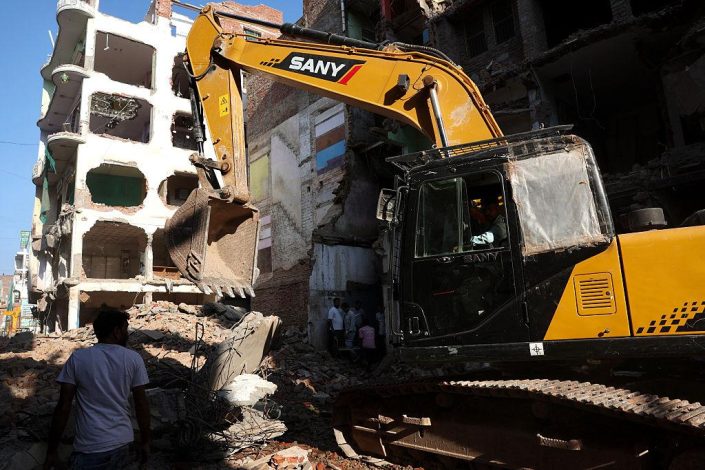 New Delhi: Voices from Indian civil society have denounced the use of bulldozers by the Hindutva regime in the BJP-ruled states of India against Muslim properties and religious institutions, warning that demolition drives carried out in the name of encroachment or unauthorised construction risk undermining rule of law, religious freedom and the country’s pluralistic heritage.
According to Kashmir Media Service, the latest concerns have intensified following the demolition of a mosque inside the Saharanpur Collectorate complex in Uttar Pradesh on September 5. The mosque was declared unauthorised by a court after a dispute over government land, while the mosque management and opposition voices questioned the manner and timing of the demolition.
Jamiat Ulama-i-Hind president Maulana Mahmood Madani described the demolition as a serious blow to justice and due process, questioning whether the administration could act as both a party to the land dispute and the authority enforcing the action. He also pointed out that the court order cited in the case did not expressly direct immediate demolition.

The threat has since extended to other Muslim places of worship in western Uttar Pradesh. The Mustafa Mosque in Moradabad has been served a notice by the Moradabad Development Authority seeking construction documents, while the Baba Bahauddin Shah Masjid in neighbouring Sambhal is facing an inquiry by the Archaeological Survey of India.
Indian civil-society critics have repeatedly warned that the bulldozer is increasingly being used as an instrument of punitive action against Muslims. Amnesty International documented 128 property demolitions across Assam, Delhi, Gujarat, Madhya Pradesh and Uttar Pradesh during a 2022 period of communal violence and protests, affecting at least 617 people, and said Muslim families and businesses were disproportionately affected.
Filmmakers, writers, activists and other public voices have also criticised the demolition culture for reducing complex legal and social disputes to instant punishment. Documented accounts of earlier demolitions, including the destruction of the home of activist Afreen Fatima’s family in Prayagraj, describe bulldozer action as a means of intimidating dissent and creating fear among Muslims.
The concerns have also received judicial attention. In November 2024, the Indian Supreme Court stressed that the State must follow due process before removing alleged illegal encroachments or unauthorised structures and held that “bulldozer justice” is unacceptable under the rule of law.
The demolition of mosques, madrasas, shrines and other Muslim institutions therefore raises broader questions about equal application of law, protection of religious freedom and preservation of India’s diverse cultural heritage. Critics say property disputes and alleged encroachments should be resolved through transparent legal procedures rather than arbitrary or punitive demolition drives.
The growing scrutiny of Muslim religious sites from Uttar Pradesh to other parts of India has fuelled fears among minority communities that historic places of worship and institutions could increasingly become vulnerable to administrative action under varying pretexts.
Civil-society voices have called for an end to selective and punitive demolitions and urged Indian authorities to uphold constitutional protections, judicial safeguards and the rights of religious minorities.