Pakistan must not be discouraged; diplomacy must continue: Masood Khan
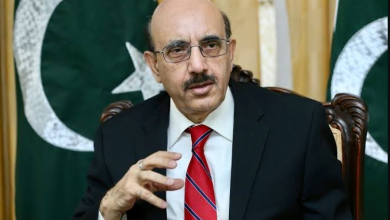
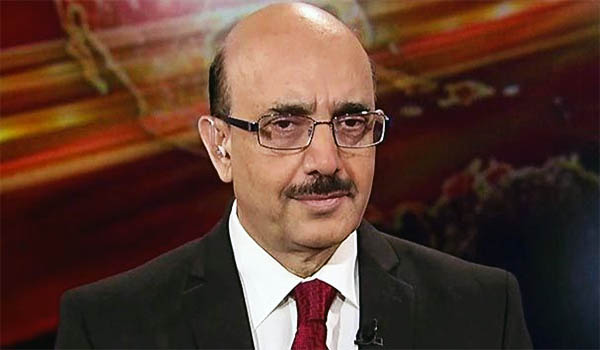 Islamabad: Pakistan must remain engaged diplomatically and continue its efforts to bring the United States and Iran back to the negotiating table despite the shrinking space for mediation amid escalating military and economic pressure, said Sardar Masood Khan, Former Ambassador of Pakistan to the United States, China and the United Nations, and former President of Azad Jammu and Kashmir.
According to Kashmir Media Service, assessing Pakistan’s options in the evolving US-Iran confrontation, Sardar Masood Khan said both sides appeared to be pursuing controlled escalation because a full-fledged war would be catastrophic for all parties. He said the United States was simultaneously increasing economic pressure on Iran through what it calls “Operation Economic Outcast,” targeting banking, aviation and other sectors, while maintaining military pressure.
He noted that the intensification of the conflict had significantly reduced the diplomatic space available to Pakistan, which had emerged as a leading mediator during the earlier phase of the crisis. Pakistan’s efforts had received support from Qatar, Oman, Saudi Arabia, Türkiye, Egypt and China, reflecting broad international interest in preventing further escalation.
Sardar Masood Khan said Pakistan had nevertheless achieved an important diplomatic breakthrough through the drafting of a Memorandum of Understanding (MoU) between the two sides. He noted that Iran continued to indicate its readiness to comply with the provisions of the MoU, while the United States had not explicitly discarded the understanding. This, he said, provided an important basis for renewed diplomatic engagement.
He cautioned that the continuing conflict was also creating space for Israel to pursue its agenda in Gaza, Lebanon, the occupied Palestinian territory and Syria without sufficient international attention. “The diversion that this war has created provides expanded space to Israel to pursue its own agenda,” he observed.
Sardar Masood Khan said the deteriorating regional security environment had three major implications for Pakistan. The first was economic, as rising oil prices, fuel and gas costs and disruptions in supplies from the Gulf could put additional pressure on Pakistan’s economy and supply chains.
The second was the future of Pakistan-led mediation. He said Qatar was exploring new diplomatic avenues with China, while China had also expressed its willingness to contribute to the safety and security of cargo and oil tankers navigating the Red Sea and Persian Gulf.
The third concern, he said, was regional security, particularly attacks involving the Houthis and Saudi Arabia. Pakistan, as a key constituent and founder of the Saudi-Pakistan-Türkiye defence arrangement, had responsibilities that required careful consideration.
Sardar Masood Khan said the conflict had become a multi-vector and multi-layered war, involving military, economic and asymmetric dimensions. Iran and the United States were exploiting each other’s vulnerabilities, while the continuing attacks were increasingly affecting the wider region and global economy.