Turkish President raises Kashmir issue at UN for 7th time
Calls for addressing Kashmir dispute with framework of UN resolutions
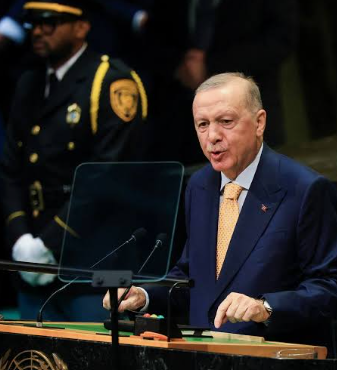
New York : Turkish President Recep Tayyip Erdogan once again raised the Kashmir issue during his address to the 81st session of the United Nations General Assembly in New York on Tuesday.
According to Kashmir Media Service, the Turkish president called for disputes in South Asia, including Kashmir, to be resolved through dialogue and negotiations.
Speaking in the presence of Pakistan Prime Minister Shehbaz Sharif, Erdogan said the disputes should be addressed within the framework of the UN Charter and relevant resolutions.

He said, “In South Asia, it is important that all disputes, including the Kashmir issue, be addressed through dialogue within the framework of the United Nations Charter and of relevant resolutions.”
Kashmir has been a recurring subject in Erdogan’s UN General Assembly speeches. He has raised the issue seven times since 2019, with 2024 being the only year during this period when he did not mention it.
Erdogan first raised the issue in 2019, after India revoked the special status of Jammu and Kashmir under Article 370. His latest remarks came as tensions between India and Pakistan remain a diplomatic issue.
Erdogan has maintained close ties with Islamabad and has repeatedly called for what he describes as a peaceful resolution to the Kashmir dispute.
Kashmir was one of several international issues addressed by Erdogan during his wide-ranging speech. He also spoke strongly in support of Palestine and criticised Israel’s actions in Gaza.
Erdogan called for greater international pressure over the situation in Gaza and urged countries that have not recognised Palestine to reconsider their position. He said Turkey would continue to speak for Palestinians at the United Nations.
During Erdogan’s remarks on Palestine, the Israeli representative walked out of the UN General Assembly hall.
Erdogan also criticised the current structure of the UN Security Council and called for reforms. He argued that decisions affecting more than 190 countries should not effectively depend on its five permanent members.
His address also covered the conflicts in Ukraine and the Middle East, freedom of navigation and regional security.