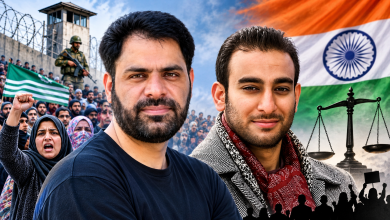
Killing of youth in fake encounters becomes a recurring pattern in IIOJK
Conflicting identification of slain youth raises fresh questions over Budgam encounter
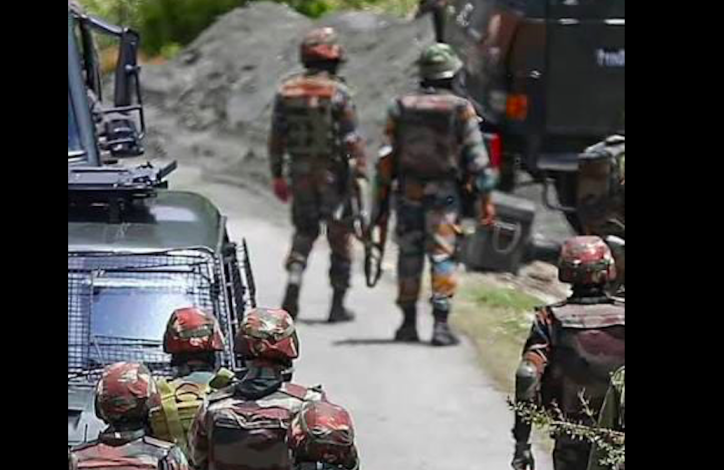 Srinagar: In Indian illegally occupied Jammu and Kashmir (IIOJK), the killing of civilians by Indian forces after branding them as militants has become a recurring pattern, raising serious questions over the circumstances surrounding such so-called encounters.
According to Kashmir Media Service, Indian forces killed a youth in a staged encounter in Korag area of Yousmarg in Budgam district, today, while another youth, identified as Yasir, was killed in a fake encounter in the same area on September 5. Indian authorities initially identified the youth killed today as Sulaiman Shah, while some officials identified him as Hashim Musa alias Asif Musa. The conflicting identification has raised further questions about the circumstances surrounding the incident.
The latest identification as “Musa” is particularly noteworthy. On April 24-25, the IIOJK Police released sketches of those allegedly involved in the Pahalgam attack, one of whom was also identified as Hashim Musa. However, on June 23, 2025, India’s National Investigation Agency (NIA) said that the sketches released by the IIOJK Police did not match the actual attackers allegedly involved in the Pahalgam attack.
On July 28, 2025, Indian forces claimed to have killed three militants during the so-called Operation Mahadev in the Dachigam forests of Srinagar. One of those killed was identified as Sulaiman Shah alias Musa, while the other two were identified as Habib Tahir alias Abu Hamza and Yasir alias Jibran. Indian authorities subsequently linked the three to the Pahalgam attack.


Now, on September 30, the youth killed in the fake encounter in Yousmarg has also been identified as Musa by some Indian officials, raising fresh questions over the identities of those killed in such operations and the circumstances in which they are declared militants.
The latest incident has renewed concerns over the circumstances surrounding killings during cordon and search operations in IIOJK, particularly amid longstanding calls for impartial investigations into incidents of fake encounters, custodial deaths and extrajudicial killings. It is also worth noting that Indian forces have impunity under draconian laws including Armed Forces Special Powers Act in which they can kill any Kashmiri in the name of being militant without facing accountability.
Indian forces have also frequently described those killed during such operations as Pakistani infiltrators or militants in an attempt to portray Pakistan as responsible for violence in IIOJK. There are other ulterior motives behind the killing of innocent civilians in fake encounters in the occupied territory. Indian Army officers and personnel resort to such encounters in pursuit of rewards, promotions and medals. The killing of youth in fake encounters is also aimed at influencing the Kashmiri people psychologically, instilling fear and terror among them and suppressing their demand for freedom. International human rights organizations have repeatedly called for credible, independent investigations into allegations of extrajudicial killings and other human rights violations in IIOJK.
Kashmir watchers and observers maintain that the people of occupied Jammu and Kashmir have been pursuing their political aspirations for nearly eight decades and have made immense sacrifices in the process. They continue to call for the implementation of the relevant United Nations resolutions and a settlement of the Kashmir dispute that respects their right to self-determination.
Also, the international community has completely rejected India’s narrative on Jammu and Kashmir and continues to treat it as a disputed territory. New Delhi has maintained its control over Jammu and Kashmir through military force.