No compromise on religious freedom, belief in oneness of Allah: Mutahida Majlis-e-Ulama
Demands immediate end to imposition of ‘Vande Mataram’ at official functions in IIOJK
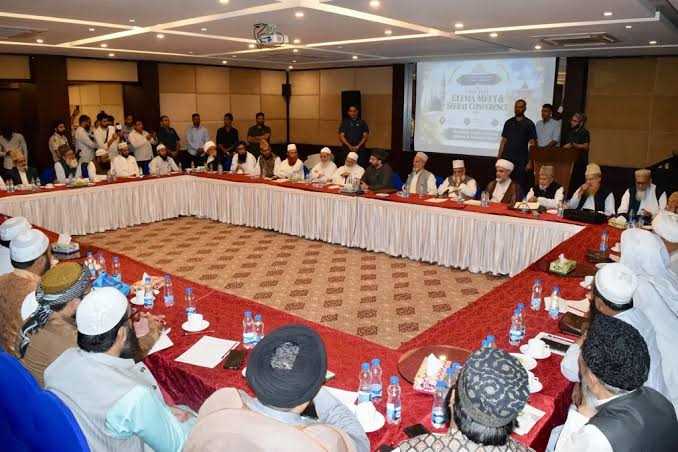 Srinagar: In Indian illegally occupied Jammu and Kashmir (IIOJK), the Mutahida Majlis-e-Ulama (MMU), an amalgam of religious organizations and institutions representing different Islamic schools of thought in the territory, has strongly objected to and expressed deep concern over the playing of ‘Vande Mataram’ at a Waqf Day function organised by the Waqf Board in Srinagar.
The MMU said in a statement that it was deeply regrettable and unacceptable that ‘Vande Mataram’ was played at an event organised by the Waqf Board itself, an institution primarily entrusted with safeguarding Muslim religious properties and protecting waqf assets.
The MMU clarified that playing ‘Vande Mataram’ was not a mandatory legal requirement simply because the event was an official function, but an optional act. Despite this, the Waqf Board went ahead with it, disregarding the fundamental religious beliefs and sentiments of Kashmiri Muslims and causing widespread resentment and anxiety.
The MMU also expressed serious concern over a gradual attempt to normalise the playing of ‘Vande Mataram’ at official functions in Muslim-majority Jammu and Kashmir. It said promoting such practices despite the well-known religious objections of Muslims amounted to disregarding their religious beliefs and constitutional rights and could further deepen public distrust and alienation.


In view of the seriousness of the matter, the MMU said it was considering seeking legal opinion and would soon submit a formal memorandum to the concerned authorities. The memorandum would demand an immediate end to the compulsory enforcement of ‘Vande Mataram’ at government functions, educational institutions and other public events across the occupied territory. It would also call for ensuring respect for every citizen’s constitutionally guaranteed right to religious freedom.
The MMU further reminded Muslims, particularly those entrusted with religious responsibilities, of their obligation to uphold the fundamental beliefs and principles of Islam, regardless of pressure, official positions or personal expediency.
Referring to the position of the All India Muslim Personal Law Board (AIMPLB), the MMU said the body had also opposed making the recitation or singing of ‘Vande Mataram’ compulsory on religious and constitutional grounds and had explained the Islamic perspective on the issue.
The MMU categorically maintained that there could be no ambiguity or compromise on matters of faith, particularly the fundamental Islamic doctrine of Tawheed (oneness of Allah). It reiterated that absolute belief in the oneness of Allah Almighty was the very foundation of a Muslim’s faith and that associating anyone or anything with Allah, or attributing divinity to any person, object, land or other creation, was strictly prohibited in Islam.