July 19, 1947: The Day Kashmiris Decided to Join Pakistan
By Farzana Yaqoob and Manzar Qureshi

On July 19, 1947, just weeks before the partition of British India, the people of Jammu and Kashmir made a defining political choice. In Srinagar, the All Jammu and Kashmir Muslim Conference, representing the overwhelming Muslim majority of the princely state, adopted a unanimous resolution calling for accession to Pakistan.
This resolution was not merely symbolic. It was a collective and deliberate expression of the political will of the Kashmiri people. Grounded in religious, cultural, geographic, and economic realities, the resolution reflected a deep and shared sense of belonging with Pakistan. The day remains a milestone in the region’s political history, marking the moment when Kashmiris clearly voiced their preferred future.
The Political Landscape and Turning Point
Throughout the 1940s, political tensions in Jammu and Kashmir were defined by the growing divide within the All Jammu and Kashmir Muslim Conference.
Sheikh Abdullah and Chaudhry Ghulam Abbas founded the JKMC in 1932. It was renamed as National Conference in 1939 in order to represent all the people of the state. In 1941, a group led by Ghulam Abbas broke off from the National Conference and revived the old Muslim Conference. The revived Muslim Conference supported the accession of the princely state to Pakistan and led the movement for Azad Kashmir.
The All Jammu and Kashmir Muslim Conference, gave voice to the aspirations of the Muslim majority. In contrast, the National Conference, under Sheikh Abdullah’s leadership, pursued a secular vision and aligned itself closely with the Indian National Congress.
As the British prepared to leave the subcontinent, princely states were offered the right to accede to either India or Pakistan. For Kashmir, with more than 80 percent of its population being Muslim and natural trade, cultural, and religious ties to regions that would form Pakistan, the direction seemed clear to many.
On July 19, 1947, a pivotal meeting was held at the residence of Sardar Muhammad Ibrahim Khan in Srinagar. The Muslim Conference convened to decide the state’s political future. The outcome was a firm and unified decision: the state of Jammu and Kashmir should accede to Pakistan.
The Resolution: A Voice of the People
The resolution was a landmark political statement. Rooted in the conviction that Pakistan represented not only religious and cultural affinity but also a more just and representative political future, the Muslim Conference declared:
“This convention of Muslim Conference is of the opinion that the ultimate solution of the Kashmir issue lies in the accession of the state of Jammu and Kashmir to Pakistan.”
This formal declaration reflected the hopes of the vast Muslim population of the state. Economically, Kashmir’s lifelines ran through what would become Pakistan. Culturally and linguistically, the people shared a heritage with Punjab and the northern provinces of Pakistan. Politically, they identified with the dream of a Muslim homeland as envisioned by Muhammad Ali Jinnah.
The July 19 resolution remains the first official and unequivocal call by the people’s representatives in Jammu and Kashmir for accession to Pakistan.
India’s Control of Kashmir
Despite the clarity of the July 19 resolution and the sentiment of the majority, India asserted control over Jammu and Kashmir through a mixture of political pressure and military intervention. Maharaja Hari Singh, the Hindu ruler of a Muslim-majority state, initially hoped to remain independent. However, as the Kashmiris took up arms to fight off the dogra army and later were joined by tribesmen from Pakistan’s frontier areas, the Maharaja requested Indian military assistance.
India agreed on the condition that he sign the Instrument of Accession, a document whose legitimacy remains contested. Signed hurriedly, under conditions of internal chaos and without consulting the people, the accession became India’s legal basis for deploying troops into Kashmir. In response to the Kashmiri uprising India rushed to the UN with complaint against Pakistan intervention in Kashmir. First resolution passed on Kashmir in January 1948, just a few months after partition.
Soon after, Indian forces occupied large parts of the region. India quickly entrenched itself through political appointments, constitutional maneuvers, and the suppression of local leadership. Despite early promises, the people of Jammu and Kashmir were never granted the promised plebiscite to decide their own fate.
Suppression of Kashmiri Aspirations
The July 19 resolution voiced a clear political aspiration, but it was ignored. Instead of respecting the will of the people, the state was thrust into a conflict that continues to this day. India’s refusal to allow a plebiscite, as mandated by early United Nations resolutions, became a central grievance for Kashmiris.
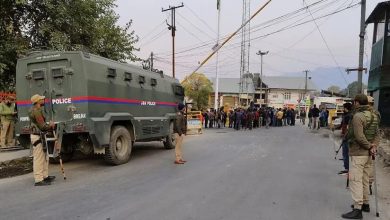
Over the decades, India has maintained its hold over Jammu and Kashmir through military presence, censorship, and political repression. While administrative changes and constitutional amendments have been used to solidify control, the original desire for self-determination, expressed in 1947, has never faded from the people’s consciousness.
The resolution remains a living document, not a relic of the past. It reflects the enduring political will of a people whose voice has been repeatedly silenced but never extinguished.
The Enduring Spirit of July 19
While India has managed to suppress the Kashmiri demand for freedom through coercion and force, it has not succeeded in breaking the will of the people. The legacy of July 19 continues to inspire generations. Each year, Accession to Pakistan Day is commemorated in Azad Jammu and Kashmir and Pakistan as a reminder of the path the people of the region chose for themselves.
That choice was not born out of pressure or momentary passion. It was the result of shared history, cultural unity, and political vision. Despite attempts to rewrite that history or marginalise that decision, the people of Kashmir continue to assert their identity and demand justice.
July 19, 1947, was not just a date. It was the voice of a people united in purpose and clear in vision. They chose to join Pakistan, and that choice remains a guiding light for their ongoing struggle.
It was, and remains, the day Kashmiris chose their destiny, a destiny that Kashmiris will realise no matter how long it takes.