The government of Azad Jammu & Kashmir (AJK) is the sole legitimate authority representing the people of the entire Jammu & Kashmir region. Its legitimacy is grounded in democratic foundations and historic consent.
On 19 July 1947, the All Jammu & Kashmir Muslim Conference passed a resolution to accede to Pakistan, clearly expressing the will of the Kashmiri people before the partition of British India.
The Muslims of Kashmir started a liberation war against India in 1947. As a result of this war in 1947, the Government of Azad Jammu and Kashmir was established on 24 th October, 1947, in the liberated area which is about 5,000 square miles out of total area of 84,471 square miles. An area of 28,000 square miles was also liberated by Gilgit Scouts and now it forms Northern Areas (Gilgit-Baltistan) which is being administered by the Federal Government of Pakistan.
Today, AJK functions with a 53-member legislative assembly, including 12 seats reserved for refugees from Indian-occupied Kashmir (IOK). 6 are representatives of Jammu and 6 are representatives of Valley. This structure ensures inclusive representation for all Kashmiris. Operating in accordance with UN resolutions, AJK holds the legal and moral authority as the true voice of Kashmir.
The 19 July Resolution and India’s Betrayal
The 19 July 1947 Resolution was a clear mandate from Kashmiris to join Pakistan, based on cultural, economic, and demographic realities. India ignored this democratic choice.
In October 1947, Kashmiris were joined by the tribesmen from north Pakistan to fight against India. India deployed troops to Kashmir after securing an “Instrument of Accession” from the Maharaja, who lacked popular support. No plebiscite or consultation with Kashmiris was conducted.
India’s military occupation bypassed the people’s will. The AJK government was formed in direct response, preserving the original mandate of the Kashmiris.
The Illegitimacy of the IOK ‘Vichy Regime’
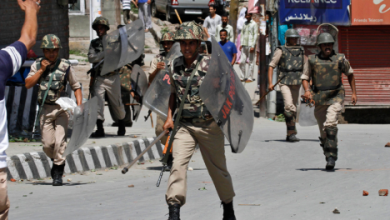
The administration in Indian-occupied Kashmir (IOK) functions under heavy military control, with approximately 700,000 Indian troops deployed. Since 1989, over 100,000 Kashmiris have died, with many more detained or disappeared.
The IOK assembly resembles a Vichy regime, a puppet body serving an occupier without genuine authority. The unilateral revocation of Article 370 in August 2019 further eliminated even nominal autonomy, followed by mass arrests and communication blackouts.
This regime has no legitimacy and does not represent the Kashmiri people.
Kashmir’s Resources Belong to Kashmiris
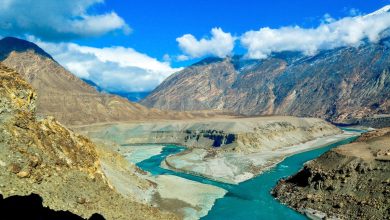
Jammu & Kashmir’s natural resources, especially water, belong solely to its people. India’s exploitation of these resources in IOK violates international law and the rights of Kashmiris.
Despite the Indus Waters Treaty, India diverts water and builds dams without consulting Kashmir’s legitimate AJK government.
In contrast, Pakistan uses Kashmir’s water with the consent of the AJK government. India uses about 33% of the region’s river water, while Pakistan uses approximately 67% with local approval.
No external power has the right to use Kashmir’s resources without the consent of its rightful representatives.
Representation from Indian-Occupied Kashmir
The AJK Legislative Assembly includes 12 elected members representing refugees from Indian-occupied Kashmir. Their presence ensures that the voices of Kashmiris under occupation remain part of the democratic process.
The Kashmiri parliament including these representatives reject Indian control and reinforce that resource use or political decisions require the approval of Kashmir’s legitimate government.
International Law and the Path Forward
According to UN Security Council resolutions, the future of Jammu & Kashmir must be decided by the people through a free and impartial plebiscite. Until then, India’s presence remains illegal and its claims over the territory and resources lack legitimacy.
The AJK government, founded on the 19 July mandate and democratic principles, is the only lawful authority representing Kashmiris. It embodies their right to self-determination and control over their resources.
India’s occupation must end, and the international community must uphold Kashmiris’ rights and recognize AJK as their rightful government.