India’s Chabahar Gamble Meets Its Reckoning
Humayun Aziz Sandeela
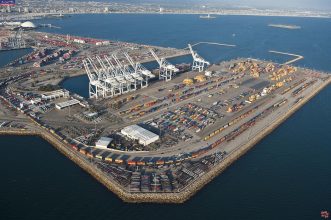 The revocation of U.S. sanctions waivers for Iran’s Chabahar Port, effective September 29, has dealt New Delhi a humiliating blow. What was once hailed as India’s masterstroke to bypass Pakistan, counter China’s Gwadar, and anchor its presence in Central Asia now risks crumbling under the weight of American penalties. Modi’s government, which sunk over $120 million into infrastructure and extended a $250 million credit line to Tehran, is suddenly staring at the possibility of losing both capital and credibility.
The timing could not be more damning. Just last year, Indian External Affairs Minister S. Jaishankar assured his audience that Washington “appreciates the larger relevance” of Chabahar. The assumption was that U.S. indulgence was permanent—that India’s project carried enough geopolitical weight to outlast shifting currents in Washington. That complacency has now been shattered. The U.S. decision, rooted in its “maximum pressure” campaign against Iran, makes clear that India’s room for maneuver was always conditional. Strategic autonomy cannot survive on borrowed waivers.
Chabahar was supposed to be India’s great alternative, a gateway to Afghanistan and a vital link in the International North-South Transport Corridor stretching to Russia and Europe. More importantly, it was to serve as New Delhi’s counter to China’s Belt and Road Initiative and Pakistan’s Gwadar Port. Yet India’s planners misread the fundamentals. They tied their strategy to a fragile American exemption instead of building real resilience. Now, with the waiver revoked, every Indian company or official working at Chabahar faces the threat of U.S. Treasury sanctions.
The consequences extend beyond trade routes. India’s credibility as a regional power is at stake. Having invested in rhetoric about being a reliable alternative to China, New Delhi is left scrambling for explanations to its partners in Afghanistan, Central Asia, and Europe. For Pakistan and China, the development is vindication: Gwadar continues to expand under CPEC while India’s answer falters under American pressure.
There is also a domestic political sting. Modi’s government touted Chabahar as a triumph of “New India’s strategic clarity.” Instead, it now symbolizes overreach and miscalculation, an ambitious gamble made without accounting for Washington’s shifting calculations or Tehran’s vulnerability. The comparison with Bangladesh, Vietnam, and even Iran’s other partners is sobering: they invested cautiously, India invested recklessly.
The U.S. move does not just jeopardize $120 million. It dismantles the illusion that India can simultaneously hedge between Washington and Tehran while projecting strength against Beijing and Islamabad. For all its talk of strategic autonomy, New Delhi has been reminded that it cannot play on all sides of the chessboard at once.
For now, Chabahar stands as both a port and a parable. It shows how overreliance on American indulgence has exposed the hollowness of India’s regional strategy, and how quickly the language of power can give way to the reality of isolation. The Modi government promised to bypass Pakistan and outmaneuver China; instead, it finds itself bypassed and outmaneuvered—trapped in a crisis of its own making. But now the waiver is going to expire, and with it, the myth of India’s uncontested rise in the region.