Modi’s policies in IIOJK termed part of systemic exclusion and injustice
#ModiColonialProjectInIIOJK
Srinagar: A series of interconnected policy decisions by the Indian government in Indian illegally occupied Jammu and Kashmir are part of a deliberate strategy to marginalize local populations, particularly the Muslim majority.
According to Kashmir Media Service, critics describe these measures as part of a “colonial project” aimed at undermining equity, dignity, and cultural identity in the territory.
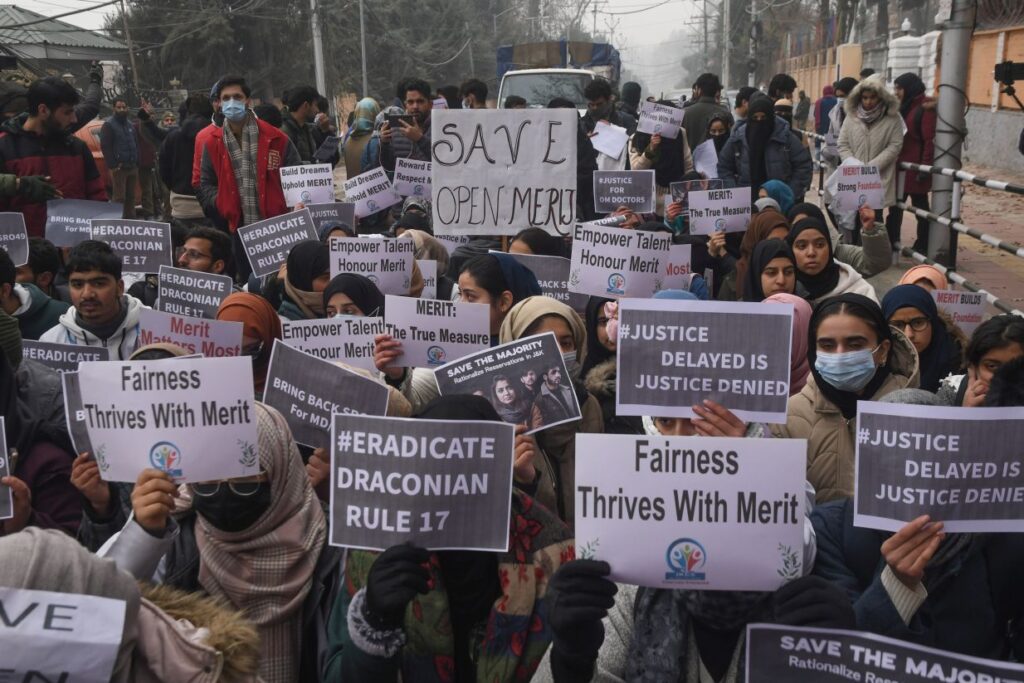
Recent amendments to reservation policies have become a focal point of contention. The changes have reduced open merit seats in government jobs and educational institutions from nearly 60% to 40%, while introducing a “dual eligibility” rule that critics argue further disadvantages local candidates.

The Open Merit Students Association has expressed strong mistrust in the administration, demanding the public release of the reservation report before its endorsement by the Lieutenant Governor. They cite a pattern of decisions made without meaningful stakeholder consultation.
Parallel complaints have emerged regarding the treatment of medical interns, who currently receive a daily stipend of Rs 410 (approximately $2)—reportedly the lowest in India and insufficient to cover a single meal in the hospital canteen. A proposal to enhance this stipend has been stalled for eleven months and was recently rejected without explanation, leading to accusations of systematic neglect aimed at blocking professional opportunities for Kashmiri youth.
Cultural and linguistic concerns have also intensified following the removal of Urdu as a qualifying criterion for Naib Tehsildar positions—a move activists describe as “linguicide.” They argue that this decision strips Kashmiri-speaking candidates of a linguistic advantage tied to local administrative records and represents a broader erosion of cultural identity.
Together, these issues—opaque reservation policies, economic exploitation of interns, and the sidelining of Urdu—are viewed by many as interconnected components of a larger strategy to disempower local communities. Critics accuse the BJP-led government of fostering inequity and fueling demographic and cultural shifts in the territory, deepening existing grievances and raising demands for transparency and justice.