249 custodial and fake encounter deaths reported in IIOJK since 2021
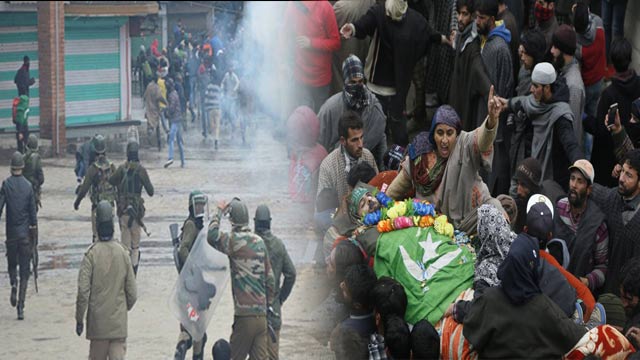
Srinagar: A total of 249 custodial and fake encounter deaths have been reported in Indian Illegally Occupied Jammu and Kashmir from 2021 to 2025. Year-wise data highlights brutal state actions and human rights violations aimed at suppressing Kashmiris’ demand for Azaadi, a demand acknowledged by the United Nations through its resolutions.
A report by Kashmir Media Service, countering claims made by the Indian BJP government, states that official figures significantly underreport such incidents. The Indian Minister of State for Home Affairs, Nityanand Rai, informed the Lok Sabha on March 24, 2026, that only eight custodial deaths had been reported in Jammu and Kashmir since April 2021. This information was provided in response to an unstarred question raised by MPs Selvaraj V., K. Subbarayan, and Rajkumar Roat.
According to the minister, data from the India’s National Human Rights Commission (NHRC) shows two custodial deaths each year in 2021–22, 2022–23, 2023–24, and 2024–25, with no custodial deaths reported up to March 15, 2025.


However, the KMS report disputes these figures, stating that the NHRC in occupied Jammu and Kashmir is concealing human rights violations and acts of violence by Indian forces.
The fact-finding report provides the following year-wise figures for custodial and fake encounter deaths:
• 2021: 65
• 2022: 59
• 2023: 41
• 2024: 50
• 2025: 34
These figures, the report says, demonstrate a pattern of violence and an attempt to suppress demands for a plebiscite and political rights acknowledged by the United Nations.
The report further states that over 5,000 Kashmiris, including women, are currently imprisoned in IIOJK and in Indian jails. Approximately 3,200 of them are facing charges related to pro-freedom activities. Many of these political detainees are held under draconian laws such as the Unlawful Activities (Prevention) Act (UAPA) and the Public Safety Act (PSA), with a significant number still under trial.
The report also highlights a lack of accountability for deaths occurring in custody or during encounters involving the Indian Army, paramilitary forces and police. It attributes this to legal immunity provided under the draconian Armed Forces Special Powers Act (AFSPA).
Furthermore, the report states that local complaints and FIRs are often not formally registered, while police file their own FIRs, which can distort facts, undermine eyewitness accounts, and obscure ground realities in IIOJK.