DFP denounces conviction of Aasiya Anbrabi in fabricated case, calls verdict ‘murder of justice’

Srinagar: In Indian illegally occupied Jammu and Kashmir, the Democratic Freedom Party (DFP), led by jailed senior Hurriyat leader Shabbir Ahmed Shah, has strongly condemned the conviction of Dukhtaran-e-Millat chairperson Aasiya Andrabi and her colleagues Fahmida Sofi and Nahida Nasreen in a fabricated case by an NIA court. The party described the verdict as a “murder of justice” and a glaring indictment of India’s so-called judicial process.
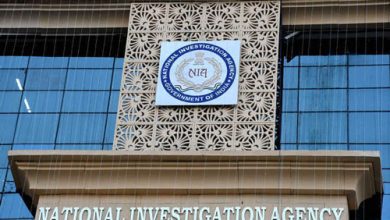
According to Kashmir Media Service, in a statement in Srinagar, DFP spokesperson Advocate Arshad Iqbal said the National Investigation Agency (NIA) court’s decision was nothing short of judicial persecution, delivered after stripping the Kashmiri women prisoners of their basic legal rights and denying them any genuine opportunity to defend themselves.
“Such convictions, delivered without any semblance of due process, only reinforce the growing perception that the courts have been reduced to mere instruments of state coercion, cynically employed to criminalize political belief, crush dissent, and terrorize the people of occupied Jammu and Kashmir into silence”, the spokesman said.

He expressed deep concern that Kashmiri political prisoners have been booked on fabricated and politically motivated charges of sedition, terrorism, hate speech, and other accusations under the draconian Unlawful Activities (Prevention) Act.
“These prisoners are being punished solely for expressing their political beliefs and for raising their voices against the injustices inflicted upon the people of Kashmir”, he added.
He appealed to the international humanitarian organisations to raise their voice against these wrongful convictions and harsh sentencing of Kashmiri leaders on fabricated and politically motivated charges.
The spokesman also expressed concern over the systematic profiling of the religious caretakers of mosques, terming it as a direct interference into their religious affairs and a flagrant violation of their right to privacy.
He urged the United Nations and other international institutions to exert pressure on the Indian government to ensure basic human rights and meaningful political space for the people of Kashmir and resolution of the long-drawn Kashmir dispute in line with the UNSC resolutions.
Meanwhile, APHC-AJK leader and Chairman of Jammu Kashmir Salvation Movement Altaf Ahmed Bhat in a statement in Islamabad strongly condemned the conviction of Dukhtaran-e-Millat Chairperson Aasiya Andrabi, along with Fahmeeda Sofi and Naheeda Nasreen, by an Indian NIA court, calling it a troubling example of how judicial processes are being used to criminalize political belief.
He said these verdicts are politically driven, delivered in an environment where fair trial guarantees and due process are routinely denied.
He said Indian courts are increasingly functioning as instruments of coercion for Kashmiri leaders, where legal proceedings are reduced to formalities meant to legitimize repression rather than deliver justice.
Paying tribute to Shaheed Ghulam Rasool Dar and all martyrs of Kashmir, Altaf Ahmed Butt said their sacrifices remain a lasting symbol of resistance against injustice and a reminder that the struggle for dignity and rights cannot be erased through force.
He also condemned the continued demolition of residential and commercial properties, describing it as collective punishment that leaves families dispossessed without notice, legal recourse, or accountability. He said the destruction of homes is being used to instill fear and impose silence on an already traumatized population.
He also criticized the arbitrary expulsion of Kashmiris from employment, particularly from government services, without transparent inquiries or the opportunity to defend themselves. Such actions, he said, are depriving families of livelihood and deliberately weakening the social and economic structure of the region.
Raising alarm over mosque profiling, Altaf Ahmed Butt said the systematic collection of data related to mosques, imams, and religious caretakers amounts to direct interference in religious affairs. He stated that turning places of worship into objects of surveillance violates the right to religious freedom and privacy, and fosters suspicion around institutions meant to serve spiritual and community needs.
He also drew attention to the deteriorating condition of illegally detained Hurriyat leaders, including Masarat Alam Butt, Shabbir Ahmed Shah, Muhammad Yasin Malik, Zaffar Akbar Butt, Dr Abdul Hameed Fayyaz, Aasiya Andrabi, Fehmida Sufi and Naheeda Nasreen, who continue to face inadequate access to medical care and basic facilities in Indian prisons.
Altaf Ahmed Butt appealed to the United Nations, Organization of Islamic Cooperation, European Union, and all international human rights organizations to immediate intervention to halt ongoing abuses, ensure accountability, and protect civilian lives.