Pakistan playing constructive diplomatic role to de-escalate Iran conflict: Masood Khan
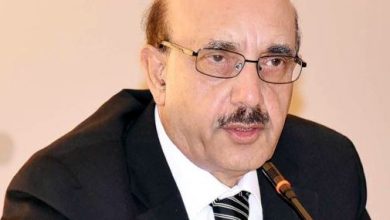
Islamabad: Former president of Azad Jammu and Kashmir and former Ambassador of Pakistan to the United States Masood Khan has said that Pakistan is playing a constructive diplomatic role amid the escalating conflict involving Iran, maintaining communication with major capitals including Washington, Tehran and Riyadh to promote dialogue and de-escalation.
According to Kashmir Media Service, Masood Khan speaking during a television interview on the evolving Middle East crisis, said although there is speculation that the United States may consider an exit strategy from the conflict with Iran, the war appears far from over. He noted that while President Donald Trump could politically claim victory at any time, signals from the U.S. defence establishment suggest preparations for a prolonged confrontation.
He pointed out that additional military deployments, including naval assets and marine expeditionary forces, indicate that the conflict may intensify rather than conclude quickly. According to Masood Khan, the objectives initially set by Washington—such as forcing Iran to surrender or achieving regime change—have not been realised so far.
“At the same time, there is mounting international pressure to end the war,” he said, noting that global markets have already been affected, with rising oil and gas prices causing economic instability. He also observed that Russia has benefited strategically from the situation, while European countries have expressed concerns because of the broader geopolitical implications, particularly in relation to the war in Ukraine.
Masood Khan said that despite the ongoing military confrontation, several back-channel diplomatic initiatives are underway. Countries such as the United Arab Emirates, Qatar and Oman are actively facilitating quiet diplomacy, while additional communication channels involving international actors continue to operate in an effort to reduce tensions.
He cautioned that the deployment of ground troops could significantly prolong the conflict, drawing parallels with previous U.S. military engagements. Referring to Iraq and Afghanistan, he noted that while military objectives in those countries were achieved rapidly at the outset, the resulting wars continued for years due to complex regional dynamics.
He emphasised that a more sustainable approach would involve international monitoring mechanisms rather than military escalation. In this context, he suggested that the International Atomic Energy Agency (IAEA) could play a constructive role by resuming inspections of Iran’s nuclear facilities, including sites such as Fordow, Natanz and Isfahan.
He warned that further escalation—particularly attacks on major Iranian oil installations such as those on Kharg Island, which handles the majority of Iran’s oil exports—could significantly widen the conflict and destabilise the entire region.