International reports contradict India’s naval claims during 2025 conflict
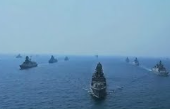
Srinagar: A series of international reports and analytical assessments have cast serious doubts on recent claims by Indian naval chief Admiral Tripathi, who asserted that the Indian Navy was “minutes away” from launching a decisive strike during the 2025 conflict.
According to Kashmir Media Service, critics have described the statement as a misleading attempt to cover what they term as India’s strategic setbacks during the confrontation, also referred to as Operation Sindoor. Observers argue that the claim contradicts multiple independent analyses and global media reports.

Several international outlets, including TIME Magazine, reported in May 2025 that the ceasefire between India and Pakistan was mediated by the United States after prolonged negotiations, rather than being the result of imminent Indian military action. Similarly, reports in The Financial Times emphasized the role of U.S. economic pressure, including threats of heavy tariffs, in bringing about a halt to hostilities.
A February 2026 report by the Center for a New American Security (CNAS) highlighted inconsistencies between India’s claims of victory and the narrative of U.S.-brokered de-escalation. The report noted that India faced significant electronic warfare challenges during the conflict, which hampered its operational capabilities, including those of its naval forces.
Analyses published by War on the Rocks in January 2026 further suggested that the conflict was largely dominated by air and missile engagements, with limited direct naval confrontation. The report pointed out that India relied heavily on non-contact warfare, such as standoff missile systems, while the Navy largely maintained a defensive and deterrent posture.
International observers also noted the absence of major naval engagements, contradicting claims of an imminent strike. Reports indicated that the Indian Navy’s Carrier Battle Group remained in a surveillance role and did not make significant forward movements into contested waters.
Additionally, a 2025 report by the U.S.-China Economic and Security Review Commission (USCC) highlighted Pakistan’s military performance during the conflict, including the effective use of advanced weaponry.
Statements by U.S. President Donald Trump in February 2026 also reinforced the mediation narrative, as he claimed that U.S. intervention helped avert a wider war and “saved millions of lives.”
Analysts say that the convergence of these reports presents a stark contrast to India’s official version, suggesting that the ceasefire was reached under diplomatic and economic pressure rather than due to imminent military escalation.
Experts further noted that international coverage consistently portrayed the conflict as a limited engagement with no decisive victor, with particular emphasis on the lack of significant naval action and reported challenges faced by Indian forces.
The emerging consensus among global observers indicates that India was closer to a ceasefire under pressure than to launching any major offensive operation, raising questions about the credibility of claims by its naval leadership.