Al Jazeera report spotlights outrage over Bollywood film glorifying pellet guns in IIOJK
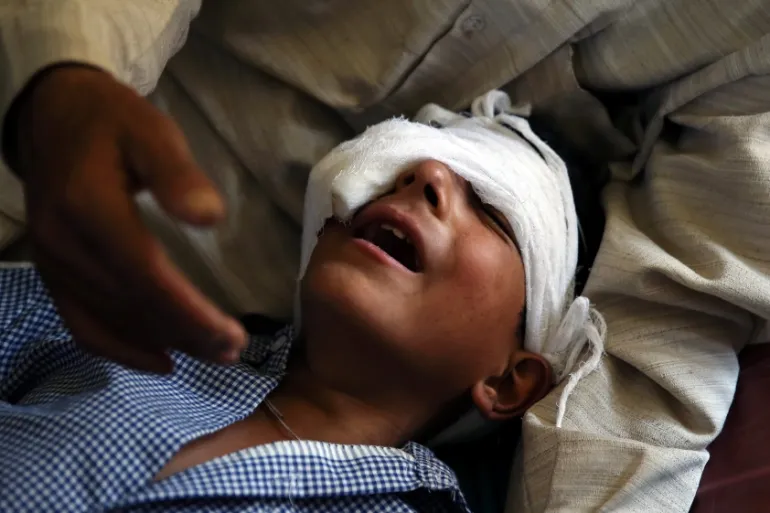 Islamabad: An upcoming Bollywood film, Chauhaan, has sparked widespread outrage among victims of pellet gun violence in Indian illegally occupied Jammu and Kashmir (IIOJK), with survivors, academics and political analysts saying that the film has trivialized their suffering and glorified a weapon that permanently blinded or maimed thousands of Kashmiris.
According to Kashmir Media Service, the backlash followed the release of the film’s teaser featuring actor Ajay Devgn as an Indian security official confronting Kashmiri protesters and describing pellet guns as causing only “limited damage.” The depiction has drawn sharp criticism from pellet victims, human rights advocates and scholars, who say it mocks those left permanently disabled by widespread use of pellet-firing shotguns in the occupied territory.
An Al Jazeera report titled “‘Limited damage’: Upcoming Bollywood film angers Kashmir pellet gun victims” and published on Tuesday highlighted the stories of Kashmiri pellet victims, including Feroz Aslam, who lost his vision after being hit by pellets during a protest in Sopore in 2016. Another victim, Masroor Khalid, was also blinded the same year and still has hundreds of pellets embedded in his face. Both told the news outlet that the film had reopened painful memories of a tragedy that continues to define their lives.
“If the makers blindfold their eyes only for a day, they would know what it feels like not being able to see,” Aslam told Al Jazeera, adding that the film ignored the lifelong physical, psychological and economic trauma endured by pellet victims and their families.


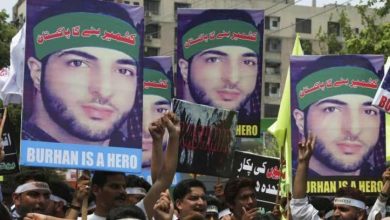
The report noted that pellet guns, introduced by India in 2010 as a so-called “non-lethal” crowd-control weapon, have caused catastrophic injuries across the Valley. Their use reached its peak during the mass uprising that followed the killing of popular youth leader Burhan Wani by Indian forces on July 8, 2016.
The 2016 uprising resulted in the killing of nearly 100 Kashmiris, mostly youth, and the blinding of hundreds of protesters, including women and children, some as young as 18 months. Among the victims was 14-year-old Insha Mushtaq, whose face was so severely damaged by pellets that doctors spent weeks reconstructing it through multiple surgeries.
Rights groups estimate that more than 1,000 Kashmiris have lost vision partially or completely due to pellet-fire, while nearly 14 percent of the pellet victims are children below the age of 15.
Saiba Varma, a medical anthropologist at the University of California San Diego whose work focuses on Kashmir, told Al Jazeera that that Chauhaan’s political messaging signals how Indian public discourse has grown “increasingly pernicious as well as less heedful of the questions of morality surrounding the police excesses” in Kashmir. She said the film reflected a growing normalization of state violence in public discourse. She said the state had once justified pellet guns as a “humanitarian” alternative to bullets, but that such moral justifications were now increasingly absent.
Varma said the depictions of Kashmiri pellet victims in the film’s trailer were laced with popular political tropes about the Kashmiri people. “The images of men with blood-soaked eyes voicing animalistic screams reinforce the tropes of Kashmiris as dangerous figures that require taming,” she said.
Political analyst Rakib Hameed Naik, head of the US-based Center for the Study of Organized Hate (CSOH), described Chauhaan as the latest example of Bollywood “pouring scorn” on Kashmir’s pellet victims. He told Al Jazeera that since Narendra Modi came to power in 2014, “hate itself has become a commodity” increasingly exploited by sections of the Indian film industry.
Naik said that following the abrogation of Kashmir’s special status in 2019, Bollywood has produced a series of films – Article 370, Baramulla and Kashmir Files – to rationalise the BJP government’s moves, using familiar Islamophobic tropes and reducing Kashmiri Muslims to caricatures. He said such movies are made to justify the BJP’s policies. “It can brush aside criticisms of abysmal human rights record and invert the reality, projecting the regime as the victim and the Kashmiri people as aggressors,” Naik said.
Ather Zia, a Kashmiri political anthropologist and poet, said Bollywood has historically treated Kashmir “either as a silent backdrop for its own stories, or Kashmiris are objectified as black-and-white caricatures”. “They are shown as either perpetually servile hosts for tourists or as raging mindless terrorists,” Zia told Al Jazeera.
The report also recalled that India’s use of pellet guns in Kashmir has attracted widespread condemnation from rights groups and even the United Nations. In 2021, UN Secretary-General António Guterres called for an end to the use of pellets against children, while India’s Supreme Court had earlier cautioned against their indiscriminate use.
Victims quoted in the report said no film could erase the reality of lives permanently altered by pellet injuries. Many continue to live with blindness, chronic pain and economic hardship years after the shootings, while families struggle with the cost of medical treatment and long-term care.