 History is not only about dates; it is about people, their challenges, their dreams, and the lessons they leave behind. Some dates do not immediately change the course of history, but they change people and the way they perceive their future. For the people of Kashmir, 13 July 1931 is one such date. Whether viewed through the lens of history, politics, or collective memory, this day occupies a significant place in Kashmir’s historical narrative.
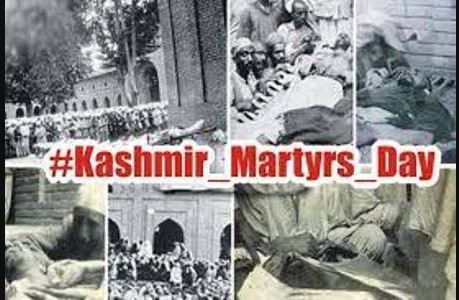
On 13 July 1931, a large crowd gathered outside the Central Jail in Srinagar, where the trial of Abdul Qadeer, known for his fiery speeches criticizing the Dogra administration, was taking place. As the proceedings continued, tensions between the assembled crowd and the state authorities steadily increased. The situation eventually escalated, and the Dogra State forces opened fire on the protesters. Twenty-two people lost their lives, while many others were injured. The incident quickly became one of the most defining moments in Kashmir’s modern political history.


To understand why this event occurred, it is important to examine the historical context in which it unfolded. During the Dogra rule from 1846 to 1947, sections of the population expressed dissatisfaction over a range of political, economic, and social issues. Concerns regarding civil rights, unequal access to opportunities, heavy taxation, administrative practices, and political representation had gradually created widespread resentment among many communities. The events leading up to July 1931 reflected an increasing level of public dissatisfaction with the existing system of governance.
Historians continue to debate the precise causes, nature, and political significance of the events of 13 July 1931. Different schools of thought interpret the incident in different ways, influenced by their historical, political, and ideological perspectives. Nevertheless, there is broad agreement that the tragedy marked a turning point in the political awakening of Kashmir. It encouraged greater public participation in political affairs and shaped the trajectory of political movements that emerged in the years that followed.
The twenty-two individuals who lost their lives were participating in a peaceful public protest. Over the decades, 13 July has become a day of remembrance, reflection, and discussion about questions of justice, representation, civil liberties, and the relationship between the state and its citizens. At the same time, it is important to acknowledge that different communities, historians, and political groups interpret the events of that day differently. These diverse perspectives form part of the broader historical discourse surrounding Kashmir’s past.
Why does 13 July continue to matter for today’s younger generation? The answer lies in the fact that the past shapes the present. A society that understands its own history is better equipped to reflect upon its future. Learning about history does not require accepting every interpretation without question. Rather, it requires the ability to think critically, examine multiple perspectives, evaluate evidence, and understand the complexities surrounding historical events. Such an approach encourages informed citizenship and strengthens intellectual maturity.
The significance of 13 July also extends beyond the history of Kashmir itself. The events of that day highlight broader lessons about governance, public participation, and the importance of dialogue over confrontation. They remind us that peaceful civic engagement and responsive institutions are essential for building trust between governments and the people they serve. The story also underscores the importance of preserving historical memory while remaining open to scholarly debate and respectful discussion. History should not be viewed as a fixed narrative but as a continuous process of learning, questioning, and understanding.
Every generation inherits history, but each generation must decide how to engage with it. Remembering the past should never be seen merely as a means of reviving old divisions or deepening tensions. Instead, it should serve as an opportunity to learn from previous experiences and to promote greater understanding. Reflecting on events such as 13 July with empathy, historical accuracy, and intellectual honesty enables societies not only to honour those who experienced them but also to strengthen the values of dialogue, justice, and mutual respect.
Ultimately, the significance of 13 July lies not only in the tragic events that occurred on that day but also in the enduring questions they raise about justice, governance, political participation, collective memory, and the importance of understanding history. Its legacy continues to encourage reflection on how societies remember their past, engage with differing interpretations, and work towards a future built upon knowledge, accountability, and peaceful coexistence.
Aima Afraz is a student of International Relations at the National University Of Modern Languages and is currently serving as a research associate at the Kashmir Institute of International Relations(KIIR).