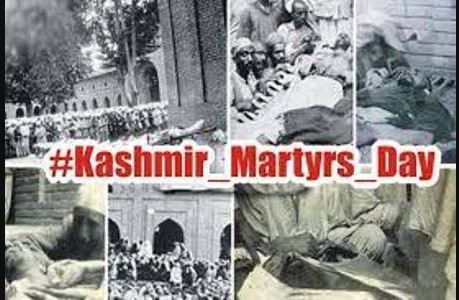
Every year on July 13, Kashmir remembers one of the most significant and tragic moments in its modern history. It remains a day of remembrance, reflection, and homage to those who sacrificed their lives in the struggle against oppression.
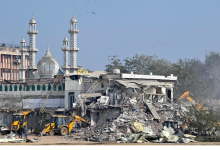
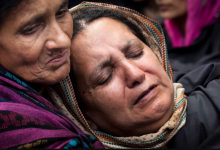
July 13 is commemorated to pay tribute to the 22 Kashmiris who were shot dead, one after the other, outside the Srinagar Central Jail by the forces of Dogra Maharaja’s autocratic regime.
Outside the Central Jail in Srinagar, thousands of Kashmiris had gathered during the trial of Abdul Qadeer. As the time for the Zuhr prayer approached, a young man stood up to call the Adhan. Before he could complete it, he was shot dead. One after another, others stepped forward to continue the call to prayer, and they too were fired upon.
By the end of the incident, 22 Kashmiris had lost their lives. They came to be remembered as the Martyrs of July 13, and their sacrifices became a defining moment in Kashmir’s political and social history, symbolizing resistance against oppression and the quest for dignity, justice, and civil rights.
Families, historians, and communities continue to commemorate the sacrifices, honoring their courage and the lasting impact their martyrdom has had on the course of Kashmir’s history.
The discrimination faced by Kashmir’s Muslim majority did not begin under Dogra rule alone. It had already surfaced during the Sikh rule. Back then, the murder of a native by a Sikh was punishable by a fine of 16 to 20 Kashmiri rupees payable to the government, of which four rupees would be given to the family if the victim was a Hindu, but only two rupees if the victim was a Muslim.
In 1846, after defeating the Sikh Empire in the first Anglo-Sikh war, the British East India Company sold Kashmir to the Gulab Singh, a Dogra, under the treaty of Amritsar. Kashmir, home of millions of people, was effectively treated as a commodity. Gulab Singh, who had sided with the British during the war, acquired Kashmir for 7.5 million Nanakshahi rupees as a reward for his loyalty.
Dogra rule possibly marked the harshest periods of economic exploitation in Kashmir. Most peasants were effectively landless, as Kashmiris were denied ownership of agricultural land. Between 50 and 75 percent of agricultural produce was taken by the Dogra rulers, leaving the cultivators with practically little or no control over the fruits of their labour.
The Dogra rulers also reintroduced the begar (forced labour) system under which people were compelled to work for for little or no payment. Almost every imaginable profession was heavily taxed, and Kashmiri Muslims were even required to pay taxes if they wished to get married. The tax burden became so excessive that a separate “zaildari tax” was introduced merely to finance the collection of taxes.
During Dogra rule, Kashmiri Pandits – native Hindus of the Kashmir Valley – were slightly better off than the Kashmiri Muslims, perhaps as a result of the administration’s pro-Hindu bias. They generally enjoyed greater access to government employment, education, and administrative positions than the Muslim majority. Consequently, despite Muslims constituting the overwhelming majority of the population, much of the educated middle class remained dominated by Kashmiri Pandits.
The Dogra regime also replaced Koshur (Kashmiri) with Urdu as the official language, making, making it even harder for the Koshur-speaking Kashmiri Muslims to break free from poverty.
Therefore, the history of Kashmir’s Muslims became closely interwined with the history of the working class in the valley. In fact, throughout the Dogra rule in Kashmir, resistance to the oppressive regime was shaped by economic exploitation as much as by religious discrimination.
Public resentment had been building for months before July 1931.
On 19 April 1931, Imam Munshi Muhammad Ishaq was prevented by Dogra Police Chief Chaudhry Ram Chand from delivering the Eid sermon at Jammu’s Municipal Park. The incident triggered widespread demonstrations in Jammu that continued for many days.
This was was followed by the desecration of the Holy Quran at the hands of Dogra troops in Jammu. This outrageous act led to extensive anger throughout the State.
In Srinagar, massive gatherings were held at the historic Jamia Masjid, Khanqah-e-Mualla, other mosques, shrines and Imamabargahs to denounce this blasphemous act and demanded punishment to those responsible.
Among those attending one such gathering at Khanqah-e-Mualla was a youth, Abdul Qadeer. At the conclusion of the meeting, pointing his finger towards the Dogra Maharaja’s palace, he raised full-throated slogans declaring “Destroy every brick of it.”
He was immediately arrested on charges of sedition. Owing to growing public anger, his trial was shifted from the court to Srinagar Central Jail.
On 12th July 1931, intense public demonstrations were held throughout the city against the shifting of the court to the Central Jail.
On 13th July, 1931 thousands of people thronged the Central Jail in Srinagar to witness the trial of Abdul Qadeer.
As the time for obligatory Zuhr prayers approached, one young man stood to call the Azaan. He was shot dead by the Dogra soldiers before completing it. Another immediately stepped forward to continue the call and was also martyred. On after another, 22 Kashmiris laid down their lives before the Azaan was completed.
This massacre remains the blackest chapter in the history of Dogra rule in Kashmir.
The number of those killed on 13 July 1931 is generally accepted as 22. Sheikh Mohammad Abdullah has mentioned this number in Aatash-i-Chinar (p. 64] without giving names of the fallen persons. Political leader and one time Abdullah’s associate, Munshi Mohammad Ishaq, an eyewitness to the developments of 1931, corroborates the number in Nida-e-Haq (p. 107) but, like Sheikh Mohammad Abdullah, mentions no names. Author and scholar, Molvi Mohammad Ibrahim, in the Koshur Encyclopedia (Vol I, pages 350-351), published by the Jammu & Kashmir Academy of Art, Culture & Languages in 1986, provides the namesand residential addresses of all 22 martyrs as under:
Amir Joo Jandgaroo (Gojwara), Akbar Dar (Osar Bhavan), Mohammad Teli (Osar Bhavan), Mohammad Subhan Rather (Osar Bhavan), Abdullah Ahangar (Narabal Nowshehra), Abdullah Lone (Mokhte Pokhar), Mohammad Shaban Misger (Mokhte Pokhar), Khaliq Shora (Anzimar), Mohammad Sultan Chola (Aram Masjid Khanyar), Ahmad Bhat (Fateh Kadal), Mohammad Sultan Khan (Basant Bagh), Nasiruddin (Chinkral Mohalla), Abdul Salam Hajam (Guzarbal), Mohammad Akbar (Zaldagar), Ghulam Nabi Kanewal (Mohalla Pandan), Abdullah Najar (Ompora), Ghulam Mohammad Sofi (Daribal), Mohammad Subhan Khan (Nawab Bazar), Abdul Gani Makai (Nawa Kadal), Ghulam Mohammad Naqash (Kadi Kadal), Ghulam Mohammad Halwai (Jama Masjid) and Ghulam Qadir Bhat (Mohalla Bahauddin Sahib).
Pir Mohammad Afzal Makhdoomi, another political leader and eyewitness of the events, says that 23 persons were killed on 13 July 1931 in Kashmir ki Tehreek-e-Azadi: Khwaab, Azaab, Saraab (pages 73-74]. The one additional martyr identified by him is Ghulam Rasool Dardah, a resident of Qutubuddin Pora.
Scholar Mridu Rai in Martyrs’ Days: Memorializing 13 July 1931 in Kashmir mentions 22 demonstrators and one policeman killed but does not list names.
Late Sadruddin Mujahid, a close associate of Sheikh Mohammad Abdullah and leader of the erstwhile Plebiscite Front, who took part in the 1931 agitation as a student of Islamia High School, identified 108 persons with their residential addresses martyred between July 1931 and 1938 in different parts of Kashmir and Rajouri and Poonch in Jammu Province [Weekly Khalid-i-Jadeed, 13 July 1981]. According to him, 20 persons were killed at the Central Jail on 13 July 1931 while 6 others were gunned down in other parts of the city including 2 each at Nawakadal and Nowshera and 1 each at Jamia Masjid and Gaw Kadal.
As scholar and activist Prem Nath Bazaz noted, the sentiments of those gathered outside the prison were not against Hindus but against tyranny itself. Yet, the riots that took place in the aftermath of July 13 took a religious turn when some shops owned by the Hindus were looted in the valley. Bazaz attributed this development to the political immaturity of the Reading Room Party and the hostile and discriminatory attitude of the Hindus towards the Muslim majority.
Ever since that episode, however, all stakeholders in the Kashmir conflict have been attempting to communalise Kashmiri history. The struggle of Kashmir’s working-class Muslims has often been reduced solely to a religious issue, overlooking its equally significant political, economic, and social dimensions.
The history of Kashmiri resistance stretches back to 29 April 1865, when the Zaldagar protest in Srinagar, widely known as the Shelbaf Tehreek (Shawl Weavers’ Uprising), became a landmark labour movement. The protest was organized against the oppressive taxation and exploitative working conditions imposed by the Dogra administration. At least 28 shawl weavers were killed, while many others drowned after a bridge collapsed as the panicked crowd attempted to escape. More than 100 weavers were injured, and the movement was eventually suppressed by the Dogra regime.
The writer is a Kashmiri human rights activist based in Islamabad.