IIOJK political leaders caution against retaliatory actions, mass detentions of Kashmiris

Srinagar: Political leaders in Indian illegally occupied Jammu and Kashmir (IIOJK) have cautioned against what they described as “wanton retributive action”, warning that the prevailing situation cannot be addressed without carrying the people along.
According to Kashmir Media Service, IIOJK Chief Minister Omar Abdullah in a statement in Srinagar, referring to the demolition of residential houses following the Pahalgam incident last year, said he had then intervened with the Modi government to stop the practice.
“Demolishing houses or making thousands of arrests will not improve the situation of Kashmir; in fact, it will only worsen it,” he said.
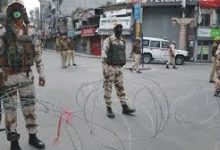
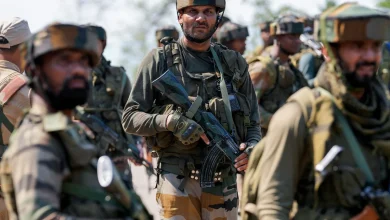
He also expressed concern over reports of mass detentions following the killing of a policeman, saying such actions risked turning public anger against the whole system.
Senior National Conference leader and Indian parliament member from Srinagar Agha Ruhullah Mehdi also criticized the ongoing crackdown in a post on X, saying that more than 3,000 people had been detained across Kashmir within 24 hours under the phrase “detained for questioning”, a term he said “appears in no statute and carries no safeguard.”
He also questioned the demolition of two residential houses during the overnight police operation, saying one of the homes had been rebuilt only months after being demolished previously by Indian forces. “The Supreme Court has held punitive demolition without due process unconstitutional,” he wrote.
Mehdi also questioned the official narrative on militancy, saying that claims of local militant recruitment falling to zero were inconsistent with the detention of thousands of alleged overground workers within a single day.
PDP President Mehbooba Mufti, while condemning the killing of the police head constable, described the demolition of the two residential houses and the detention of thousands of people as “collective punishment” with no place in a democracy.
She argued that if the Indian government maintained that militancy had been reduced to near zero, it should pursue a “more humane and lawful approach” rather than resorting to what she said as “tit for tat” measures affecting innocent civilians.