When CJP Protests Shake India, Does Kashmir Become a Security Escape Route?
Humayun Aziz Sandeela
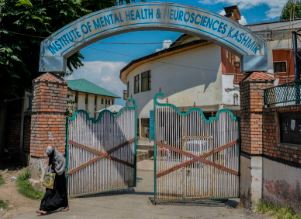
The latest military operations across Indian illegally occupied Jammu and Kashmir, during which reports suggest that more than 3,000 Kashmiri youth have been detained, have once again drawn international attention to one of South Asia’s most enduring conflicts. The reported expansion of cordon-and-search operations, raids, arrests, increased troop deployment, checkpoints, and restrictions on civilian movement across areas including Islamabad, Shopian, Kulgam, Pulwama, Srinagar, Ganderbal, Baramulla, Budgam, Sopore, Kupwara, Bandipora, Awantipora, and Handwara has renewed a familiar debate: how far can a state go in the name of security before it begins to undermine the very rights it claims to protect?
The immediate trigger for the latest operation was the killing of an Indian police constable in Islamabad town on July 22, 2026. Every government has the right and responsibility to investigate attacks on its personnel, prevent violence, and bring those responsible to justice. However, the experience of conflict zones around the world shows that the manner in which a state responds to violence often determines whether a crisis is contained or whether it deepens existing grievances.
The larger question is whether security policies in conflict regions are shaped only by immediate security concerns or whether they are sometimes influenced by wider political circumstances. Governments facing domestic unrest, public anger, or political pressure often find themselves balancing competing demands: demonstrating control, maintaining public confidence, and ensuring that state power remains within the boundaries of law.
The timing of New Delhi’s latest security operation in Kashmir has inevitably triggered political debate because it coincided with one of the most significant youth-led protest movements confronting the Modi government in recent years. The Cockroach Janta Party (CJP), which emerged from public anger over allegations surrounding irregularities in the NEET examination system, has grown into a broader movement demanding accountability, reforms in the examination process, and greater transparency in India’s education system.
For many young protesters, the controversy is not merely about one examination but reflects wider frustrations over unemployment, limited opportunities, and declining faith in public institutions. They argue that repeated failures in governance have left millions of students uncertain about their future and increasingly disconnected from the political system.
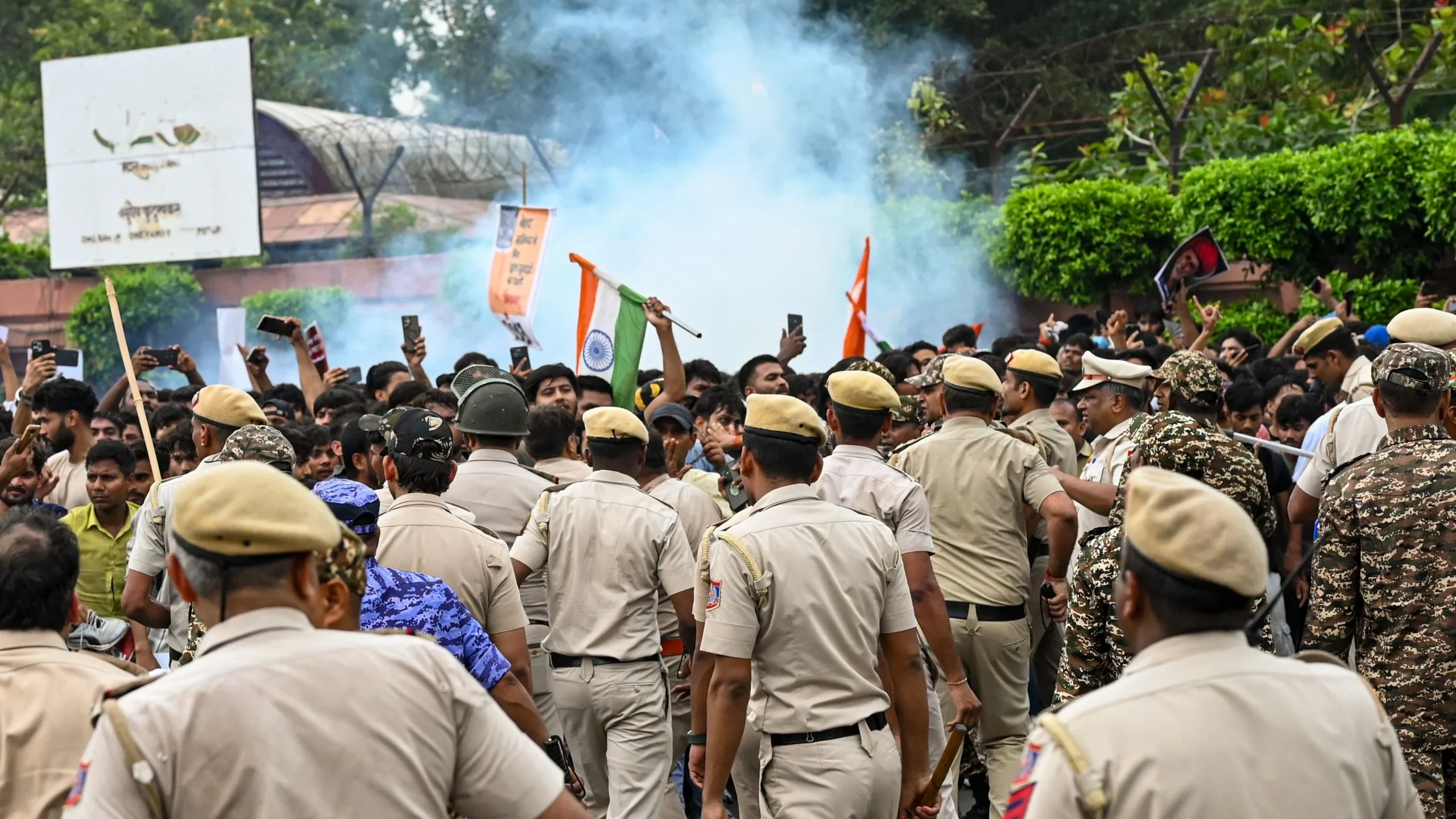
The government’s handling of these protests has also attracted criticism. According to police and media reports, more than 170 people, including protesters and security personnel, were injured during clashes surrounding the “Sansad Chalo” march, while dozens of demonstrators were detained after police used tear gas and baton charges to prevent protesters from moving towards Parliament.
Critics argue that the response reflects a broader pattern in which administrative and security measures have often replaced political dialogue. They point to the prolonged farmers’ protests of 2020–21, continuing criticism over the handling of ethnic violence in Manipur, and demonstrations in Ladakh seeking constitutional safeguards as examples where sections of society felt their concerns were not addressed through meaningful engagement.
Against this backdrop, the intensified security measures in Kashmir have raised genuine questions whether governments facing political pressure increasingly rely on displays of state authority rather than dialogue.
Regardless of political interpretations surrounding the timing, the latest developments in Kashmir raise serious legal and humanitarian concerns. International human rights law recognises that states have both the authority and obligation to protect their citizens from violence. But that authority is not unlimited. Counter insurgency operations must remain within the boundaries of necessity, proportionality, accountability, and respect for individual rights.
India, as a State Party to the International Covenant on Civil and Political Rights (ICCPR), is obligated to uphold fundamental protections relating to liberty, fair trial guarantees, freedom of expression, and protection from arbitrary detention. Article 9 of the ICCPR clearly states that individuals cannot be deprived of liberty arbitrarily and that those detained must be informed of the reasons for their detention and given access to judicial review.
This principle becomes especially important during large-scale security operations. A democratic legal system is built on the idea that responsibility belongs to individuals, not communities. Arrests and investigations must therefore be based on specific evidence against specific individuals rather than collective suspicion.
Article 14 of the ICCPR further guarantees the right to a fair hearing and the presumption of innocence. These principles are not technical legal requirements; they are the foundations upon which public trust in justice systems is built. When communities believe that punishment extends beyond those accused of wrongdoing, resentment and alienation can grow.
Restrictions on civilian movement, privacy, and everyday life during security operations also require careful examination. International standards recognise that governments may impose temporary restrictions during security emergencies, but such measures must remain lawful, necessary, proportionate, and non-discriminatory. Security and human rights are not opposing forces; in functioning democracies, respect for rights strengthens the legitimacy of security measures.
International humanitarian law provides additional protections in situations involving armed conflict. The Fourth Geneva Convention prohibits collective penalties and measures of intimidation against protected civilians. Article 33 states that protected persons cannot be punished for offences they have not personally committed. Although legal interpretations regarding the Convention’s formal applicability to Kashmir remain contested, the principle against collective punishment remains a widely accepted humanitarian norm.
Similarly, the demolition of civilian properties following militant attacks requires careful legal scrutiny. International standards generally prohibit the destruction of private property unless it is justified by genuine military necessity. Where such actions are perceived as punitive rather than operational, they risk raising serious questions under humanitarian law.
The history of conflicts around the world offers an important lesson: security measures alone rarely resolve political disputes. Northern Ireland, South Africa, and other conflict zones demonstrate that lasting peace requires more than force. It requires political engagement, accountable institutions, justice, and a relationship of trust between citizens and the state.
Young people are often the first generation to experience the consequences of prolonged conflict. Their education, employment opportunities, political participation, and sense of belonging are deeply affected by instability. Policies perceived as excessive or indiscriminate may provide short-term control but can create long-term resentment among younger generations.
The broader lesson from Kashmir extends beyond one region or one government. The challenge for any state facing violence is not simply how to restore order, but how to do so without weakening the democratic values that give state authority its legitimacy.
Large-scale security operations, mass detentions, and measures perceived as collective punishment risk widening the gap between the state and the Kashmiri population rather than addressing the deeper political and social issues that have sustained the conflict for decades. History suggests that coercive measures may suppress immediate unrest, but they rarely eliminate the grievances that fuel instability.
A lasting solution cannot emerge solely through expanded security deployments. It requires justice, accountability, political engagement, and respect for fundamental rights. Effective security depends on public trust, and public trust is built through fairness, transparency, and adherence to the rule of law.
For the international community, the responsibility is to ensure that human rights principles are applied consistently and impartially. Allegations of arbitrary detention, collective punishment, or disproportionate restrictions should be independently examined, and accountability mechanisms must operate without political interference.
Ultimately, peace in Kashmir cannot be secured through force alone. Sustainable stability requires a broader approach—one that combines security with dialogue, justice, and institutions capable of restoring confidence among all stakeholders. Only through such an approach can cycles of mistrust and alienation begin to give way to lasting peace.