India’s latest crackdown in IIOJK reflects pattern of collective punishment: Observers
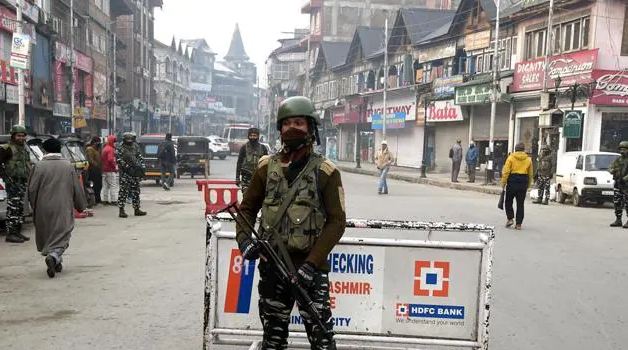
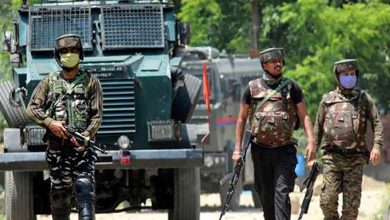
Srinagar: The latest large-scale crackdown launched by Indian forces in Indian illegally occupied Jammu and Kashmir (IIOJK), during which over 3,500 Kashmiris were detained and several houses demolished following the killing of an Indian police head constable, has raised serious concerns among human rights observers and Kashmir watchers.
According to Kashmir Media Service, observers say that the killing was used as a pretext to impose collective punishment and further tighten New Delhi’s control over the occupied territory. They maintain that the scale and speed of the operation have reinforced longstanding concerns over the sweeping powers exercised by Indian occupation forces in IIOJK.
They argue that detaining thousands of innocent Kashmiris and demolishing family homes for the alleged act of a single gunman cannot be regarded as legitimate law enforcement. Such measures, they say, amount to collective punishment, which is prohibited under international humanitarian law, as entire families and communities are penalized without proof of involvement in any offence.


Instead of conducting a transparent and credible investigation to identify those responsible, the authorities launched raids, mass arrests and punitive actions. The absence of a publicly credible investigative process, they say, has fuelled suspicions that the incident was used to justify a pre-planned military crackdown rather than to ensure justice.
Observers noted that the detention of thousands of people within a very short span suggests that Indian agencies relied on pre-prepared lists rather than evidence collected during the investigation. They said the operation reflected a policy of preventive detention and mass profiling rather than conventional policing.
They also described the demolition of residential houses as another disturbing aspect of the crackdown. Destroying family homes without judicial proceedings, they said, bypasses due process, undermines the rule of law and effectively punishes entire families before any court has examined the evidence.
According to the observers, the failure to follow transparent legal procedures has strengthened public perception that the occupation authorities are more interested in controlling the local population than in delivering justice. They said coercive measures have increasingly replaced impartial investigations and judicial accountability in the occupied territory.
The observers further pointed out that large-scale military operations in IIOJK have frequently coincided with periods of political unrest in India. They said such crackdowns often dominate media attention at times when the Indian government is facing widespread protests or mounting political pressure within the country, diverting focus from domestic challenges.
They noted that the latest operation follows a familiar pattern in IIOJK, where thousands of Kashmiris, including youth, political activists and ordinary civilians, have repeatedly been detained during similar military sweeps without formal charges or transparent legal proceedings.
Rights groups, they added, have consistently documented the demolition of residential properties as a tactic used by Indian forces to instil fear, intimidate communities and impose collective punishment on families of alleged suspects.
Against the backdrop of recurring raids, mass detentions, house demolitions and sweeping powers enjoyed by Indian forces, the latest crackdown represents another chapter in New Delhi’s policy of ruling IIOJK through fear rather than justice, the observers said, adding that such actions only deepen alienation among Kashmiri people.
They maintained that unless the international community makes it unequivocally clear that India’s repressive actions in IIOJK threaten regional peace and presses New Delhi to end its coercive policies, create a conducive atmosphere for dialogue and resolve the Kashmir dispute in accordance with the UN Security Council resolutions, such cycles of repression are likely to continue.