BJP regime restricts media, journalists from publishing August 5 protest coverage:Activists
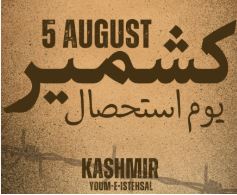
Srinagar: Seven years after the August 5, 2019 abrogation of Articles 370 and 35A in Indian illegally occupied Jammu and Kashmir (IIOJK), Kashmiri activists have said there has been an increase in the repression of dissenting voices, arbitrary detentions, restrictions on press freedom, and the stringent use of black laws to silence political leaders, journalists, and human rights defenders in the territory.
According to Kashmir Media Service, the Indian BJP government, in violation of UN resolutions and international law, revoked the special status of Indian iIllegally occupied Jammu and Kashmir and imposed an unprecedented military siege across the territory on this day in 2019.
The activists said authorities have continued to use travel bans, passport revocations, and intimidation against critics, while imposing severe restrictions on freedom of expression, peaceful assembly, and freedom of association.
They said the Indian government has significantly intensified its crackdown on fundamental rights in occupied Jammu and Kashmir over the past seven years, creating an atmosphere in which dissent has largely been suppressed through heavy-handed measures.
They added that by harassing and intimidating critical voices, the BJP authorities are targeting credible and independent sources of information, creating an environment of fear and uncertainty throughout the region.
The activists said the BJP authorities have directed the media, particularly daily newspapers, to refrain from covering or publishing reports on protests scheduled for August 5. The day is observed in Pakistan as Youm-e-Istehsal (Exploitation Day) and is also marked as a “Black Day” by political parties in IIOJK to protest the revocation of the territory’s special status.
The Indian authorities in Srinagar have typically denied permission for demonstrations, increased troop deployments, and imposed strict restrictions on public gatherings and media movement across occupied Jammu and Kashmir.
The activists further said that previous and current observances of “Black Day” have been marked by intense scrutiny of local media reporting, temporary communication restrictions, and warnings against publishing or circulating calls for protests and shutdowns.