Poonch civilian killings downplayed as Indian Army brigadier gets only ‘severe displeasure’
Srinagar: Armed Forces Tribunal (AFT), a specialized Indian judicial body dealing with military service and court-martial matters, has upheld the Indian Army’s action against a brigadier whose command was linked to the killing of three civilians during interrogation in Indian illegally occupied Jammu and Kashmir’s Poonch district in December 2023, but the disciplinary action against the senior officer — described merely as “severe displeasure” — has raised questions over the gravity attached to the deaths of the civilians.
According to Kashmir Media Service, the Chandigarh Bench of the AFT, comprising Justice Sudhir Mittal and Lt Gen Rambir Singh, in its order pronounced on August 20, upheld the action against Brigadier P. Acharya, who commanded a Rashtriya Rifles battalion. The tribunal found that he had failed to exercise adequate command and control, had himself assaulted a Kashmiri youth and had failed to ensure restraint by officers under his command. It stressed that grief and anger over the deaths of soldiers could not override military discipline and the legal obligation to treat civilians humanely.
“In the conflict between human emotions and requirements of discipline, which is in large measure based on the law declared by the Indian Supreme Court, human emotions must yield,” the bench observed.

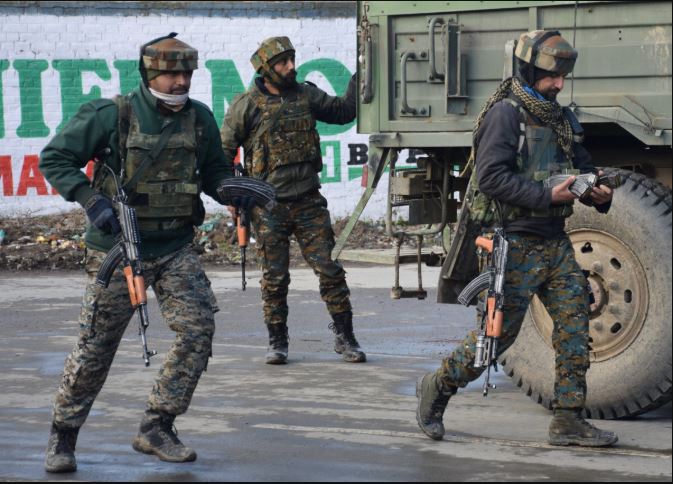
Four Indian army personnel were killed and three injured when an army column was ambushed near Dhatyar Morh in Poonch district on December 21, 2023.
Indian forces subsequently launched cordon and search operations in Dera Ki Gali, Bafliaz and Topa Peer, during which several civilians were detained for questioning. According to the tribunal proceedings, three detainees — Safeer Ahmed, Mohammad Showkat and Shabir Ahmed — were killed. All three belonged to the Gujjar-Bakarwal community and were residents of Topa Peer.
Videos that emerged following the incident showed detainees being subjected to physical abuse, triggering widespread anger among local residents and demands for accountability.
Amid mounting public pressure, the Indian Army was forced to order a Court of Inquiry into the civilian deaths. Following the inquiry, Brigadier Acharya was served a show-cause notice in April 2024, accusing him of failing to exercise proper command and control, using physical force against civilians, failing to prevent excessive and unlawful force and failing to issue clear instructions regarding the treatment of civilians.
Yet, despite the serious allegations involving the deaths of three civilians, the officer was awarded only “severe displeasure” for two years by the General Officer Commanding, 16 Corps, Nagrota, in July 2024.
The wording of the punishment itself underscores the apparent disparity between the gravity of the conduct and the disciplinary action imposed. The deaths of three civilians following their detention and interrogation were treated as a matter of military administrative discipline, with the senior officer escaping any harsher publicly reported punishment.
While upholding the Army’s action, the tribunal noted that soldiers are expected to maintain restraint and adhere to the applicable laws of armed conflict even during war. Its observations effectively acknowledged that the circumstances surrounding the deaths of the civilians could not be justified by the anger generated by the killing of army personnel.
The December 2023 civilian deaths had stirred widespread public anger in occupied Jammu and Kashmir, particularly among members of the Gujjar-Bakarwal community, and intensified concerns over the treatment of civilians during so-called security operations.
The case has also raised questions about the adequacy of accountability mechanisms when civilians die in military custody, particularly when disciplinary action against a senior commander amounts only to “severe displeasure.”