Repeated military reviews raise questions over India’s future designs in IIOJK: Analysts
Jammu: The Indian Army’s unusually frequent reviews of operational preparedness by senior commanders in Indian illegally occupied Jammu and Kashmir have raised questions about New Delhi’s future designs in the occupied territory, particularly amid its repeated claims of restoring normalcy in the region.
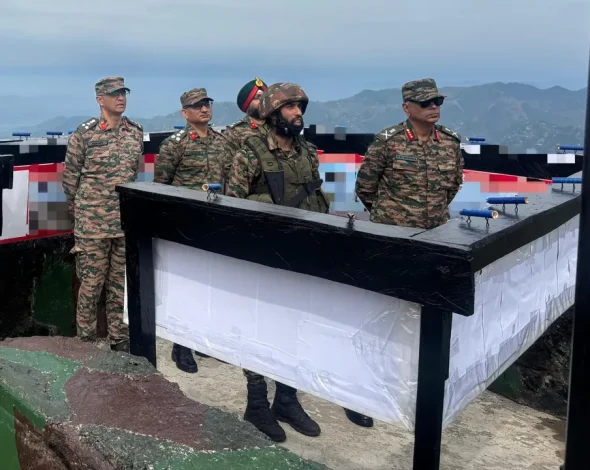
According to Kashmir Media Service, Indian Army’s White Knight Corps Commander Lt Gen PK Mishra on Monday visited forward areas along the Line of Control (LoC) in Poonch sector and reviewed the “evolving security dynamics” and operational preparedness.
He was accompanied by GOC Ace of Spades Division Maj Gen Manoj Raran. The Army said the commander interacted with troops and stressed maintaining high operational readiness and enhancing capabilities to meet emerging challenges.


The visit came only a day after Western Command chief Lt Gen Pushpendra Singh reviewed the operational preparedness of the Tiger Division of Rising Star Corps in Jammu and assessed its ability to respond to “emerging contingencies”. He also emphasized sustained combat readiness, adaptability and mission effectiveness.
The back-to-back visits by senior military commanders, with repeated references to “operational preparedness”, “emerging contingencies” and “evolving security dynamics”, suggest heightened military vigilance in the region and have prompted questions about the objectives behind such intensified preparedness.
The Poonch-Rajouri belt has repeatedly remained a focus of Indian military reviews. The latest developments are particularly significant as the Army has already conducted several high-level assessments of the area this year. In July, Army Chief Gen Dhiraj Seth visited forward areas in Poonch, Rajouri and Sunderbani and reviewed the situation and operational preparedness of the White Knight Corps.
Analysts say the repeated high-level military reviews and emphasis on emerging threats raise questions about the nature of contingencies anticipated by New Delhi and whether the heightened preparedness points to future military or strategic designs in the occupied territory.
The developments also expose a contradiction in India’s claims of restoring normalcy in IIOJK, where senior military commanders continue to conduct frequent operational assessments and security reviews, particularly in strategically sensitive peripheral districts.
Observers say continued militarization and heightened measures taken in the name of security are contributing to an atmosphere of fear and uncertainty among the local population, while the Kashmir dispute remains unresolved and tensions continue to persist in South Asia.