India resorts to retrospective claims to mask Operation Sindoor setback
Ex CDS’s Kirana Hills remarks expose Delhi’s impression-management drive
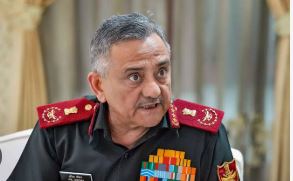
New Delhi: India appears to be intensifying its campaign to reshape the narrative surrounding Operation Sindoor, with former Indian Chief of Defence Staff (CDS) General Anil Chauhan making retrospective claims about an alleged strike on Pakistan’s Kirana Hills nearly a year and a half after the May 2025 conflict.
According to Kashmir Media Service, Pakistan has rejected Chauhan’s claims regarding Kirana Hills, describing them as retrospective propaganda aimed at creating an impression of military success after India failed to achieve its objectives during Marka-e-Haq.
The remarks have assumed significance amid India’s growing focus on narrative warfare following the conflict. Indian military authorities have recently acknowledged the challenges faced on the information front and have begun training officers to counter what they describe as adversarial narratives and shape public perception.


Pakistan maintains that its layered air-defence network effectively thwarted India’s military objectives during Marka-e-Haq, while its subsequent response under Operation Bunyanum Marsoos demonstrated the capability to impose costs across the conflict spectrum.
Pakistan has also rejected claims that any strategic asset or sensitive infrastructure was compromised during the confrontation. The International Atomic Energy Agency (IAEA) had confirmed that there was no radiation leak and no damage to Pakistani nuclear facilities, contradicting alarmist claims surrounding the conflict.
The Pakistani position has also been supported by international assessments and media reports that highlighted the military losses suffered by India, including the downing of Indian fighter aircraft. French media reports subsequently drew attention to problems involving India’s Rafale fighter jets.
The statement over Kirana Hills comes as New Delhi faces questions over its attempts to retrospectively recast the events of May 2025 through selective narratives. Pakistan has maintained that its calibrated response and restraint prevented the confrontation from escalating into a wider catastrophe in the nuclear-sensitive region.
The conflict had raised serious concerns over regional stability as India and Pakistan, both nuclear-armed states, engaged in direct military confrontation. Pakistan maintains that international diplomatic intervention, including US engagement, ultimately helped bring the hostilities to an end.
Meanwhile, Indian Congress leader Pawan Khera has linked recent controversies involving former CDS Anil Chauhan’s remarks to broader questions surrounding the use of pellet guns, arguing that political controversies could divert attention from accountability over who authorised their use.