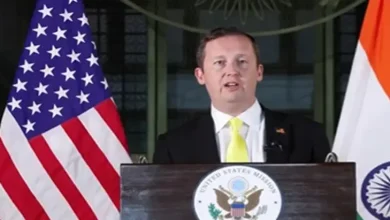
In an article entitled “A Treaty Pakistan Destroyed Long Before India Set It Aside”, published on August 1, 2026 and written by India’s Ambassador to the United States Vinay Kwatra, he seeks to portray the Indus Waters Treaty (IWT) as an asymmetric arrangement that conferred undue concessions, while alleging that Pakistan has obstructed India’s hydropower development on Western Rivers, clearly following the tradition of fabrication and obfuscation, distorting account of the Treaty’s history, structure and purpose.
India has been advancing this narrative with increasing frequency since its unlawful pronouncement in April 2025 to hold the Treaty “in abeyance.” It appears intended to retrospectively justify a unilateral action that finds no basis either in the Treaty itself or in international law.
The IWT is a binding international agreement concluded on September 19, 1960 after decade-long negotiations facilitated by the World Bank. It was neither an act of Indian generosity nor a concession to Pakistan. It was a carefully negotiated legal settlement designed to replace upstream discretion with clearly defined and binding rights and obligations, thereby providing certainty, predictability and stability in the management of the Indus River System.

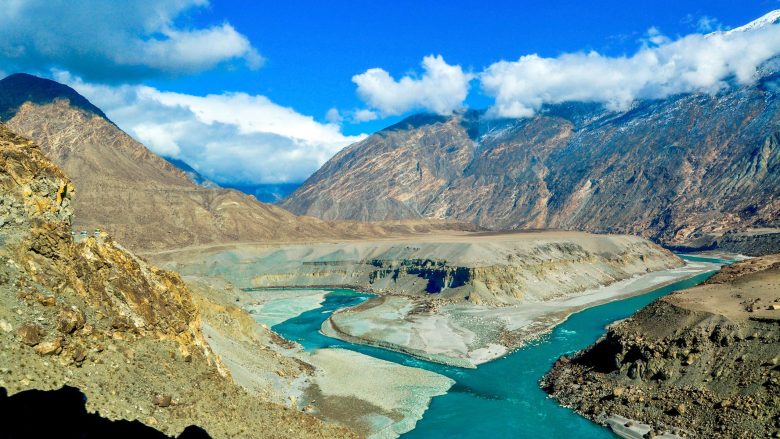
Under the settlement, India secured unrestricted use of three Eastern Rivers (Ravi, Beas, and Sutlej), while Pakistan’s rights over the waters of three Western Rivers (Indus, Jhelum, and Chenab) were protected through a comprehensive legal regime. Pakistan, for its part, relinquished its historic dependence on Eastern Rivers and undertook extensive replacement works to reconfigure its irrigation system in accordance with the new allocation.
To describe this arrangement as inherently unfair is to disregard circumstances in which the Treaty was negotiated and the carefully calibrated balance embodied in its provisions. The limitations governing India’s uses of Western Rivers reflect the hydrological realities of an upstream-downstream relationship and are essential to safeguarding the rights and water security of the lower riparian State. They were integral to the bargain on which IWT was concluded and have contributed to its durability for six decades.
Equally misplaced is the assertion that Pakistan has sought to impede India’s hydropower development. The Treaty expressly permits India to construct run-of-river hydroelectric plants on Western Rivers, subject to Treaty-prescribed design and operational criteria.
Pakistan’s recourse to dispute-settlement mechanisms under Article IX is not obstruction but the exercise of rights expressly afforded by the Treaty. Questions concerning pondage, spillways, outlets, intakes, freeboard and operating criteria go directly to safeguards negotiated by the two sides. Seeking clarification, neutral determination or arbitration on such matters constitutes the implementation of IWT, not its abuse.
India cannot reasonably claim the benefit of the Treaty’s provisions permitting hydropower development while dismissing the technical limitations and dispute-resolution procedures that form part of the same negotiated framework.
The Court of Arbitration has reaffirmed the continuing validity and operation of the Treaty and the binding nature of its safeguards. Its Awards, including the Supplemental Award of May 2026, reinforce the principle that hydroelectric projects on Western Rivers must conform to IWT’s prescribed limitations.
Any unrelated political or security allegations cannot absolve a state of its obligations under a binding international agreement. Baseless allegations of terrorism or other bilateral disputes cannot create a unilateral right to suspend, disregard or rewrite the IWT.
The legal position is clear. The IWT contains no provision allowing either party unilaterally to suspend it, place it “in abeyance,” or terminate it. Article XII provides that the IWT shall continue in force until terminated by a duly ratified treaty concluded between the two governments.
India’s unilateral announcement of April 2025 therefore cannot alter the Treaty’s legal status or extinguish the rights and obligations arising under it. The Treaty remains valid, operative and binding.
For more than six decades, the IWT has provided a rules-based framework for managing one of the world’s most important transboundary river systems. Its resilience has rested not on political goodwill, but on the fact that it replaced unilateral discretion with binding rules and procedures for resolving disputes. Undermining a time-tested water treaty, with a malicious aim of weaponizing transboundary rivers, would not only reduce certainty and predictability, but also pose a serious threat to peace and stability in an already volatile region.
Pakistan remains committed to the faithful implementation of the IWT in its letter and spirit. India should rescind its unilateral measures, return to full compliance with its Treaty obligations, and engage through the institutional and dispute-resolution mechanisms established under the Treaty.
Pakistan will continue to defend its legitimate rights under the Treaty through all available means. For a country whose agriculture, food security, livelihoods and economic wellbeing are intrinsically connected with the Indus Basin, the issue is not one of political advantage. It concerns water security and well-being of 250 million Pakistanis and the integrity of a binding international agreement that has helped preserve stability in South Asia for generations.
Rizwan Saeed Sheikh is Pakistan’s Ambassador to the United States.