Govt rebuts claims of cancelling power-generation component of Diamer-Bhasha Dam
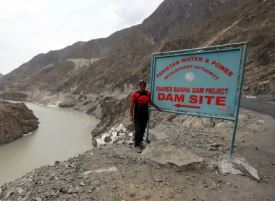
Islamabad : Pakistan’s government has rejected claims that the hydropower component has been cancelled, while national power-sector planning continues to recognise the Diamer-Bhasha Power Project as a 4,500 MW hydropower development.
According to Kashmir Media Service, the distinction matters. A review of financing, construction sequencing, transmission requirements or the timing of generation capacity is not the same as cancelling the power component altogether.
For a project of Diamer-Bhasha’s scale, the difference between “not yet operational,” “being reconsidered,” “rephased” and “cancelled” is substantial. Conflating these terms can create a misleading picture of Pakistan’s infrastructure and energy policy.


The Diamer-Bhasha Dam has never been conceived solely as a water-storage facility.
Its strategic purpose has always combined water security with hydropower generation. The project has been planned with approximately 6.4 million acre-feet of live water storage and 4,500 MW of installed electricity-generation capacity.
The hydropower component is therefore not an auxiliary addition to an otherwise completed dam. It is one of the defining elements of the project’s long-term design.
The country faces increasing pressure on its water resources while simultaneously seeking to expand reliable, domestically generated electricity. Large hydropower projects can address both challenges by improving water regulation while producing electricity without the recurring fuel requirements associated with thermal generation.
That is why Diamer-Bhasha continues to occupy a strategic position in Pakistan’s long-term infrastructure planning.
One of the strongest indicators that the 4,500 MW component has not been abandoned is its continued presence in Pakistan’s power-sector planning.
The National Transmission and Despatch Company’s Transmission System Expansion Plan has identified the Diamer-Bhasha Power Project as a 4,500 MW hydropower project and considered the transmission infrastructure required to evacuate its electricity.
This is important because generation capacity and transmission planning are closely linked.
A project expected to add thousands of megawatts to the national grid requires corresponding investment in transmission infrastructure. Its inclusion in national transmission planning therefore provides a clear indication that the power component remains part of the country’s longer-term electricity architecture.
Similarly, the government’s power-sector planning framework has continued to include Diamer-Bhasha among future generation resources.
The official record therefore does not support the simple claim that Pakistan has “cancelled” the 4,500 MW component.
The controversy appears to stem from confusion surrounding the project’s implementation and the changing economics of Pakistan’s power sector.
Pakistan is currently reassessing its electricity requirements amid changes in demand, rapid growth in distributed solar generation, excess generation capacity and the financial pressures associated with capacity payments.
Those developments inevitably affect decisions about when new generation should come online and how large infrastructure projects should be financed and integrated into the grid.
A government can change a project’s financing model, construction sequence or commissioning timeline without removing the project from its long-term generation strategy.
That distinction is particularly important for Diamer-Bhasha Dam, whose construction timeline extends over many years and whose water-storage and hydropower functions are being developed within a broader national infrastructure strategy.
The debate over the power component should not obscure the larger strategic importance of Diamer-Bhasha.
The country’s dependence on a limited number of major reservoirs, changing precipitation patterns, rising demand for irrigation water and the need to improve flood management have made additional storage capacity a strategic necessity.
Its reservoir is expected to provide additional water storage while helping regulate flows to downstream infrastructure, including the Tarbela system.
At the same time, the project’s 4,500 MW hydropower capacity represents a significant potential addition to Pakistan’s renewable electricity supply.