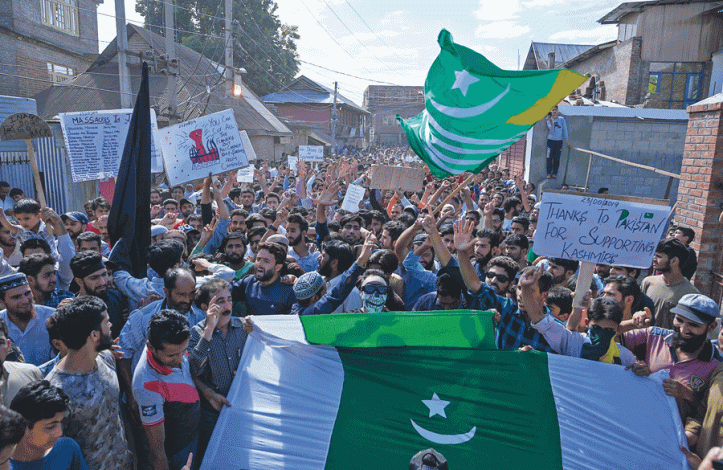
India faces a Kashmir question it has failed to resolve, and has increasingly sought instead to construct a narrative that presents the dispute as settled. Since the unilateral revocation of Article 370 on 5 August 2019, New Delhi has devoted considerable political and diplomatic effort to projecting an image of normalcy, relying on elections, diplomatic visits and administrative measures as evidence of political stability. Yet such displays cannot substitute for addressing the underlying political aspirations of the Kashmiri people or resolving the dispute in accordance with international law. What is presented as normalisation therefore risks becoming a carefully managed narrative designed to shape international perceptions rather than a genuine political settlement.
The fiction cracked publicly on 19 August 2026, when US Ambassador to India Sergio Gor arrived in Srinagar, met Indian illegally occupied Jammu and Kashmir’s Chief Minister Omar Abdullah and obligingly told reporters that Kashmir is “an important part of India.” The remark was not an accident. It was the precise outcome India had engineered: a Trump administration envoy, visiting a territory India controls by force, reciting the Indian government’s preferred characterisation on camera. Pakistan was right to treat it as what it was — a diplomatic provocation. The Foreign Ministry summoned US Chargé d’Affaires Natalie Baker within hours, issued a formal demarche and categorically rejected the statement as factually incorrect, irresponsible and contrary to UN Security Council resolutions.
Ambassador Gor’s words do not reflect a formal revision of established US policy on Kashmir’s disputed status. They reflect the success, for one news cycle, of India’s relentless lobbying to have its illegal occupation validated by the world’s most powerful government.
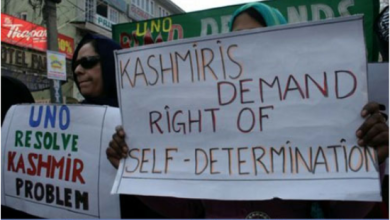
That occupation is older than the ambassador’s visit, and its illegality predates every Indian administrative arrangement imposed since 2019. UN Security Council Resolution 47 of 1948 guaranteed the Kashmiri people a free and impartial plebiscite to determine their own political future. No such plebiscite has ever been held. India’s response to this binding international commitment has been nearly eight decades of delay, deflection and, ultimately, the 2019 revocation — a unilateral constitutional manoeuvre that the UN Secretary-General’s office noted with “concern” and which no UNSC resolution has ever endorsed or legitimised. What India calls integration, international law calls the permanent alteration of a disputed territory’s status without the consent of its people.
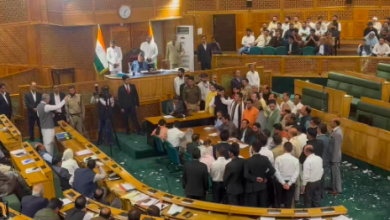
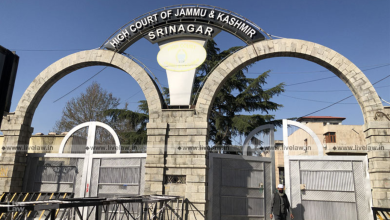
New Delhi’s answer is to point to Omar Abdullah’s government and IIOJK’s October 2024 elections as evidence of democratic normalisation and popular acceptance. But elections without meaningful executive authority cannot constitute genuine democracy. Abdullah’s government remains constitutionally subordinate to a Lieutenant Governor appointed by New Delhi, who retains control over police, public order and key administrative matters. The elected government’s repeated demands for the restoration of full statehood remain unresolved. On 5 August 2026, seven years after the constitutional changes, Kashmiris were still seeking judicial intervention for the restoration of statehood. Political participation cannot be presented as consent when elected representatives remain institutionally constrained.
India’s resistance to independent scrutiny reinforces this contradiction. The OHCHR’s 2018 and 2019 reports called for an independent international Commission of Inquiry, yet India has rejected such calls. Independent journalists continue to face significant restrictions, while international human rights mechanisms have not been granted unimpeded access to investigate conditions in the territory. Such restrictions raise serious questions about transparency and accountability.
Pakistan’s position remains that the Kashmir dispute must be resolved in accordance with international law, relevant UN Security Council resolutions and the freely expressed will of the Kashmiri people. Its protest against Ambassador Gor’s remarks therefore reflects opposition to the premature normalisation of a contested dispute.
The international community must distinguish stability from legitimacy. Elections under constrained political authority are not self-determination; diplomatic visits do not settle sovereignty; and prolonged restrictions on independent scrutiny cannot substitute for genuine accountability. Kashmir requires a political settlement grounded in law, representation and the people’s freely expressed will.
Kashmir is not India’s to administer into permanence, and it is not the world’s to forget because India has grown powerful enough to make forgetting convenient. The aspirations of the Kashmiri people — their right to determine their own future, guaranteed by international law and denied by Indian policy for more than three-quarters of a century — do not expire. The world must stop rewarding the patience of the oppressor and start honouring the rights of the oppressed.
Muhammad Ibrahim Bhatti is a graduate of BS International Relations from the International Islamic University Islamabad and a Research Assistant at the Kashmir Institute of International Relations (KIIR).