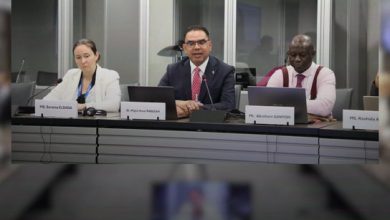
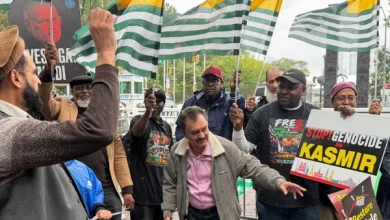
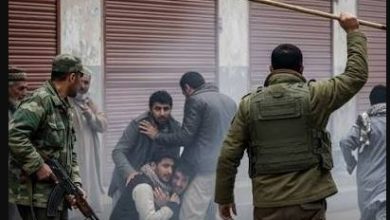
Kashmiri delegation raises alarm over environmental and health concerns in IIOJK at UNHRC
UN Special Rapporteur briefed on hazardous waste, military pollution and industrial contamination
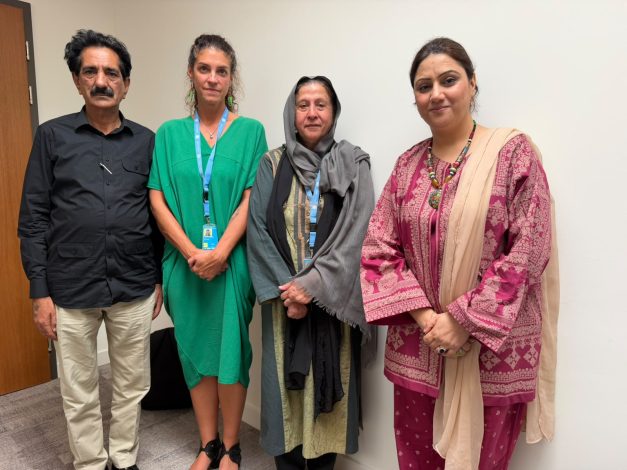 Geneva: A Kashmiri delegation today held a detailed meeting with Dr. Bethanie Carney Almroth, United Nations Special Rapporteur on the implications for human rights of the environmentally sound management and disposal of hazardous substances and wastes, at the United Nations Human Rights Council in Geneva.
According to Kashmir Media Service, the meeting took place on the sidelines of the 63rd Session of the UN Human Rights Council. The delegation comprised Advocate Parvez Ahmed Shah, General Secretary, All Parties Hurriyat Conference (APHC); Mrs. Shamim Shawal, senior Hurriyat leader; and Prof. Shugufta Ashraf, prominent human rights activist.
The delegation briefed the Special Rapporteur on the severe and prolonged exposure of Kashmiri civilians to toxic and hazardous substances and the resulting consequences for their health and human rights in Indian illegally occupied Jammu and Kashmir (IIOJK).
The delegation said that tons of biomedical waste generated by hospitals across Kashmir are being dumped untreated in open areas near civilian populations. The waste includes infectious sharps, blood-soaked bandages, pathological waste, used syringes, and expired medicines. It said that non-compliance with the Biomedical Waste Management Rules, 2016, has contributed to the spread of infectious diseases, including hepatitis, skin infections, and respiratory illnesses among people living near dumping sites.


The delegation further said that human waste, used engine oil, battery acid, diesel, coolant and other chemical waste generated by Indian army camps and military convoys are being disposed of without treatment in local streams and on land. Such hazardous discharges have contaminated drinking-water sources in several districts, contributing to gastrointestinal illnesses, kidney disorders, skin diseases and other chronic health problems. It described the exposure of civilians to hazardous substances without free, prior, and informed consent as a serious human rights concern falling within the Special Rapporteur’s mandate.
The delegation also drew the Special Rapporteur’s attention to the environmental and health impacts of the large-scale annual pilgrimage to the Amarnath cave in south Kashmir. It said Indian authorities encourage and facilitate the arrival of millions of pilgrims from mainland India every year, generating large quantities of polythene bags, plastic bottles, and other waste. It said some of this waste is dumped into the Lidder River and other water channels or burned in the open. It further said that open burning of plastic waste releases toxic substances, including dioxins and furans, which can pose serious health risks.
The delegation highlighted the plight of people living around the Khrew, Wuyan, and Khonmoh industrial belt in Pulwama district, where more than a dozen cement factories operate. It said that emissions from these factories contain hazardous dust and pollutants, including silica, chromium, lead, and alkaline compounds. It added that prolonged exposure had contributed to respiratory and other health problems among local residents, including silicosis, chronic asthma, bronchitis, lung fibrosis, eye infections, and skin diseases.
The delegation said that the number of people affected remains unknown because no comprehensive health assessment of the population has been carried out. It further said factory workers are among the worst affected due to inadequate access to personal protective equipment.