79 years of occupation: Kashmiris’ woes etched in collective memory: Report
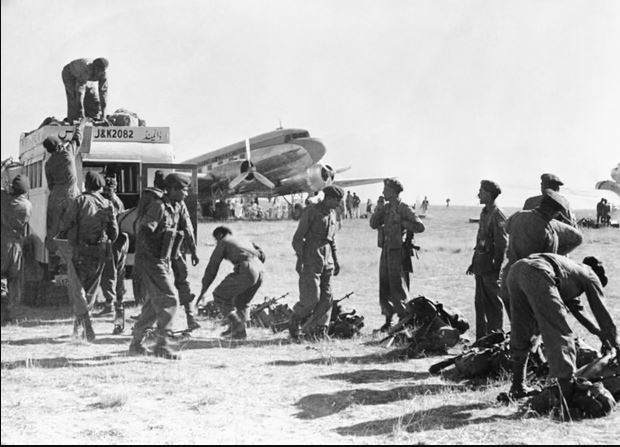
Srinagar, : October 27, 1947, marked a turning point in the history of Indian illegally occupied Jammu and Kashmir (IIOJK), when Indian troops landed in Srinagar and militarily occupied the territory, ushering in decades of suffering, repression and denial of Kashmiris’ fundamental rights.
According to a report by Raies Mir, editor, Kashmir Media Service, the day, what the Kashmiri political leaders and analysts describes as, remains etched in the collective memory of the Kashmiri people as a symbol of their continuing struggle for freedom, dignity and the right to self-determination.
Political experts and analysts based in Srinagar have said that the people of occupied Jammu and Kashmir have endured 79 years of political injustice, military occupation and human rights concerns. They maintain that the Kashmir dispute remains unresolved and requires a peaceful settlement in accordance with the aspirations of the Kashmiri people and relevant United Nations resolutions.
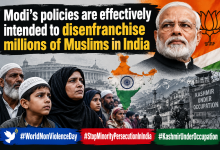
The Kashmiri people’s ordeal, they said, began on October 27, 1947, when Indian troops landed in Srinagar amid the dispute over the future of Jammu and Kashmir. Kashmiri leaders and political representatives have long maintained that the region’s future should be determined in accordance with the wishes of its people.
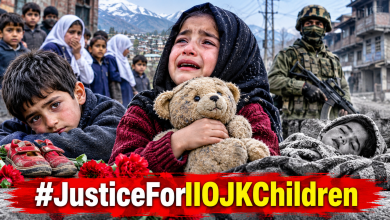
Over the decades, the territory has witnessed prolonged political unrest, widespread Indian forces deployments, restrictions on civil liberties and repeated incidents of human rights violations. The people of IIOJK continue to demand political justice and a resolution of the Kashmir dispute.
Curbs on civil liberties
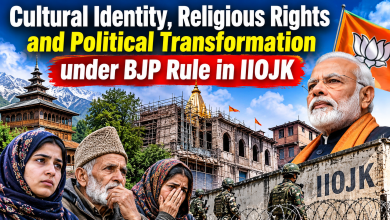
The analysts said that, alongside security measures, the Indian government has pursued policies that critics describe as an assault on the region’s cultural, religious and political identity. They have expressed concern over changes to educational curricula, restrictions on political activities and measures to promote the Hindutva ideology associated with Rashtriya Swayamsevak Sangh (RSS) and the ruling Bharatiya Janata Party (BJP).
The situation deteriorated further following the Indian BJP government’s revocation of Jammu and Kashmir’s special constitutional status on August 5, 2019. The move was accompanied by a sweeping security lockdown, restrictions on public gatherings and a communications blackout that severely disrupted daily life.
The prolonged internet shutdown and restrictions on communications affected students, journalists, businesses and families, while political voices opposing the constitutional changes faced substantial constraints.
According to figures cited in reports compiled by the Kashmir Chamber of Commerce and Industry (KCCI), businesses in occupied Jammu and Kashmir suffered estimated losses of ₹18,000 crore, or approximately $2.5 billion, during the first 120 days following the August 2019 measures. Trade bodies also estimated that nearly 500,000 jobs were lost during the initial five-month period.
Critics have further raised concerns about damage to historic religious sites and the erosion of cultural and religious rights, arguing that protecting the region’s heritage must form an essential part of any lasting political settlement.
Militarisation and rights violations
IIOJK remains heavily militarised, with Indian Army personnel, paramilitary forces, police and other agencies deployed throughout the territory. Kashmiri political representatives have repeatedly raised concerns about checkpoints, searches, cordon-and-search operations, house raids, summoning youth to police stations and restrictions on movement.
During protests and cordon-and-search operations, civilians have suffered injuries from bullets, pellets and tear-gas shells. The use of pellet-firing shotguns has attracted particular criticism because of the serious eye injuries sustained by protesters, including young people.
Human rights advocates have also raised concerns about alleged extrajudicial killings, custodial deaths, enforced disappearances, torture and arbitrary detention. They argue that accountability and independent investigations are essential to addressing these allegations and preventing further abuses.
The Armed Forces (Special Powers) Act (AFSPA), the Public Safety Act (PSA) and the Unlawful Activities (Prevention) Act (UAPA) remain central to criticism of India’s military policies in the territory. Rights advocates contend that these laws and the powers exercised under them can undermine civil liberties and make it difficult for victims to obtain justice.
Figures cited in the supplied report include thousands of killings, custodial deaths, alleged enforced disappearances, widowed women and orphaned children. The report also cites nearly 8,000 custodial disappearances and 11,286 cases of molestation or sexual violence against Kashmiri women.
Fake encounters
Several incidents have become prominent in debates over accountability for extrajudicial killings in occupied Jammu and Kashmir.
The Pathribal incident of March 2000 followed the Chattisinghpora massacre, in which 35 Sikhs were killed. Indian authorities initially claimed that five men killed in Pathribal were militants responsible for the massacre. The killings subsequently became the subject of serious controversy and investigations, with eyewitnesses saying that the men were civilians killed in a staged encounter by Indian forces.
The Machil incident of April 2010 involved the killing of three young labourers from Nadihal village in Baramulla district — Shahzad Ahmad Khan (27), Mohammad Shafi Ahmad Lone (19), and Riyaz Ahmad Lone (20) — by Indian troops and subsequently presented as militants. The case became a major example cited by rights advocates in discussions about accountability for fake encounters.
On July 18, 2020, three daily-wage labourers from Rajouri — Imtiyaz Ahmad (20), Abrar Ahmad (25), and Mohammad Ibrar (16) — who had travelled to Shopian for work, were killed in a staged encounter in the Amshipora area of Shopian and falsely labelled as foreign militants to claim a cash bounty.
The Lawaypora killings of three young men — Athar Mushtaq Wani (17), Zubair Ahmad Lone (22), and Ajaz Maqbool Ganai (24) — in Srinagar on December 30, 2020, triggered significant public outcry, political demands for transparency, and deep scepticism toward official state narratives in Jammu and Kashmir, which also generated concerns and calls for accountability.
The report further said that three young labourers from the nomadic Gujjar-Bakerwal community went missing: Riyaz Ahmed Bajad (25), whose body was recovered on March 13, 2025, Mohammad Showkat Bajad (18), whose body was recovered on March 16, 2025, and Mukhtar Ahmed Awan (24), whose body was recovered on April 11, 2025. They reportedly went missing from Ashmuji village on February 13, 2025, while travelling to attend a family function in Ashmuji, Kulgam, were killed in custody and weeks later, their bodies were recovered from the Veshow Nallah (stream).
The supplied material also cites 249 custodial and fake-encounter deaths between 2021 and 2025.
Massacres and destruction of historic sites
The history of the Kashmir conflict includes numerous incidents in which civilians were killed during search operations or protests. Kashmiri organisations and rights advocates frequently cite the following incidents in their calls for accountability:
– Gawakadal massacre, Srinagar, January 1990: Indian forces opened fire on demonstrators, killing dozens of civilians, according to accounts of the incident.
– Handwara massacre, 1990: Firing on protesters resulted in civilian deaths.
– Zakoora and Tengpora massacres, Srinagar, 1990: Demonstrators were killed in incidents of firing by Indian forces personnel.
– Hawal massacre, Srinagar, 1990: A funeral procession following the killing of Mirwaiz Maulvi Farooq came under fire from Indian paramilitary personnel, resulting in heavy casualties.
– Sopore massacre, January 1993: Indian Border Security Forces personnel were accused of killing dozens of civilians and setting fire to homes, shops and other buildings.
– Bijbehara massacre, October 1993: Indian forces opened fire on a protest march, killing more than 30 civilians, according to accounts cited by Kashmiri organisations.
– Kupwara massacre, January 1994: Civilians were killed in Indian forces firing in Kupwara town following a strike marking India’s Republic Day.
The destruction of the historic shrine of Sheikh Noor-ud-Din Noorani at Charar-i-Sharief in 1995, along with damage to surrounding residential areas in Budgam district, remains another deeply painful episode in the region’s history.
Human rights organisations, including the International People’s Tribunal on Human Rights and Justice in Kashmir (IPTK), and other groups have documented concerns about nearly 6,700 unmarked graves and mass graves across different parts of the territory.
International organisations, including Amnesty International and Human Rights Watch, have published reports over the years examining reports of extrajudicial killings, disappearances, torture and other abuses in Jammu and Kashmir.
Sexual violence
The reports of sexual violence have also remained a major human rights concern in the Kashmir conflict. Rights advocates have called for impartial investigations into reported incidents and for survivors and their families to receive justice.
The Kunanposhpora mass-rape, dating to February 1991, remains among the most widely cited cases. Residents and victim families said that women were sexually assaulted by Indian Army personnel during a cordon-and-search operation in the Kupwara district villages.
The rape and deaths of Aasiya Jan and Neelofar Jan in Shopian in May 2009 by Indian forces personnel also prompted widespread protests and demands for justice. Their deaths and the circumstances surrounding them became a major source of public concern.
The 2018 Kathua case, involving the abduction, sexual assault and murder of eight-year-old Aasifa Bano, further intensified concerns about violence against women and girls and the role of communal hatred in crimes against vulnerable communities.
Rights advocates repeatedly maintain that all incidents of sexual violence must be investigated impartially and that those responsible should be held accountable under the law.
Post-2019 measures
Political experts and analysts said that the Indian BJP government’s August 5, 2019, decision to revoke Jammu and Kashmir’s special status under Articles 370 and 35A opened a new chapter of political and constitutional uncertainty which violates the international laws of this disputed territory.
They argued that subsequent administrative, electoral and demographic measures have weakened the political representation and autonomy of the Kashmiri people. They also expressed concern that changes to the region’s cultural and educational institutions could undermine its distinctive language, heritage and religious identity.
The analysts drew comparisons between India’s policies in occupied Jammu and Kashmir and settler-colonial practices elsewhere, including in occupied Palestine. These attempts and conspiracy to impose Hindutva ideology would deepen political alienation rather than resolve the dispute.
The experts maintained that the Kashmiri people’s demand for self-determination remains central to the conflict and cannot be addressed through security or military measures alone.
They urged the international community to take sustained diplomatic action, press for the protection of fundamental rights and support a peaceful settlement consistent with the wishes of the Kashmiri people and relevant UN resolutions.
The All Parties Hurriyat Conference (APHC) has also maintained that the Kashmir dispute dates back to 1947 and has called for international intervention to secure a just and lasting resolution.
The decades of repression and political uncertainty have failed to extinguish the Kashmiri people’s aspirations for freedom, dignity and self-determination. New Delhi should be made bound to address the underlying political dispute and the international community to ensure that human rights and the people’s aspirations remain central to efforts to achieve lasting peace in the region.