Pakistan’s diplomatic missions worldwide observe Kashmir Black Day
Support for Kashmiris’ right to self-determination reaffirmed
Islamabad: Pakistan’s diplomatic missions across the globe solemnly observed Kashmir Black Day to mark 79 years since Indian troops landed in Srinagar on 27 October 1947.
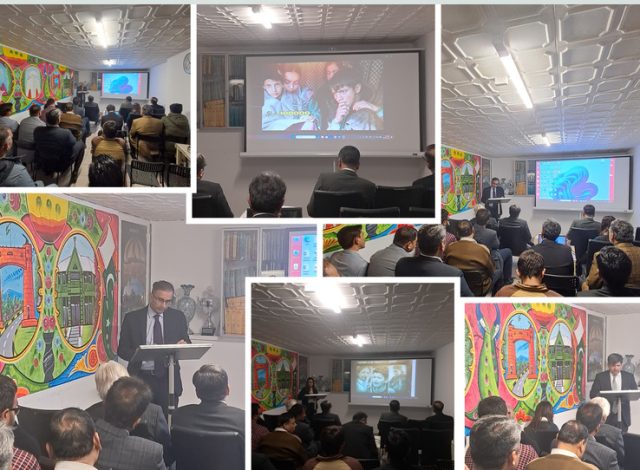 The embassies and high commissions organised commemorative events to express moral, political and diplomatic solidarity with the Kashmiri people in Indian Illegally Occupied Jammu and Kashmir (IIOJK).
Each ceremony commenced with special messages from President Asif Ali Zardari, Prime Minister Shehbaz Sharif, and Deputy Prime Minister and Foreign Minister Senator Ishaq Dar, emphasising that a lasting resolution of the Jammu and Kashmir dispute remains indispensable for enduring peace and stability in South Asia.

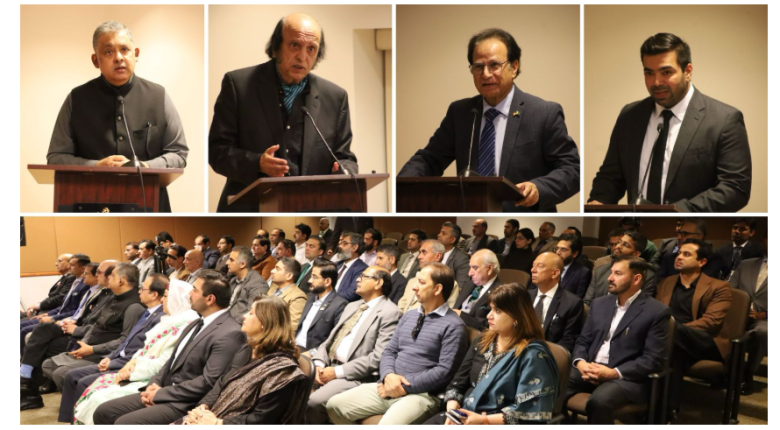 The events brought together members of the Pakistani and Kashmiri diaspora, foreign diplomats, academics, civil society advocates and media professionals.
Alongside speeches, the missions screened documentaries showcasing the resilience of the Kashmiri people and hosted photographic exhibitions documenting the humanitarian situation in IIOJK, as part of coordinated diplomatic efforts to maintain international attention on the longstanding dispute.
USA
The Embassy of Pakistan in Washington, D.C., commemorated Kashmir Black Day on Wednesday to express solidarity with the Kashmiri people against India’s occupation and continuing human rights violations in IIOJK.
Addressing the gathering, Pakistan’s Ambassador to the United States, Rizwan Saeed Sheikh, highlighted the historical and legal foundations of the Kashmiri struggle for self-determination, describing it as an essential pillar of Pakistan’s national identity and dignity.
“It is our job. It is our cause. Yesterday, today, tomorrow, and the day after, not to quit. We cannot quit. You cannot quit your genesis,” Ambassador Sheikh emphasised.
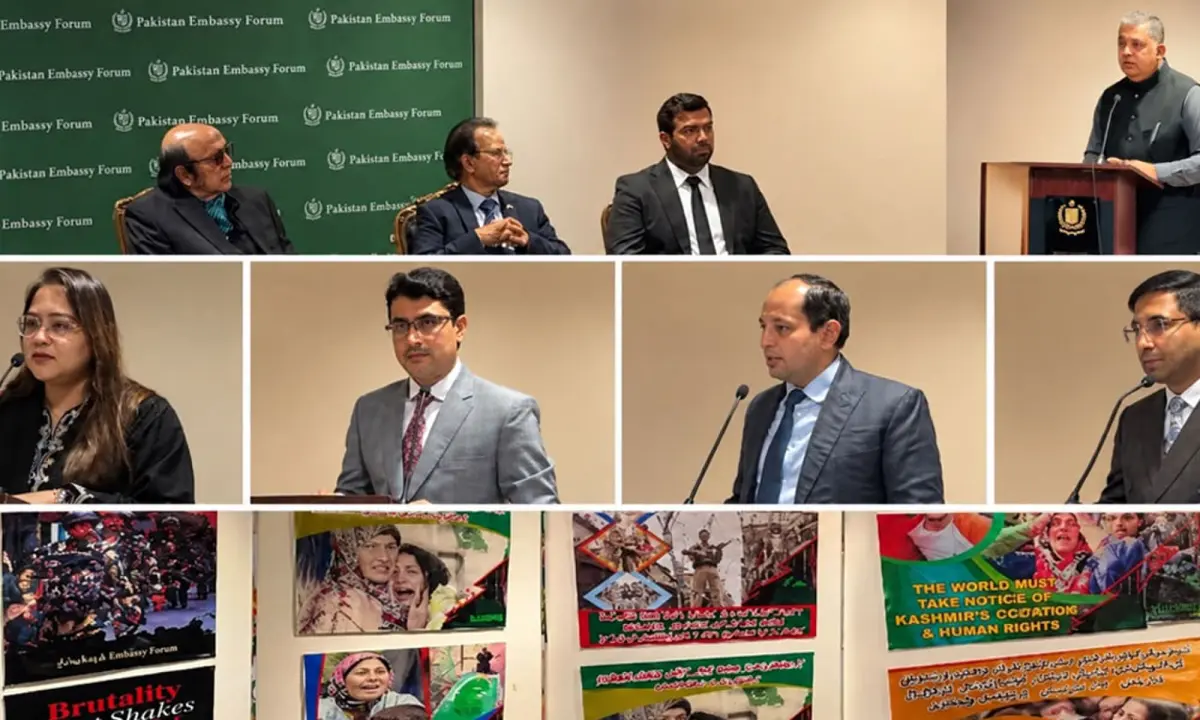 Focusing on the international dimension of the dispute, Ambassador Sheikh noted that since August 2019, the conflict had increasingly become a legal battle that must be firmly anchored in international law and UN resolutions.
“The law is on our side, the history is on our side, the geography is on our side, the religiosity is on our side, the sociology is on our side, and Kashmiris on both sides of the Line of Control are on our side. We are in it to win it, and that is what we intend to do,” he stated.
Describing Jammu and Kashmir as an unfinished agenda of the partition of the subcontinent, the ambassador referred to UN Security Council Resolution 122, emphasising that unilateral measures could not replace the internationally agreed solution.
The event featured prominent speakers, including Ali Raza Anar, president of the Foundation for American Security and Technology; Zulfiqar Ali Kazmi, executive director of The Common Grounds USA and president of Discover Pakistan TV; and Muwahid Hussain Shah, attorney-at-law, author and policy analyst. The speakers highlighted the continuing humanitarian and political crisis in IIOJK and called for sustained international attention to the plight and aspirations of the Kashmiri people.
A documentary depicting the struggles and resilience of the Kashmiri people was screened during the event.
New York
The Consulate General of Pakistan in New York, in collaboration with Pakistan’s Permanent Mission to the United Nations, observed Kashmir Black Day.
In his keynote address, Consul General Aamer Ahmed Atozai reaffirmed Pakistan’s unwavering political, diplomatic and moral support for the Kashmiri people’s inalienable right to self-determination.
He emphasised that Pakistan continued to raise the dispute at the UN in the context of human rights, peace and security, and international law, with national consensus behind the Kashmiri people’s right to self-determination as enshrined in the UN Charter and Security Council resolutions.
 In his opening remarks, Pakistan’s Acting Permanent Representative to the United Nations, Ambassador Muhammad Usman Iqbal Jadoon, highlighted continuing human rights violations in IIOJK, including restrictions on fundamental freedoms, political detentions, an overwhelming military presence and attempts to alter the demographic composition of the occupied territory.
He reaffirmed Pakistan’s principled support for a just and peaceful settlement of the dispute in accordance with relevant UN resolutions and the wishes of the Kashmiri people.
The event also featured speeches by guests, including Ghulam Shah Qadir, president of PML-N AJK; Azra Dar, human rights commissioner of Nassau County, New York; Farooq Tabassum, former principal secretary to the AJK government; and senior Kashmiri leaders Ghulam Nabi Fai and Taj Khan.
The speakers highlighted the grave human rights situation in IIOJK, condemned alleged atrocities by Indian occupation forces and urged the international community to take meaningful steps to end the suffering of the Kashmiri people. The event concluded with a renewed commitment to supporting their struggle for freedom, dignity and self-determination.
Norway
The Embassy of Pakistan in Oslo held an event to observe Kashmir Black Day, attended by Norwegian politicians, current and former members of the Norwegian Parliament, civil society representatives, media professionals, members of the Pakistani and Kashmiri communities, and friends of Kashmir.
The speakers included Labour Party MP Frode Jacobsen, former Deputy Speaker of the Storting Akhtar Chaudhry, former MP Lars Rise, former MP and writer Khalid Mahmood, and community representatives Athar Ali and Nasir Chaudhry.
The speakers paid tribute to the resilience and sacrifices of the Kashmiri people and urged the international community to take notice of the continued denial of their fundamental rights in IIOJK. They described the Kashmiri people’s longstanding struggle for self-determination as a legitimate and inalienable democratic right.
In his address, Pakistan’s Ambassador to Norway and Iceland, Asim Ali Khan, highlighted grave human rights violations in IIOJK.
He reaffirmed Pakistan’s unwavering moral, political and diplomatic support for the Kashmiri people’s struggle for self-determination, as recognised in relevant United Nations Security Council resolutions. The ambassador thanked Norwegian political figures and the Pakistani-Norwegian community for raising their voices in support of Kashmiris.
Participants expressed solidarity with the Kashmiri people and underscored the importance of a just and peaceful settlement of the Jammu and Kashmir dispute in accordance with their aspirations and relevant UNSC resolutions.
Canada
The Pakistan High Commission in Ottawa and the consulates general in Toronto, Montreal and Vancouver organised events to express solidarity with the people of IIOJK and support their struggle for the inalienable right to self-determination.
The solemn event at the High Commission included a documentary screening, a photographic exhibition and remarks by human rights advocates highlighting the Kashmir dispute and the oppression faced by civilians in IIOJK.
Addressing the participants, Pakistan’s High Commissioner, Muhammad Saleem, emphasised that the Jammu and Kashmir dispute remained a longstanding unresolved issue on the UN Security Council’s agenda. He called upon the international community, human rights organisations and civil society groups to condemn human rights violations in IIOJK and support a just and peaceful resolution of the dispute.
Kashmir Black Day commemorates the occupation of Jammu and Kashmir by India on 27 October 1947, against the will and aspirations of its people. The event reaffirmed Pakistan’s resolve to continue highlighting the dispute and expressing solidarity with the people of IIOJK until their legitimate aspirations for self-determination are fulfilled.
Belgium
The Embassy of Pakistan in Brussels observed Kashmir Black Day, with speakers reaffirming Pakistan’s solidarity with the people of IIOJK and highlighting the urgent need for a just and lasting resolution of the Jammu and Kashmir dispute in accordance with relevant United Nations Security Council resolutions and the aspirations of the Kashmiri people.
Pakistan’s Ambassador to the European Union, Belgium and Luxembourg, Rahim Hayat Qureshi, underscored the importance of upholding international law and implementing relevant UNSC resolutions to ensure a just settlement of the dispute in accordance with the wishes of the Kashmiri people.
He emphasised that a peaceful and lasting resolution was essential for enduring peace and stability in South Asia and beyond. He reaffirmed Pakistan’s continued commitment to supporting the Kashmiri people in their pursuit of self-determination, dignity and justice.
As part of the observance, the ambassador inaugurated a photographic exhibition titled “Kashmir Black Day: A Forgotten Tragedy”, highlighting the human rights situation in IIOJK. A documentary depicting the plight of the Kashmiri people under Indian occupation was also screened.
Azerbaijan
The Embassy of Pakistan in Baku observed Jammu and Kashmir Black Day on 27 October 2026 to commemorate the events of 27 October 1947, when Indian troops landed in Srinagar and occupied Jammu and Kashmir against the will of its people.
In her address, Chargé d’Affaires Sara Ijaz reaffirmed Pakistan’s solidarity with the Kashmiri people and their inalienable right to self-determination.
She highlighted continuing human rights violations in IIOJK, particularly following the revocation of Articles 370 and 35-A of the Indian Constitution on 5 August 2019. She drew attention to arbitrary arrests, extrajudicial killings, restrictions on media and communications, and attempts to alter the demographic composition of the territory.
She underscored that Jammu and Kashmir remained an internationally recognised dispute and that unilateral actions could not change its disputed status or undermine the legitimate right of the Kashmiri people to self-determination in accordance with relevant United Nations Security Council resolutions and international law. She also appreciated Azerbaijan’s consistent support for the Jammu and Kashmir cause.
A photographic exhibition highlighting the human rights situation in IIOJK was also organised.
France
The Embassy of Pakistan in France organised a special event to mark Kashmir Black Day and express solidarity with the Kashmiri people in IIOJK.
Ambassador Mumtaz Zahra Baloch outlined the history of India’s occupation of Jammu and Kashmir and the suppression of the Kashmiri people. She said durable peace in South Asia depended on a peaceful resolution of the dispute in accordance with UNSC resolutions and the wishes of the Kashmiri people. For generations, she said, the Kashmiri people had looked to the international community, especially the United Nations, to hold India accountable for its actions in IIOJK.
India’s unilateral measures and continuing abuses since 5 August 2019 had further aggravated the situation and deepened the alienation of the Kashmiri people, who remained united in rejecting attempts to alter the demographic composition of the occupied territory, she added.
The ambassador said the Kashmir dispute had strong political, legal and moral foundations and reaffirmed Pakistan’s continued political, diplomatic and moral support for the Kashmiri people’s legitimate struggle.
Speakers condemned alleged violations of human rights and international humanitarian law by Indian occupation forces against Kashmiri men, women and children. They called upon the international community and media to highlight the suffering of the Kashmiri people and hold India accountable.
Iran
The Embassy of Pakistan in Iran organised an event at Pakistan House to observe Kashmir Black Day and reaffirm Pakistan’s support for the Kashmiri people’s right to self-determination.
In his welcome remarks, Pakistan’s Ambassador to Iran, Imran Ahmed Siddiqui, highlighted the historical significance of 27 October 1947, when Indian troops landed in Srinagar, marking the beginning of a prolonged period of suffering for the people of Jammu and Kashmir.
He noted that India had brought the Jammu and Kashmir question before the United Nations Security Council on 1 January 1948. On 21 April 1948, UNSC Resolution 47 envisaged a free and impartial plebiscite under UN auspices to determine the future of Jammu and Kashmir. However, implementation of the UN resolutions remained pending, he added.
Ambassador Siddiqui reiterated Pakistan’s commitment to extending moral, political and diplomatic support to the Kashmiri people.
He emphasised that the credibility of the international order rested on the principle that commitments must be honoured, international law applied consistently, and people’s rights not sacrificed to political expediency.
He urged the international community to call upon India to implement relevant United Nations Security Council resolutions, enabling the people of Jammu and Kashmir to exercise their right to self-determination in accordance with their aspirations.
Guest speakers from the international relations departments of Iranian universities underscored the importance of resolving the longstanding dispute through the implementation of relevant UN resolutions in letter and spirit.
A documentary highlighting the plight of the Kashmiri people was screened, and a photographic exhibition depicted the hardships faced by Kashmiris and their continued struggle for fundamental rights and self-determination.
An Iranian poet recited a poem dedicated to Kashmir, expressing solidarity with the Kashmiri people and highlighting their enduring quest for justice and dignity.
Saudi Arabia
The Consulate General of Pakistan in Jeddah organised a community gathering to commemorate Kashmir Black Day on 27 October. Prominent members of the Pakistani and Kashmiri communities, along with Saudi guests, attended the event.
 Pakistan’s Consul General in Jeddah, Syed Mustafa Rabbani, and Pakistan’s Ambassador to the Organisation of Islamic Cooperation (OIC), Syed Mohammad Fawad Sher, were the keynote speakers. Kashmir Committee Chairman Masood Puri and Jammu and Kashmir Overseas Community Chairman Arif Mughal also highlighted the plight of the people of IIOJK.
A documentary illustrating the situation in IIOJK was screened, providing participants with an overview of alleged violations of international law and the challenges faced by local residents.
The speakers underlined the historical significance of the day and condemned alleged abuses by Indian forces in IIOJK, particularly since 5 August 2019. They paid tribute to the sacrifices of Kashmiris and stressed Pakistan’s continued support for their cause.
The gathering reiterated Pakistan’s moral, political and diplomatic support for the Kashmiri people’s struggle for self-determination, as recognised in UN Security Council resolutions.
Consul General Rabbani acknowledged the consistent support of the OIC and the Saudi government for the Kashmir cause.
In a gesture of solidarity, a book by Dr Talha Al Kashmiri was launched at the event. Titled Bayna Ashjar al-Jinar, it was described as the first Arabic-language novel on Kashmir. The novel explores themes of humanity, love, culture and the beauty of the region in the context of the Kashmir issue.
The author, a Pakistani expatriate of Kashmiri origin living in Saudi Arabia, shared his experience of writing the work and thanked the Kashmiri community and the Kashmir Committee Jeddah for supporting its publication. Copies were distributed among attendees. The event concluded with a collective prayer for the people of Kashmir and their struggle for freedom.
United Kingdom
The Pakistan High Commission in London organised a solemn event to commemorate Jammu and Kashmir Black Day.
British parliamentarians, including Lord Qurban Hussain, Lord Shaffaq Mohammed, Baroness Nosheena Mobarik, Adnan Hussain MP, Afzal Khan MP and Ayoub Khan MP, attended the event, along with British Kashmiris, civil society activists and media representatives.
In his keynote address, High Commissioner Tipu Usman condemned what he described as a climate of fear and brutal repression imposed by Indian occupation forces in IIOJK. He said the people of the occupied territory had endured a prolonged military siege accompanied by torture, enforced disappearances and extrajudicial killings.
The high commissioner emphasised that India’s actions violated international law and fundamental moral principles and threatened regional and global peace and security. He urged the international community to hold India accountable for violations of UN Security Council resolutions concerning the right to self-determination.
High Commissioner Usman appreciated British parliamentarians for raising the Jammu and Kashmir dispute in Parliament and with the British government. He reiterated the High Commission’s commitment to working with parliamentarians and the wider Kashmiri community to highlight the Kashmir cause.
British parliamentarians and other speakers expressed solidarity with the people of Jammu and Kashmir. Members of Parliament emphasised that Jammu and Kashmir was not merely a bilateral issue between Pakistan and India but a longstanding international dispute.
They urged the international community to call upon India to end human rights violations in IIOJK and honour its international commitments regarding a free and fair plebiscite in the occupied territory.
Türkiye
The Embassy of Pakistan in Ankara commemorated Kashmir Black Day with a solemn ceremony expressing solidarity with the people of IIOJK and reaffirming Pakistan’s support for their right to self-determination.
A documentary highlighting the historical significance of Kashmir Black Day and the longstanding struggle of the Kashmiri people was screened.
Speakers included Güray Alpar, president of the Geopolitical Foresight Institute; Mustafa Kaya, deputy chairman of the Felicity Party (Saadet Partisi); Prof. Dr Recep Akdağ, former deputy prime minister and minister of health of Türkiye; and Shaiq Ahmed Bhutto, chargé d’affaires at the Embassy of Pakistan in Ankara.
Alpar described the struggle of the Kashmiri people as a matter of human dignity and emphasised their right to determine their own future. He expressed concern that their voices had not received the international attention they deserved and highlighted the importance of solidarity with their aspirations.
Mustafa Kaya underlined the connection between the Kashmir and Palestine issues, observing that resolving both disputes was essential for lasting peace. He also drew attention to similarities between policies pursued by India in Kashmir and those implemented by Israel in the occupied Palestinian territories. He reaffirmed Türkiye’s support for the Kashmiri people’s struggle, irrespective of political affiliations.
Prof. Dr Recep Akdağ highlighted the importance of justice, dialogue and international solidarity in addressing longstanding conflicts. He stressed that the people of Kashmir must be allowed to exercise their right to self-determination in accordance with relevant United Nations resolutions.
In his concluding remarks, Shaiq Ahmed Bhutto recalled the events of 27 October 1947 and stated that “a dispute cannot be considered resolved simply because it has endured for generations.” He reaffirmed Pakistan’s commitment to a peaceful settlement in accordance with international law, relevant UN Security Council resolutions and the wishes of the Kashmiri people.
He also expressed appreciation for Türkiye’s consistent support. He criticised India’s unilateral decision in April 2025 to hold the Indus Waters Treaty in abeyance, stressing that the treaty remained a cornerstone of regional water security and stability. He underscored that shared water resources must not be used as instruments of political pressure and called for respect for international law and existing treaty obligations.
United Arab Emirates
An event was held at the Embassy of Pakistan in Abu Dhabi on 27 October 2026 to observe Kashmir Black Day.
In his address, Ambassador Shafqat Ali Khan paid tribute to the people of IIOJK and praised their struggle for self-determination.
He stated that India’s actions could not deter the Kashmiri people from their struggle. He added that India’s measures violated the UN Charter and Security Council resolutions and urged the international community to play its role in addressing human rights abuses by the occupying forces.
The ambassador said 27 October 1947 remained one of the darkest days in the history of Jammu and Kashmir. He described it as the beginning of an occupation against the wishes of the people and the principles of Partition. Nearly eight decades later, he said, the occupation continued amid repression and the failure to implement UN Security Council resolutions affirming the Kashmiri people’s right to self-determination.
He recalled that the Security Council had recognised that the final disposition of Jammu and Kashmir should be determined through a free and impartial plebiscite under UN auspices. He said India had accepted the resolutions and was bound under the UN Charter to implement them. Instead, he alleged, India had obstructed efforts to hold the plebiscite and, since 5 August 2019, had sought through unilateral measures to alter the territory’s status, demography and political character.
The ambassador added that Pakistan’s leadership had consistently raised the Jammu and Kashmir dispute at the United Nations and other international forums, drawing attention to the plight of the people of IIOJK.
A documentary depicting the occupation and alleged human rights violations by Indian security forces in Kashmir was also screened.
 Russia
The Embassy of Pakistan observed Kashmir Black Day at Pakistan House to mark 27 October 1947, when Indian troops entered Jammu and Kashmir.
The occasion served as a reminder of the longstanding dispute and the importance of its peaceful resolution in accordance with relevant United Nations Security Council resolutions.
Addressing the gathering, Pakistan’s Ambassador to the Russian Federation, Faisal Niaz Tirmizi, highlighted the historical background of the dispute and the challenges faced by the Kashmiri people. He reiterated Pakistan’s position and emphasised the need for a just, peaceful and lasting resolution in accordance with relevant UN Security Council resolutions and the aspirations of the Kashmiri people.
The ambassador also referred to the human rights situation in IIOJK, underscoring the importance of sustained international attention to humanitarian concerns in the region.
A documentary highlighting the plight of the Kashmiri people was screened during the ceremony, providing insight into the challenges faced by the local population.
Afghanistan
A solemn ceremony was held at the Pakistan Embassy in Kabul to observe Jammu and Kashmir Black Day, marking 79 years since Indian forces landed in Srinagar on 27 October 1947, beginning a prolonged and tragic chapter in the history of Jammu and Kashmir.
Speakers highlighted the continued detention of Kashmiri political leaders and human rights defenders and called for sustained international attention to the situation.
Pakistan’s position was reiterated that lasting peace and stability in South Asia remained linked to a just and peaceful resolution of the Jammu and Kashmir dispute in accordance with relevant United Nations Security Council resolutions and the aspirations of the Kashmiri people.
Participants paid tribute to the sacrifices of Kashmiri men, women and children in pursuit of their right to self-determination, affirming that their aspirations could not be extinguished through coercion or repression. They reaffirmed their unwavering moral, diplomatic and political support for the Kashmiri people and their cause.