Sheshnag Under Siege: The Strategic Calculus Behind Environmental Destruction in IIOJK
Dr. Waleed Rasool
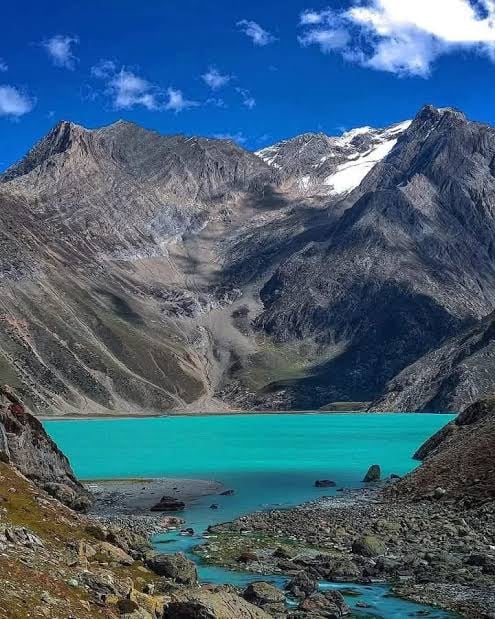
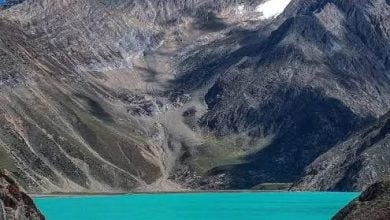
Bringing Indian illegally occupied Jammu and Kashmir (IIOJK) directly under Delhi’s tight clutches was core to the Modi regime’s strategic calculus. During the Modi regime in India, religious sensitivities have repeatedly been exploited to polarise society and consolidate majority support. The same political formula is now being applied in the occupied territory, where development projects are increasingly intertwined with the politics of Hindutva. Sheshnag, identified among fourteen highly vulnerable sites facing the threat of extinction, has become a serious environmental concern. Located in a seismically active region, it is exposed to avalanches, cloudbursts, flash floods, landslides and severe soil erosion. Disturbing this fragile mountain ecosystem through large-scale construction could have consequences extending far beyond the immediate project area.
The proposed NH-501 corridor is being justified largely in the name of facilitating Hindu pilgrims travelling to the Amarnath cave, believed in Hindu mythology to be associated with Lord Shiva. This cave was discovered by a Muslim shepherd. Kashmiri Muslims are facilitating the Hindu pilgrimage to the cave. The real question is whether Mdi led regime justifies placing an already fragile ecosystem under additional pressure, particularly when the developmental needs of Kashmir’s Muslim-majority population remain largely unaddressed.
An investigative report published by Kashmir Times has highlighted another dimension of the proposed highway. Its strategic significance reportedly extends beyond pilgrimage access, with the potential to strengthen India’s military and administrative control by connecting the region with Ladakh through the Bijbehara Emergency Airstrip, currently under the control of India’s Ministry of Defence. If these findings are substantiated, the project cannot be viewed merely as a road for pilgrims. Its wider implications for the consolidation of occupation deserve serious scrutiny.


The seasonal nature of the Amarnath pilgrimage, which has continued for centuries, also raises questions about the necessity of such extensive infrastructure in environmentally sensitive mountains. The reported lack of adequate scrutiny of the Category-B environmental assessment further raises concerns about transparency and accountability.
Kashmiris have not remained silent on the environmental consequences of mass pilgrimage. During the 2008 Amarnath land controversy, a massive agitation led by the late Syed Ali Shah Geelani brought these concerns into sharp focus. Geelani made it clear that the objection was not to religious pilgrimage but to the environmental consequences of accommodating an ever-increasing number of visitors in a fragile region. His warning remains relevant: religious freedom cannot become a justification for ecological destruction.The Valley, once celebrated for its natural beauty and freshwater resources, is already under severe environmental stress.
Under the Modi regime, the slogan of Vikas (development) increasingly invites scrutiny when infrastructure projects threaten the very natural resources upon which local communities depend. Why should an ecologically sensitive region bear such a heavy environmental cost to facilitate access to a pilgrimage destination? The concerns are not confined to Sheshnag. The proposed road raises questions about land acquisition, deforestation, biodiversity loss and damage to wildlife habitats, particularly around ecologically sensitive areas such as Aru and Thajwas. Environmental, wildlife and forestry authorities should have been meaningfully involved before decisions of this scale were pursued. Development without proper environmental assessment is not development; it is a recipe for long-term destruction.
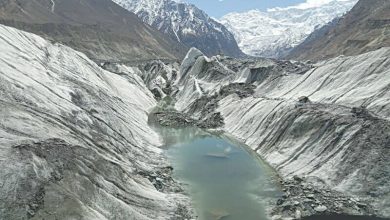
Sheshnag itself is under growing ecological pressure. Rising temperatures, human activity, waste accumulation and seasonal tourism are already testing the limits of this high-altitude landscape. Bringing heavy traffic and additional infrastructure into such restricted terrain could overwhelm its natural carrying capacity. Road excavation through fragile mountains also risks destabilising slopes, disturbing natural drainage and accelerating erosion. The resulting damage would not remain confined to the construction site; it could affect forests, glaciers, wildlife and communities downstream.
For Kashmiris, who have endured decades of conflict, displacement and insecurity since 1990, another threat to their natural resources is particularly alarming. The proposed NH-501 corridor is therefore not simply an infrastructure project. It raises a fundamental question about whose interests are being served and who will bear the environmental cost. The importance of Sheshnag extends well beyond its immediate surroundings. This high-altitude glacial lake feeds the Lidder River, which in turn contributes to the Jhelum River system. Any serious disruption to this interconnected ecosystem could affect water resources and the ecological balance of the wider Valley.
According to the findings attributed to the Comptroller and Auditor General of India, Sheshnag has been identified among vulnerable glaciers and associated water bodies facing degradation. The issue has also been discussed in the Kashmir Assembly. The Kashmir Times investigation published on 24 November has brought these environmental concerns and the proposed highway’s implications back into public debate. The authorities cannot dismiss such questions as opposition to development or religious pilgrimage. The issue is whether the environmental consequences have been properly assessed and whether the voices of the local population have been heard.
Sheshnag is not merely a pilgrimage destination or a strategic corridor. It is part of Kashmir’s living ecological heritage and soul, sustaining the Lidder and contributing to the Jhelum. Its destruction would be an irreversible loss. No political project, however strategically attractive, can justify sacrificing an ecosystem that sustains generations of Kashmiris.