As the first three months of 2026 have passed, there is still a heavy silence over homes in Indian Illegally Occupied Jammu and Kashmir, filled with quiet fear and grief. For many families, the day begins not with certainty, but with the need to confirm that their loved ones are safe. Since January, at least sixteen Kashmiris have lost their lives in operations conducted by Indian troops. These are not distant or abstract figures; they are individuals whose absence is felt in empty chairs, unanswered calls, and lives abruptly interrupted. Behind each death is a family struggling to process loss without clarity, holding onto memories while searching for answers that rarely come.
The consequences of such incidents extend far beyond the immediate loss of life. Each killing reverberates through families and communities, leaving behind a trail of emotional and economic devastation. In a region where extended families often rely on a single breadwinner, the sudden loss of a young man can plunge households into long-term hardship. Yet the grief is not only material. It is also deeply psychological. Parents are left grappling with unanswered questions, siblings with unresolved anger, and entire neighborhoods with a quiet but persistent fear of what might come next.
Parallel to these fatalities is a surge in arrests that has further strained the social fabric. Hundreds of individuals, ranging from political workers to students and ordinary civilians, have reportedly been detained in recent months. For families, an arrest is not simply a legal event; it is the beginning of a prolonged ordeal. Information about detainees is often limited, legal processes can be opaque, and the emotional toll of uncertainty becomes a daily burden. The absence of clear communication fuels anxiety, leaving families suspended between hope and despair.
Meanwhile, daily life continues to be disrupted by frequent cordon-and-search operations. These exercises, carried out across towns and villages, impose a form of collective restriction that affects entire communities. Homes are searched, movement is curtailed, and daily routines are brought to an abrupt halt. For adults, these intrusions are a source of humiliation and stress. For children, they are formative experiences that shape their understanding of authority, safety, and normalcy. Growing up in such an environment risks normalizing a state of perpetual insecurity.
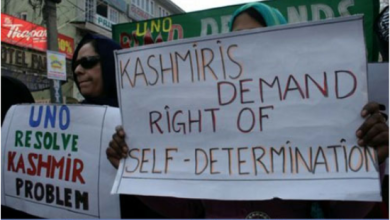
Public protests, often sparked by killings or arrests, have also become flashpoints for further confrontation. Demonstrators—many of them young—take to the streets to voice their anger and grief, only to be met with forceful crowd-control measures. Tear gas, baton charges, and other forms of coercion have reportedly resulted in numerous injuries. These cycles of protest and repression reinforce a pattern in which expressions of dissent are met not with dialogue, but with force, thereby entrenching resentment and alienation.
Another dimension of the crisis lies in the reported seizure of properties. Authorities describe these actions as lawful interventions, often linked to security concerns. However, for affected families, the loss of a home or business carries consequences that go far beyond legality. Property is not merely an economic asset; it is tied to identity, heritage, and a sense of belonging. Its confiscation can feel like a form of collective punishment, deepening feelings of marginalization and insecurity.
Taken together, these developments have fostered a pervasive climate of fear in IIOJK. Parents worry about the safety of their children, particularly young men who are frequently the focus of sieges and search operations. Students face interruptions to their education, undermining their prospects and sense of stability. Businesses struggle to function amid recurring disruptions, further weakening an already fragile economy. In such an environment, even routine activities—attending school, opening a shop, visiting a neighbor—are overshadowed by uncertainty.
It is important to recognize that Kashmir’s current predicament is not an isolated moment, but part of a longer trajectory shaped by decades of conflict and political impasse. Yet the persistence—and in some respects, intensification—of these patterns raises urgent questions about accountability and the protection of fundamental rights. Allegations of arbitrary detention, excessive use of force, and collective punishment cannot be dismissed as routine aspects of a security strategy. They require independent scrutiny, transparent investigation, and, where necessary, redress.
At the same time, the resilience of the Kashmiri people remains striking. Communities continue to extend solidarity to those in distress, offering support to families affected by violence or detention. Despite restrictions and challenges, voices calling for dignity, justice, and peace have not been silenced. This resilience, however, should not be mistaken for acceptance. It is a testament to endurance, not an endorsement of the conditions that necessitate it.
Ultimately, the path forward cannot be paved through force alone. Sustainable peace requires a shift from control to engagement, from suppression to dialogue. It demands a commitment to upholding human dignity and ensuring that grievances are addressed through lawful and transparent means. Without such efforts, the cycle of fear and unrest is likely to persist, with consequences that extend far beyond the region itself.
As the situation continues to evolve, it is essential to move beyond statistics and recognize the human stories they conceal. Each number represents a life interrupted, a family altered, a future uncertain. Addressing this crisis requires not only political will, but also a renewed emphasis on empathy, accountability, and the universal principles of human rights. Only then can there be a genuine hope of transforming a landscape of suffering into one of peace and possibility.
The writer is a student of Political science at the University of Punjab. Currently she is serving as an intern at the Kashmir Institute of International Relations, Islamabad.