The Kashmir conflict remains one of the most violent and long-standing disputes in modern history. Since 1989, Indian occupied Jammu & Kashmir has witnessed large-scale massacres, extrajudicial killings, enforced disappearances and widespread suppression of dissent. Despite international condemnation and repeated calls for justice, the cycle of violence continues. The revocation of Article 370 and 35A in August 2019 further intensified tensions, stripping Kashmir of its special status and leading to even harsher crackdowns. This article aims to explore the numerous massacres that have taken place in Kashmir, the systematic suppression of dissent and the region’s current situation.
Massacres in Kashmir: A Dark Legacy
Massacres in IoK are not isolated incidents but part of a broader pattern of state violence. Indian occupation forces have repeatedly used excessive force to suppress protests, often leading to mass killings. Some of the most tragic massacres include, on January 21, 1990, Indian occupation forces opened fire on unarmed protestors at Gaw Kadal in Srinagar, killing over 50 people and injuring dozens. The protest was against the molestation of women by occupation forces during house-to-house searches. The indiscriminate firing on civilians is considered one of the worst massacres in Kashmir’s history, setting the stage for more brutal crackdowns in the following years. The town of Kupwara witnessed another horrific massacre when Indian forces killed 27 civilians. The killings occurred during a protest against the arbitrary arrests and torture of Kashmiri youth. Despite multiple eyewitness accounts and documentation by human rights groups, no justice has been served. The Bijbehara Massacre saw Indian occupation forces kill at least 43 protestors and injure more than 100. The demonstrators were calling for the implementation of United Nations resolutions that call for a plebiscite in Kashmir. This massacre was widely condemned, but once again, no one was held accountable.The town of Sopore experienced one of the worst atrocities when Indian paramilitary forces went on a rampage, killing more than 50 civilians and burning down over 400 homes and shops. This was an act of collective punishment, aimed at terrorizing the local population. Massacres like these have left a deep scar on Kashmir’s social and political fabric. Thousands of families have lost loved ones, while survivors continue to struggle for justice in an environment of impunity.
Silencing of Kashmiri Dissent
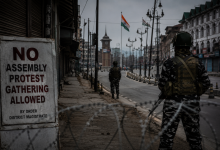
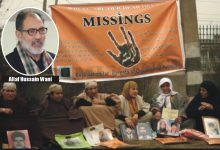
Alongside physical violence, the suppression of political expression in Kashmir has intensified over the years. Kashmiri leaders, activists, journalists and civilians who speak out against human rights violations face arrests, torture and long detentions without trial. The cases of Shaheed Muhammad Maqbool Bhat and Shaheed Muhammad Afzal Guru highlight the silencing of Kashmiri voices through capital punishment.
Maqbool Bhat, a prominent Kashmiri nationalist leader, was hanged in Tihar Jail on February 11, 1984. He was buried within the prison and his body was never returned to his family. Similarly, Afzal Guru was executed on February 9, 2013, on charges of conspiracy in the 2001 Indian Parliament attack. His trial was widely criticized for lack of due process and his execution was seen as politically motivated. Like Bhat, his remains were buried within the jail premises, denying his family the right to perform his last rites.
Prominent Kashmiri political figures such as Syed Ali Shah Geelani and Yasin Malik have also faced repeated house arrests and imprisonment. Geelani, a veteran leader of the resistance movement, was under house arrest for years before his death in 2021. Yasin Malik, the leader of the Jammu and Kashmir Liberation Front (JKLF), has been imprisoned on various charges, including terrorism-related offenses, which many see as politically motivated attempts to silence dissent.
Post-2019: The Abrogation of Article 370 and Its Consequences
On August 5, 2019, the Indian government revoked Article 370 and 35A, stripping Jammu and Kashmir of its special autonomy. This move was met with widespread resistance from Kashmiri people, but protests were swiftly crushed. The government imposed an unprecedented security lockdown, cutting off communication channels, detaining thousands of civilians and curbing press freedoms.
Since the revocation of Article 370 on August 5, 2019, the scale of repression in Kashmir has intensified significantly. Reports indicate that at least 966 people have been killed, while 2,455 individuals have been tortured or critically injured. The number of civilian arrests has risen to 25,628, highlighting the extent of crackdowns and mass detentions. The situation continues to deteriorate, with occupation forces employing severe measures to silence dissent and suppress any form of resistance in the region. The abrogation of Article 370 has also changed Kashmir’s demographics and political landscape. New laws have allowed non-Kashmiris to settle in the region, sparking fears of demographic engineering aimed at diluting Kashmiri identity. Land reforms have enabled outside businesses to acquire property, further marginalizing the local population.
Organizations such as Amnesty International, Human Rights Watch and the United Nations have repeatedly raised concerns over human rights violations in Kashmir. Reports have documented mass arrests, enforced disappearances and the use of torture in detention centers. The Shopian Rape Case (2009) remains a haunting example of sexual violence perpetrated by Indian occupation forces , leading to widespread protests. The international response, however, has been largely muted. While Pakistan has consistently raised the Kashmir issue at forums such as the United Nations and the Organization of Islamic Cooperation (OIC), global powers have largely remained silent due to strategic interests with India. The UN Security Council Resolutions of 1948 and 1949, which call for a plebiscite in Kashmir, remain unimplemented.
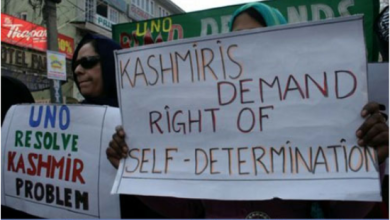
Despite decades of brutal repression, Kashmiri youth continue to resist in various ways. Many participate in protests, while others use social media to document human rights violations. The killing of Burhan Wani in 2016 ignited a wave of mass protests, demonstrating that the younger generation remains committed to the struggle for self-determination. The Indian government’s approach, however, has been to crush dissent through military means. Internet shutdowns, mass detentions and restrictions on movement have become routine. Yet, the resilience of the Kashmiri people remains strong. The historical and contemporary violence faced by Kashmiri people highlights the urgent need for justice, accountability and a peaceful resolution based on international law. Until the grievances of the Kashmiri people are addressed, peace in the region will remain elusive. The world must not ignore Kashmir’s suffering and the international community must act to ensure justice for the victims of mass killings and state repression.
 Ifra Bibi is a student at the National University of Modern languages, pursuing a bachelor’s degree in International Relation and is currently serving as an intern at Kashmir Institute of International relations.