Quad brushes off India’s Pakistan accusation over Pahalgam attack
Humayun Aziz Sandeela
 India’s attempt to rally international condemnation against Pakistan over the recent Pahalgam attack in occupied Kashmir has hit a diplomatic wall. The latest joint statement by the Quadrilateral Security Dialogue — or Quad — comprising the United States, Australia, Japan, and India, deliberately avoids assigning blame, a move seen as a significant setback for New Delhi’s narrative strategy.
Released by the U.S. State Department following the July 2 ministerial meeting in Washington, the statement unequivocally condemned terrorism but refrained from naming any state actor. Instead, it called on all United Nations member states to cooperate with “relevant authorities” in bringing the perpetrators to justice — language that conspicuously omitted Pakistan, the target of India’s repeated accusations.
India pushed for Pakistan’s name in the QUAD statement after the Pahalgam attack.
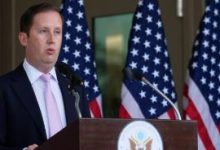
Not only did QUAD refuse they didn’t even call Kashmir part of India.
Diplomatic slap, politely delivered. 🇵🇰💥 pic.twitter.com/Yg9tyqrVHN
— Mansoor Ahmed Qureshi (@MansurQr) July 3, 2025
This omission, though subtle, is telling. India’s External Affairs Minister S. Jaishankar had urged Quad partners to acknowledge India’s right to retaliate and to recognize its security concerns regarding cross-border terrorism. Speaking ahead of the meeting on July 01, 2025, Jaishankar told Newsweek that “India has every right to defend its people,” reiterating India’s hardline posture of “no impunity” for those sheltering or enabling attacks. Despite this effort, the Quad’s final communiqué chose neutral phrasing nearly identical to that used by the UN Security Council in May — a statement Indian media had earlier claimed was influenced by Pakistan’s diplomatic outreach, according to a report published by The Wire on July 02, 2025.
After facing embarrassment at the SCO, India turned to QUAD, only to face further humiliation as QUAD merely condemned the Pahalgam false flag without naming Pakistan. (Even Pakistan has condemned Pahalgam!)
Jaishankar’s laser-eyes “supremacy” earned India yet another 🍭. pic.twitter.com/2yJHXnqVKJ
— Mohsin Ali (@Mohsin_o2) July 2, 2025
This isn’t the first time the Indian narrative has failed to gain traction. The UNSC’s response to the Pahalgam incident avoided direct attribution, a notable departure from its 2019 Pulwama statement, which more closely mirrored India’s talking points. The consistency of this caution — now echoed by the Quad — suggests growing discomfort among India’s partners with being drawn into its regional confrontations.
Further complicating India’s efforts is the contradiction surrounding the May ceasefire that followed the Pahalgam attack. While U.S. President Donald Trump announced the de-escalation on social media, India rejected the idea of any third-party mediation. Jaishankar went so far as to dispute Trump’s version, insisting in his Newsweek interview that there was “no linking of trade and ceasefire” in conversations with the U.S. This public denial, followed by insistence on Pakistan’s culpability, seems to have left Quad members unconvinced.
Analysts have not missed this diplomatic friction. Dr. Rabia Akhtar, a leading South Asian security expert and dean at the University of Lahore, noted that India’s push for global alignment on Pakistan is more reflective of internal political imperatives than shared international priorities. In a statement issued by the university, she remarked, “If it still takes an official statement by India’s Foreign Minister to convince Quad partners about India’s counterterrorism compulsions, then Ashley Tellis was right — India’s Pakistan obsession is a domestic compulsion, not a shared global concern.”
Even India’s Ministry of Defence seemed to recognize the sensitivities at play. The Wire reported that the ministry quietly edited its official summary of a phone call between Defence Minister Rajnath Singh and U.S. Secretary of Defence Pete Hegseth, removing all references to “Pakistan-sponsored terrorism.” The earlier version, reportedly more pointed, was swiftly replaced with a sanitized account — possibly to avoid diplomatic embarrassment.
In the end, the Quad’s reluctance to name Pakistan serves as a clear indicator that New Delhi’s long-standing tactic of internationalizing its bilateral disputes is losing steam. The global community, while committed to counterterrorism, appears unwilling to echo accusations that lack consensus or risk escalating regional tensions.
India may still exercise its right to defend its borders, but it will have to contend with a shifting diplomatic landscape — one in which even close partners are no longer automatic amplifiers of its claims.