SCO, Kashmir, Asian Century: Why India Must Rethink Its Strategic Future
By Farzana Yaqoob and Manzar Qureshi
 The Strategic Shift Toward Regionalism
As global power dynamics shift, the Shanghai Cooperation Organization (SCO) has become a cornerstone of regional cooperation and stability across Eurasia. With nuclear-armed powers China, Russia, and Pakistan as active members, the SCO offers a platform not just for collective security but for long-term economic integration.
In contrast, the influence of traditional Western powers is steadily declining. India, physically distant from the Euro-Atlantic sphere and increasingly excluded from key Western economic and security frameworks, finds itself at a crossroads. It must think out of the box, beyond its historical alignment with the West and embrace local and regional development. The future lies in cooperation with neighboring powers, not confrontation.
Surrounded by Hostility: Strategic Geography Cannot Be Ignored


India today faces a harsh geopolitical reality. It is encircled by neighbors that are either openly hostile or increasingly aligned with China and Pakistan, from Nepal’s assertive tilt toward Beijing, to Bangladesh’s growing strategic neutrality, to Sri Lanka’s deepening economic ties with China, and Afghanistan’s uncertain future under a government disinterested in Indian outreach.
This regional environment leaves India isolated and strategically constrained, while China and Pakistan continue to deepen ties with nearly all of India’s neighbors. Rather than addressing this through diplomacy and engagement, India has often relied on coercive tactics and hardened positions, most notably in Kashmir.
China and Pakistan: Anchors of Regional Connectivity
China envisions regional peace as a prerequisite for its global ambitions, especially through the Belt and Road Initiative (BRI). The China-Pakistan Economic Corridor (CPEC) stands as a flagship example, rooted in connectivity, energy security, and economic development. Pakistan, through CPEC and broader SCO engagement, acts as a responsible nuclear state and net provider of regional stability.
Pakistan’s calls for diplomacy, dialogue, and mutual development reflect its commitment to peaceful coexistence. Together, China and Pakistan offer a vision for inclusive progress, backed by infrastructure and strategic alignment that India would benefit from, if it chooses cooperation over antagonism.
India’s Current Trajectory: A Strategic Miscalculation
Unfortunately, India under current leadership has pursued a path marked by militarism, majoritarian nationalism, and unilateralism, especially on the Kashmir issue. Its actions resemble those of a rogue nuclear actor, undermining diplomatic norms and destabilizing an already fragile region.
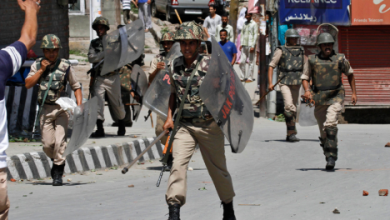
Instead of leveraging platforms like the SCO to resolve disputes and build trust, India has doubled down on aggression and repression, particularly in Indian-occupied Kashmir. This unresolved conflict remains the central bone of contention and a major threat to regional stability.
Kashmir: The Key to Unlocking Prosperity
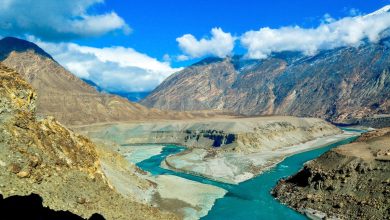
Kashmir and Indus Valley along with Tibet region was the hub of the Buddhist civilisation from where Buddhism spread across Asia through historic land and sea Silk routes. Its historic and geo-economic significance necessitates geopolitical stability for the rise of the Asian and/or Eurasian century.
The Kashmir dispute is not just a bilateral issue, it is a regional flashpoint with global consequences. Unless India comes to terms with the concerns and goals of China, Pakistan, and Russia, particularly regarding Kashmir, it will remain isolated within regional frameworks like the SCO.
Importantly, the SCO has effectively provided Kashmir with a geopolitical shield and a vessel moving steadily toward its right to self-determination. With no credible challenger to this momentum in sight, the sooner India recognizes this reality and transforms it into an opportunity, the better it will be for the entire region. Continued resistance will only deepen India’s isolation.
The failure of Operation Sindoor should serve as an eye-opener, loud enough even for a deep sleeper. Military adventurism and hardline nationalism have failed to alter the strategic calculus in Kashmir. What remains is diplomacy, realism, and engagement.
Only if India exchanges its rigid stance on Kashmir for a vision of regional prosperity can it truly benefit from the economic growth, strategic protection, and geopolitical influence offered by the China-Russia-Pakistan bloc. A sincere resolution of the Kashmir issue could transform the region from a conflict zone into an engine of development.
Asia’s Missed Opportunity or Greatest Asset
If India embraces cooperation, the Eurasian region could become one of the largest and most self-sufficient economic blocs on the planet, encompassing up to four billion people. The shared market potential of South Asia, Central Asia, and East Asia could rival or even surpass that of the West.
However, this opportunity depends on India’s willingness to step back from confrontation and become a stakeholder in regional peace. India’s continued resistance to meaningful dialogue, particularly on Kashmir, not only risks its regional standing but could also jeopardize its internal cohesion in the face of rising unrest and border tensions.
A Crossroads: Cooperation or Collapse
India now stands at a strategic fork in the road. On one path lies inclusion in a powerful Eurasian order based on economic integration, collective security, and mutual respect. On the other lies a future of isolation, economic stagnation, and internal fragmentation.
The SCO offers a clear path forward, but only if India chooses dialogue over domination. That choice begins with Kashmir. A peaceful resolution, in exchange for lasting prosperity, is not a concession, it is a strategic investment in India’s own future.