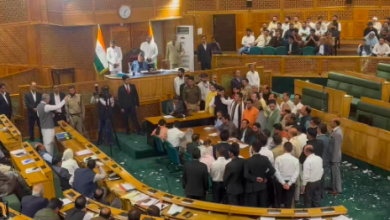
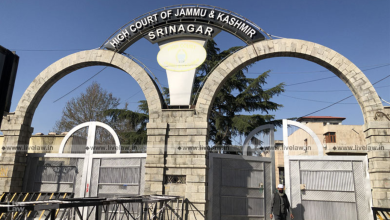
On August 5, 2019, the Indian government dramatically rescinded the semi‑autonomous status of Jammu and Kashmir, triggering one of the harshest security crackdowns in the region’s history. Within hours of Parliament’s move to abrogate Article 370 of the Indian Constitution, New Delhi imposed curfew, deployed tens of thousands of additional troops, and cut off nearly all communications. Mobile and internet networks went dark almost entirely after August 4, and for many weeks citizens could not send emails or make phone calls. Under this communications blackout, Indian forces raided homes and rounded up thousands of Kashmiris – including political leaders, activists, lawyers and even children – often without charge. Human Rights Watch (HRW) noted that India “arbitrarily detained thousands of Kashmiris” in 2019 (many under the stringent Public Safety Act) and held “hundreds…without charge or under house arrest” to pre-empt protests. In short order, the state’s elected government was dissolved, and Jammu and Kashmir was divided into two federal territories, ending the last vestige of local legislative power.
International monitors quickly condemned India’s actions. A UN panel of special rapporteurs warned on August 22, 2019 that the freedom-of-speech crackdown was severe and unjustified: reports spoke of a “near total communications blackout” and experts called it a form of “collective punishment” of Kashmir’s population. Amnesty International similarly noted that revoking the region’s autonomy was carried out “without… consultation and any participation of the people of Jammu & Kashmir,” and under a “complete communication clampdown” including internet and telephone suspensions and mass detentions. Rights groups described the early weeks of the lockdown as “one of the longest spells ever in the region” – not since the late 1980s had the local population seen such an all‑encompassing security siege. The Kashmir Chamber of Commerce estimated that the five-month internet blackout alone cost businesses some $2.5 billion, as factories and schools remained shuttered.
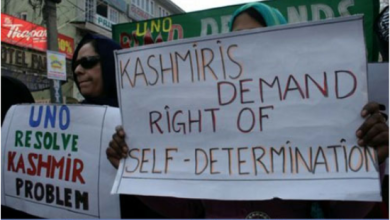
In June 2022, Kashmiri teachers and residents held protests in Srinagar demanding justice and an end to “targeted killings,” reflecting ongoing public frustration under India’s repressive policies. Rights groups confirm that the clampdown that began in August 2019 never fully eased. Amnesty International noted in 2022 that the Indian government had “drastically intensified” its repression in Jammu and Kashmir, especially against journalists and human rights defenders. Authorities continue to misuse the Public Safety Act (PSA) and Unlawful Activities (Prevention) Act (UAPA) to detain civilians, including former officials, without trial. Human Rights Watch reported that at least 35 journalists have faced interrogations, threats, or arrests since 2019. A 2020 media policy aimed to suppress independent reporting, and in 2022, journalists like Fahad Shah and Aasif Sultan were re-arrested under PSA after receiving bail.
International concern has grown. UN Special Rapporteurs warned in 2021 that the revocation of Kashmir’s autonomy endangered the rights of its Muslim-majority population. A 2022 UN panel urged India to lift restrictions on free expression and peaceful assembly. UN experts also condemned the use of UAPA against civil society leaders, including Khurram Parvez. Despite official claims of “development,” dissenters continue to face raids, surveillance, and arbitrary detention without legal recourse. Rights groups summarize the situation as follows:
In August 2019, New Delhi imposed a near-total communication blackout in Kashmir, resulting in the world’s longest internet shutdown in a democracy; full access was only gradually restored over months.
Thousands, including political leaders, lawyers, activists, and minors, were detained—many without charge—under sweeping laws like the Public Safety Act (PSA). Despite harsh curfews, Kashmir witnessed over 700 street protests within six weeks of August 5; authorities responded with excessive force, injuring scores of civilians. Journalists have faced systematic harassment, raids, arrests, and censorship; foreign media remain largely barred, and local outlets operate under severe pressure. The Armed Forces Special Powers Act (AFSPA) continues to shield Indian forces from accountability of extrajudicial killings, torture, and other grave rights abuses going uninvestigated.
Throughout, the Modi administration has defended its Kashmir policy as necessary to maintain stability. Officials have touted new infrastructure and low militant attack counts, with India’s Home Minister stating in 2022 that Kashmir was on a “path of peace and development”. In parliament and to foreign diplomats, New Delhi has emphasized normalcy – for example, citing the reopening of offices and some revival of commerce after curfew restrictions eased. But local voices and observers say normalcy has been superficial. As one independent report observes, Kashmiris “no longer have their own government” and “stay ignorant” of policy decisions while still living under daily surveillance and control.
Pakistani government and international bodies have registered concern. The European Parliament, U.S. Congress and successive UN Human Rights Council sessions have all expressed unease over Kashmir’s human rights situation. UN High Commissioner for Human Rights Michelle Bachelet similarly said she was “deeply concerned” at ongoing detentions and communications restrictions. Yet on the ground, most families in the Valley continue to live with an unspoken tension a feeling that dissent is not tolerated. A protest banner summed up the sentiment: it implores authorities to “stop innocent killings in Kashmir” and underscores the simple demand of victims’ relatives for accountability.
 The writer is a student of international relations at Abdul Wali Khan University Mardan and currently serving as an intern at the Kashmir Institute of International Relations (KIIR).