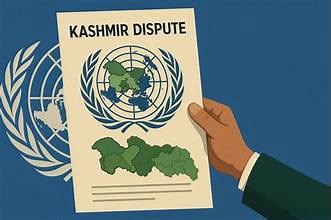
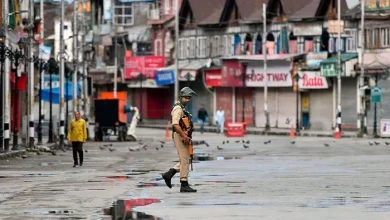
Article: Banning the Truth: India’s War on Kashmir’s Memory
 By Altaf Hussain Wani
The Indian government’s recent ban on 25 books in Jammu and Kashmir—including works by Arundhati Roy, A.G. Noorani, Sumantra Bose, and Tariq Ali—is not merely an act of censorship; it is an assault on history itself. Under the guise of preventing “secessionist narratives” and “glorification of terrorism,” authorities have criminalized scholarship, suppressed documented truths, and attempted to erase Kashmir’s collective memory. This ban is not about protecting national security; it is about controlling the past to justify the present.
When a state fears books, it fears the truth. And when it bans literature that documents human rights abuses, historical grievances, and political struggles, it reveals its own insecurity. The banned books do not incite violence—they expose it. They do not distort history—they record it. By silencing these voices, the Indian government is not defending democracy; it is dismantling it.
The Books They Fear: What’s Really Being Banned?

The banned literature includes historical accounts, legal analyses, and firsthand testimonies—none of which advocate violence. Instead, they provide critical perspectives on Kashmir’s political struggle, India’s military policies, and the lived experiences of Kashmiris under occupation.
1. The Kashmir Dispute 1947–2012 – A.G. Noorani
A constitutional expert, Noorani meticulously examines Kashmir’s legal history, including India’s contested accession and broken promises of a plebiscite. He writes: “The Indian government’s refusal to hold a referendum, as mandated by the UN, has turned Kashmir into an open prison. The people’s right to self-determination was not a rhetorical demand—it was a legal obligation.”
If historical facts are now deemed “sedition,” then India’s own archives—filled with records of Nehru’s pledges on Kashmir—must also be purged.
2. Kashmir: The Case for Freedom – Tariq Ali, Arundhati Roy, et al.
This anthology compiles essays from scholars and journalists documenting India’s militarization of Kashmir. Roy writes: “To call Kashmir an ‘integral part of India’ while stationing half a million soldiers there, enforcing curfews, and criminalizing dissent is Orwellian. No democracy should fear its own history.” Does this critique amount to “terrorism”? Or is it simply an indictment of state repression?
3. Kashmir at the Crossroads – Sumantra Bose
A political scientist, Bose analyzes Kashmir’s conflict through historical and geopolitical lenses. He notes: “The Indian state’s reliance on brute force—mass arrests, pellet guns, and draconian laws—has only deepened alienation. Peace cannot be achieved by erasing memory.”
If such analysis is banned, what does that say about India’s commitment to intellectual freedom?
International recognition of Kashmir’s suffering
The Indian government claims these books spread “false narratives,” yet their contents align with findings by global human rights organizations such as:
· United Nations (2018, 2019 Reports): Documented extrajudicial killings, torture, and impunity for security forces.
· Amnesty International: Exposed mass graves, enforced disappearances, and the misuse of anti-terror laws.
· Human Rights Watch: Condemned internet blackouts, media censorship, and arbitrary detentions.
If the UN and Amnesty are not “anti-India,” why are books citing their reports banned? The answer is clear: the state cannot tolerate scrutiny.
The Larger Crackdown: From Autonomy to Authoritarianism
The book ban is part of a broader campaign to erase Kashmir’s identity since the revocation of Article 370 in 2019:
Media Gag: Journalists arrested, newspapers raided, critical reporting stifled.
Digital Censorship: Frequent internet shutdowns, social media bans.
Cultural Erasure: Renaming landmarks, rewriting textbooks, and now, banning books.
This is not governance—it is thought control.
Legal, Moral, and Ethical Failures
1. Violation of Free Speech (Article 19)
India’s Constitution guarantees freedom of expression, yet bans books without proving they incite violence. Courts have previously overturned such bans (Aveek Sarkar v. State of West Bengal), but Kashmir’s legal isolation makes resistance harder.
2. Criminalizing Scholarship
If historians like Noorani and Bose are “dangerous,” then what of India’s own scholars who critique British colonialism? Should The Discovery of India be banned for criticizing imperial rule?
3. Ethical Bankruptcy
A democracy thrives on debate, not enforced silence. As journalist Anuradha Bhasin, whose book is banned, writes: “When you ban books, you admit you have no counter-argument. You confess your fear of the truth.”
Conclusion: The Fight for Kashmir’s Memory
The ban on these books is an act of desperation—a sign that the state fears an informed public. But history cannot be erased by decree. Kashmir’s stories will survive, whether in hidden manuscripts, digital archives, or whispered oral histories.
The international community must condemn this censorship. Academics, journalists, and civil society must challenge it. Because when books are banned, the real crime is not sedition—it is the state’s fear of its own people. The battle for Kashmir’s memory is not over. It has only just begun.
Writer is the chairman of Islamabad based think tank—Kashmir Institute of International Relations (KIIR). He can be reached via email: saleeemwani@hotmail.com