India-Afghanistan joint statement on Kashmir baseless: Legal experts
Kashmir internationally recognised dispute, not India’s internal matter
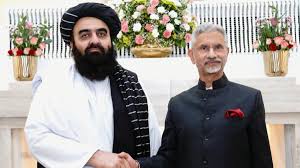
Islamabad: legal expert have condemned India’s attempt to portray the UN-recognised disputed territory of Jammu and Kashmir as its integral part in a joint statement issued with Taliban Foreign Minister Amir Khan Muttaqi in New Delhi as baseless, misleading, and in blatant violation of the United Nations Security Council resolutions on Kashmir.
According to Kashmir Media Service, Pakistan has already expressed strong reservations over the joint statement issued after the meeting between Indian External Affairs Minister S. Jaishankar and Taliban Foreign Minister Amir Khan Muttaqi in New Delhi. The statement falsely referred to Jammu and Kashmir as part of India — an assertion that contradicts internationally accepted facts and the legal status of the territory.
Legal experts noted that Jammu and Kashmir is an internationally recognized dispute pending on the agenda of the United Nations Security Council. Several UNSC resolutions, starting from Resolution 47 of 1948, explicitly call for the people of Jammu and Kashmir to exercise their right to self-determination through a free and impartial plebiscite under UN supervision. No bilateral or unilateral declaration can alter this internationally binding commitment.

The experts have pointed out the contradiction in India’s position, as New Delhi itself had earlier branded the Taliban as a terrorist group and refused to recognize its government after the takeover of Kabul in August 2021. “It is ironic that India, which once called the Taliban regime illegitimate and terror-linked, is now issuing joint statements with it to advance its own political propaganda on Kashmir,” said one of the legal experts.
Moreover, the Taliban administration itself is not recognized by the United Nations or the majority of world governments. Therefore, any endorsement or statement from the Taliban regime carries no legal or diplomatic weight in altering the disputed status of Jammu and Kashmir.
Experts add that the Indian government’s repeated attempts to use such engagements to project false narratives are part of its ongoing campaign to mislead the international community about the reality in Indian illegally occupied Jammu and Kashmir. The situation on the ground — marked by continued military occupation, human rights violations, and denial of democratic rights — exposes the hollow nature of India’s claims.