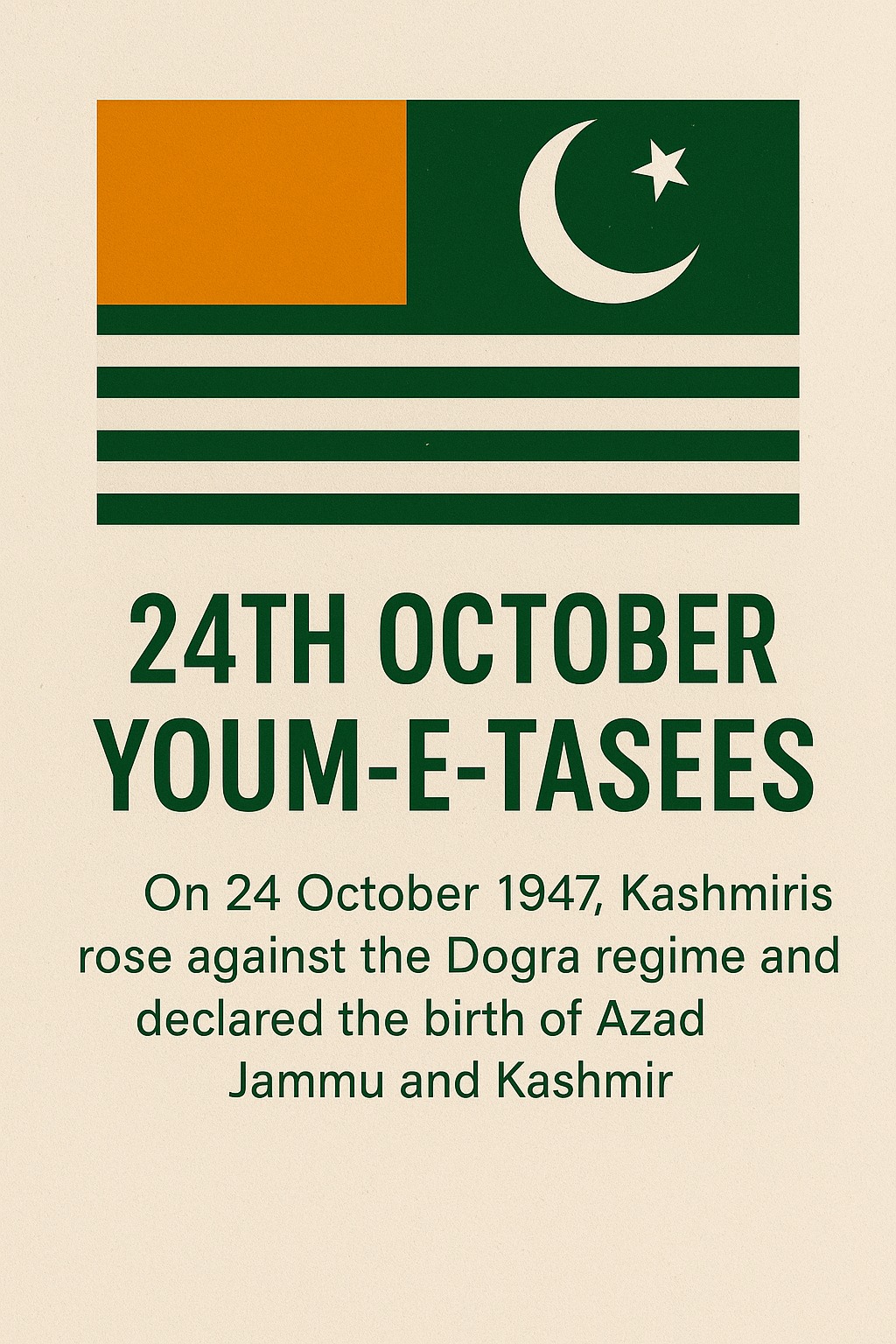
 Every year on 24 October, the people of Azad Jammu and Kashmir celebrate Youm-e-Tasees, the day in 1947 when a group of determined Kashmiris rose against the Dogra regime and declared the birth of Azad (Free) Jammu and Kashmir. It is a day etched in both memory and meaning a commemoration of defiance, dignity, and the undying belief that the people of Kashmir are the masters of their own destiny.
The 1947 uprising was not born out of chance; it was a culmination of decades of political awakening. When the British Raj ended, the princely states were to choose between joining India or Pakistan or remaining independent is based on geography and the will of their people. In Jammu and Kashmir, the majority-Muslim population overwhelmingly desired accession to Pakistan, yet the Hindu Dogra ruler, Maharaja Hari Singh, hesitated. As violence engulfed the subcontinent, Kashmiri freedom fighters from Poonch, Mirpur, and Muzaffarabad launched an armed revolt against oppressive rule. By late October, they had liberated significant territories west of the Jhelum River and established the Provisional Government of Azad Jammu and Kashmir on October 24, 1947.
For the people of AJK, this day represents far more than a symbolic milestone; it is a testament to the courage of ordinary men and women who took up the banner of freedom with little more than faith and resolve. Azad Jammu and Kashmir has since remained a living embodiment of that resistance. Its institutions, however modest, were founded upon the principles of self-governance, accountability, and the right to self-determination, the very ideals that continue to elude their brethren across the Line of Control.
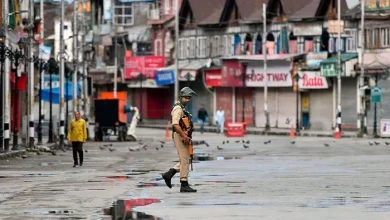
On this side of the divide, Youm-e-Tasees is a celebration of self-rule. On the other, it is a day of painful contrast. In Indian-Illegally Occupied Jammu and Kashmir (IIOJK), the same aspirations that birthed Azad Kashmir are today met with military repression and silence. Since India’s unilateral revocation of Articles 370 and 35-A in August 2019, the region has witnessed a suffocating siege, tens of thousands of additional troops deployed, mass detentions, internet blackouts, and the erosion of the very autonomy once promised under international law. What Azad Kashmir achieved in 1947, political agency and dignity, remains denied to the people still living under occupation.
For many Kashmiris, the two regions now stand as mirror images of two possible futures: one of freedom earned through unity, and another of identity stifled by force. Yet, even in the occupied territories, the spirit of 24 October endures. The courage of Kashmiris who continue to speak out despite the risk of imprisonment is a modern echo of that same historic uprising. Their resilience proves that repression can silence voices, but not memory.
As Azad Jammu and Kashmir marks its 78th Youm-e-Tasees, the celebrations are inevitably tempered by reflection. True independence for Kashmir will remain incomplete until IIOJK is free from Indian subjugation.
Today, the challenge before the international community is moral as much as legal: to recognise that the promise made to the people of Jammu and Kashmir in UN resolutions and international covenants remains unfulfilled. Until that day arrives, every 24 October will serve as both celebration and reminder, of a freedom realised on one side of the mountains and still withheld on the other.
For the people of Azad Kashmir, Youm-e-Tasees is not only a tribute to their past, it is a pledge to continue the struggle until every Kashmiri shares in the same liberty they won in 1947.