Bihar voter purge exposes India’s fake democracy
Millions of minority voters deleted under Modi regime’s new exercise
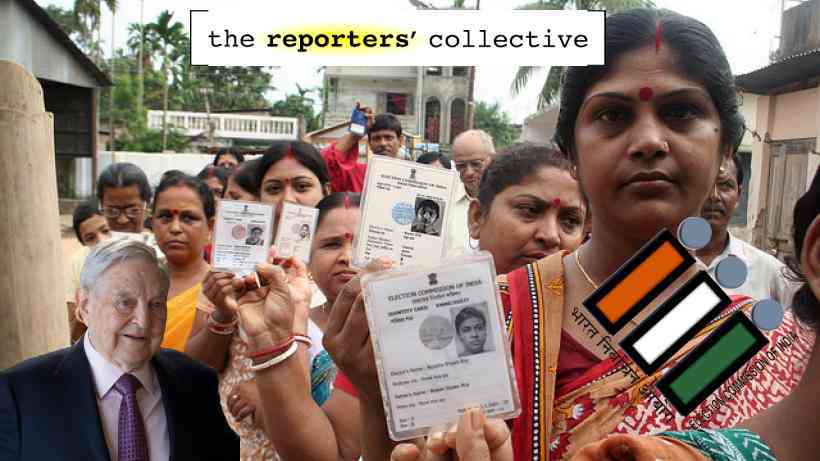 New Delhi: India’s so-called “world’s largest democracy” has once again been exposed as a managed illusion, as the Modi-led Bharatiya Janata Party (BJP) government has turned Bihar into a testing ground for mass disenfranchisement targeting Muslims and other marginalized communities under the so-called “Special Intensive Revision” (SIR) of electoral rolls.
According to Kashmir Media Service, under the SIR exercise, the Election Commission of India (ECI) has deleted 6.8 million voters—around eight percent of Bihar’s total electorate of 79 million—in just a few weeks, on the pretext of “verification.” Civil rights groups, however, say the drive is a politically motivated campaign to erase Muslim, Christian, Dalit and backward-caste voters who are unlikely to support the BJP in upcoming elections.
The purge has caused widespread outrage after the case of Clarence Toppo, a 38-year-old Christian Dalit IT worker from Ara, came to light. He discovered that his 74-year-old mother, Mary Toppo, had been declared dead, and that he and his two brothers were also removed from the voter list without verification. “If I live in India and my voter identification is taken from me, that’s a very big deal,” Toppo said, describing how his family was targeted simply for belonging to minority identities.
Human rights organisations, including the People’s Union for Civil Liberties (PUCL), have warned that the SIR process was deliberately rushed to facilitate large-scale deletions. Officials were reportedly given only one month to verify thousands of voters each—a task that took a full year during similar revisions in 2003. “Because of this arbitrariness, many genuine people were excluded,” said PUCL’s Sarfaraz Uddin, adding that this was “not incompetence but strategy.”
Prominent lawyer Prashant Bhushan pointed out that the BJP could manipulate electoral outcomes by “selectively disenfranchising” those who do not vote for it, since even a 4–6% shift in the voter base could decide key contests. Bihar’s targeted groups include 17 million Muslims, along with Dalits, Christians and backward castes.
A detailed study by analysts Yogendra Yadav and Rahul Shastri found that 24.7 percent of the 6.5 million deleted names in draft rolls were Muslims, while in the final list, the Muslim share of deletions rose to 33 percent. In Seemanchal, Bihar’s largest Muslim-majority region, deletions among Muslims reached 3.7 percent, compared to 1.9 percent among non-Muslims. Once flagged for review, the probability of deletion was 6.38 percent for Muslims and 4.18 percent for non-Muslims, proving that the so-called verification was in fact selective targeting.
BJP leaders have further fueled communal tension by linking the voter verification process with anti-Muslim rhetoric. In September 2024, Indian Minister Giriraj Singh told a rally in Purnia, “Many demons have come from Bangladesh; we have to kill those demons,” a remark seen as an official endorsement of hate speech against Muslims.
Civil society groups have warned that this voter purge is part of a wider plan linked to the National Register of Citizens (NRC) and Citizenship Amendment Act (CAA) to strip Muslims of citizenship rights. CPI-ML leader Kumar Parvez said, “If their name does not remain on the voter list, tomorrow they will not remain as citizens.”
The exercise has caused immense human suffering. In Alampur Gonpura near Patna, 92-year-old Jitni Devi lost her monthly pension of 1,100 rupees and access to food and medicine after being removed from the voter rolls. In Ara, retired postal officer Krishna Dayal Singh was falsely declared dead, fearing his descendants may one day be denied citizenship.
Analysts say Bihar, India’s poorest state, has been turned into a political experiment to silence the marginalized. Amir Abbas, editor of Democratic Charkha, said the 2025 SIR was “a political experiment systematically targeting Muslims, Christians and lower-caste groups least likely to support Modi’s BJP.”
Despite widespread possession of Aadhaar cards by 90 percent of Biharis, the ECI initially excluded the document from verification requirements, demanding land records and school certificates that most poor citizens do not possess. The Supreme Court was forced to intervene on September 8, ruling that Aadhaar must be accepted as valid proof.
Following Bihar’s purge, the ECI has now extended the SIR exercise to 12 more states, covering nearly 500 million voters, a move activists say could strip up to 90 million Indians—mostly Muslims and Dalits—of their right to vote.
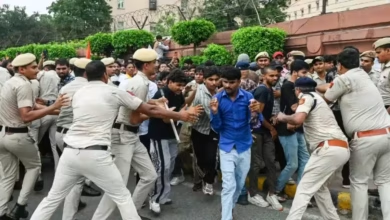
Opposition protests have erupted across Bihar and other states. Rahul Gandhi and several southern leaders have joined demonstrations in Patna, warning that the BJP is orchestrating “the largest disenfranchisement project in the world.” PUCL’s Pushpendra Kumar said, “This is a national operation now. Opposition parties know they have to build a united campaign to resist it.”
Observers and civil rights defenders have termed the Bihar operation a case of “electoral ethnic cleansing,” warning that India is constructing a political system where votes are removed, citizenship is conditional, and minorities are rendered voiceless.
They cautioned that the Bihar experiment is only the beginning of a larger plan to turn India into a Hindu majoritarian state, where democracy exists only in name and millions of Muslims and Dalits are stripped of their most basic constitutional right — the right to vote.