Prominent Indian Journalist Rana Ayyub, father face death threats
CPJ demand immediate guarantee to safety of Ayyub and family
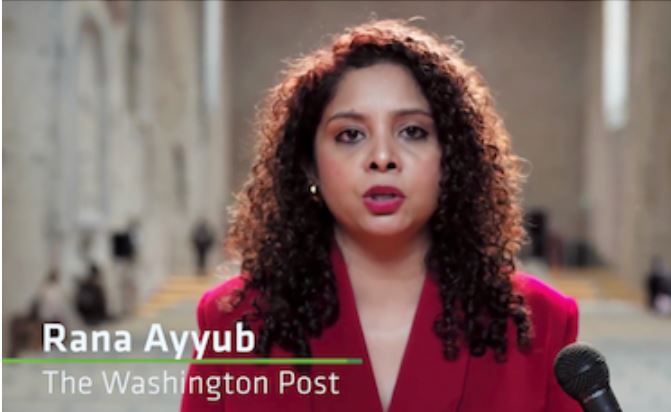 New Delhi: Prominent Indian journalist and Washington Post columnist Rana Ayyub and her father were targeted with death threats by an unknown caller who knew their home address, prompting urgent calls for their protection from international press freedom organizations.
According to Kashmir Media Service, the Committee to Protect Journalists (CPJ) on Monday demanded that Indian authorities immediately guarantee the safety of Ayyub and her family. The threats occurred on November 2, when Ayyub received a barrage of video calls, phone calls, and WhatsApp messages over a 20-minute period from an international number .
“The threats of violence made against Rana Ayyub and her father from an unknown international number are deeply concerning,” said CPJ’s India representative Kunal Majumder. “Authorities must act swiftly to identify and hold accountable those responsible and ensure the safety of all journalists in India so they can work without fear of intimidation or violence” .
The caller demanded that Ayyub write a column on the 1984 anti-Sikh riots and explicitly threatened to send people to her home to attack her and kill her father if she failed to publish the article. In her police complaint filed with the Kopar Khairane Police Station in Navi Mumbai, Ayyub noted that the caller’s profile picture matched a photograph of incarcerated Indian gangster Lawrence Bishnoi .


This incident is not an isolated one for Ayyub, whose personal phone number was leaked online last year and who has faced repeated online trolling, official intimidation, and rape and death threats as a result of her reporting . Ayyub stated that police officers were subsequently sent to her residence for protection.
This latest threat fits a broader pattern of systematic harassment against the journalist. A report by Reporters Without Borders (RSF) has detailed how Ayyub has become a symbol of the online attacks faced by women journalists in India, often from networks affiliated with the Hindutva movement. RSF has also documented instances where she was stalked by individuals posing as intelligence agents while reporting, which intimidated her sources and severely hampered her work.
International organizations, including the International Center for Journalists (ICFJ), have repeatedly stood in solidarity with Ayyub, condemning the legal and online persecution she faces, which is designed to intimidate her into silence.