Hindutva agenda poses grave threat to regional peace, warn webinar speakers
Islamabad: Experts, academics and rights advocates have termed the BJP-led Hindutva agenda in Indian Illegally Occupied Jammu and Kashmir a serious threat to peace and stability in South Asia, urging Pakistan, Kashmiri leadership and the international community to strengthen coordinated political, diplomatic and academic efforts to expose India’s settler-colonial project.
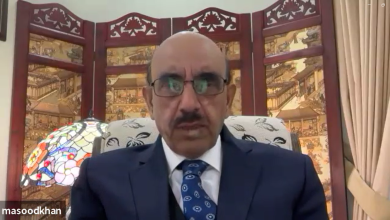
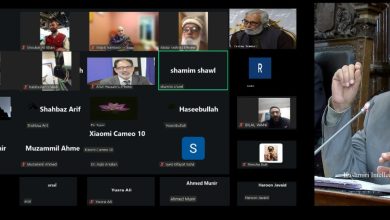
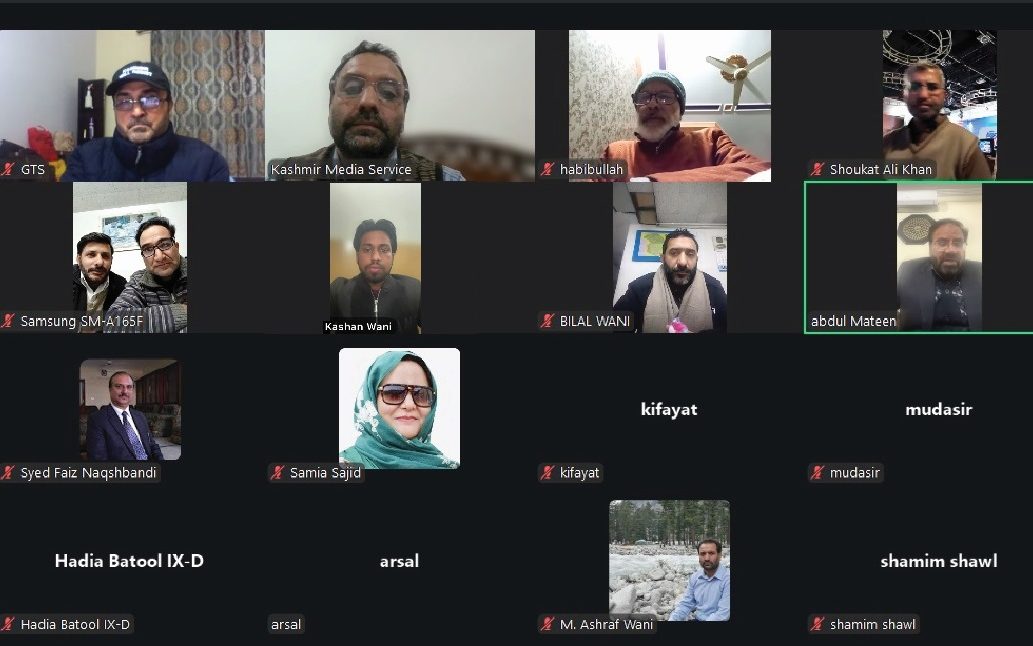
According to Kashmir Media Service, the views were expressed during a webinar titled “BJP’s Hindutva Agenda in Kashmir: A Serious Threat to South Asian Peace”, organized by Kashmir Media Service and United Kashmir Journalists Association, and attended by scholars, journalists and civil society representatives. The seminar was moderated by senior journalist Dr. Muhammad Ashraf Wani and Kashmiri activist Raies Ahmad Mir.
Opening the discussion, Abdul Rashid Turabi, Former Ameer, Jamaat-e-Islami AJK stressed that the religious leadership must raise a unified voice against Indian repression in IIOJK. He said the “base camp”—Azad Jammu and Kashmir—needed to be strengthened politically and institutionally to effectively support the Kashmiri people’s struggle.
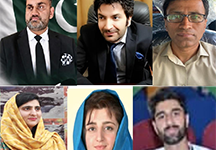
FarzanaYaqoob, former AJK Minister and CEO Dastaq Resources Pvt. Ltd., highlighted stark differences between the situation in AJK and the ongoing repression in IIOJK, noting that operations such as Bunyanum Marsoos had helped amplify Kashmiri voices globally. She said India had weaponized psychological torture and was increasingly “criminalizing the very word ‘Kashmiri’,” which she described as a dangerous attempt to delegitimize Kashmiri identity.
Shamim Shawl, senior APHC-AJK Leader and human rights advocate, said the base camp must “demonstrate its character” by taking more assertive positions on the Kashmir issue. She argued that despite sustained economic pressure, India had failed to break the resolve of Kashmiris. Pointing to the RSS’s narrative of an exclusive Hindu nation, she warned that settler colonization was accelerating in IIOJK and that “no voice is coming out of Kashmir due to Indian suppression—so we have to speak for them.”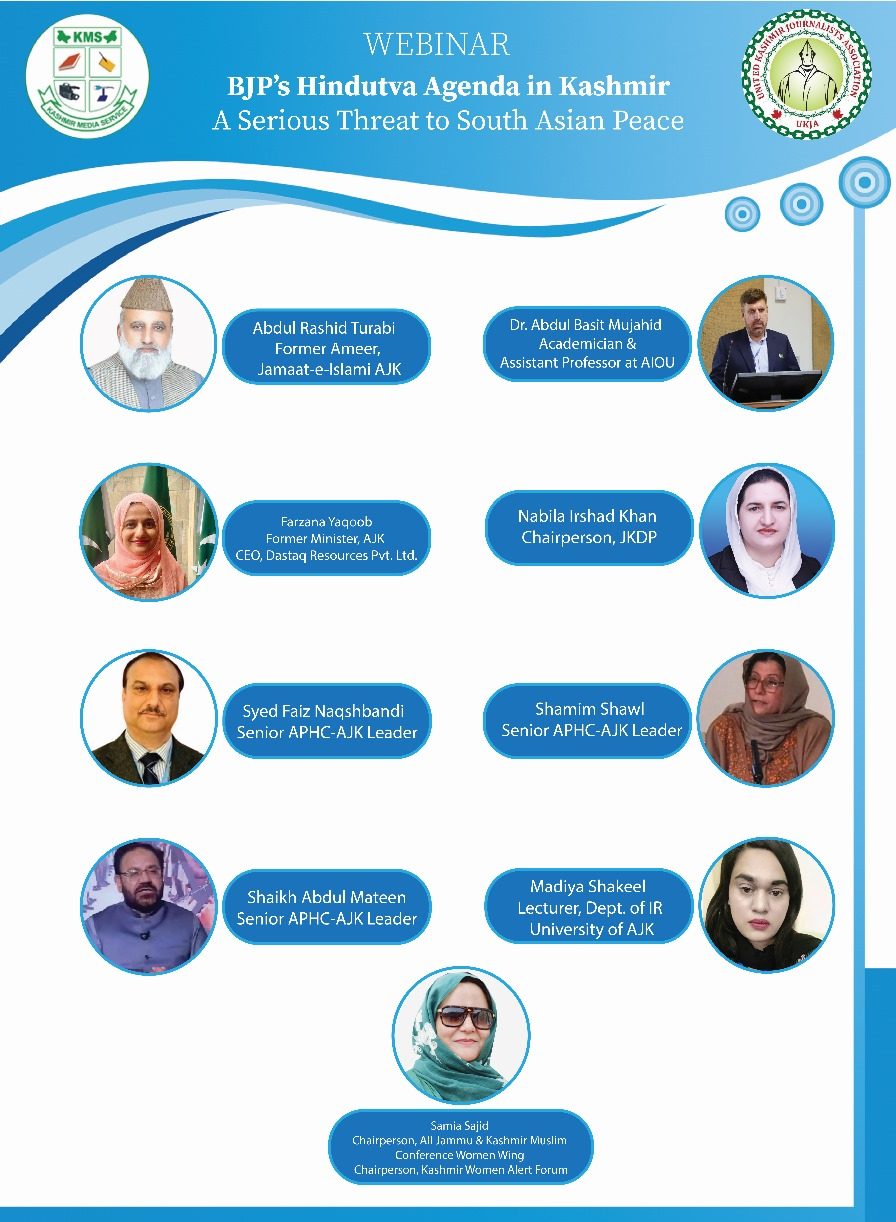
Madiya Shakeel, academic researcher and Lecturer, Dept. of International Relations, University of AJK, provided an analytical overview of the conceptual framework of Hindutva, describing it as a project aimed at centralization of the state, demographic re-engineering and cultural domination. She discussed “saffronization,” including the promotion of Hindu religious festivals in Kashmir, revision of school textbooks, and the systematic marginalization of Muslims and Christians. She said Hindutva’s cross-national networks and global cultural influence made it “a threat not only to Kashmir but to world peace.”
Syed Faiz Naqshbandi, senior APHC-AJK leader, warned that India was carrying out a “cultural invasion” alongside demographic changes intended to render Kashmiris irrelevant in their own homeland. He elaborated on the binding nature of UN resolutions on Kashmir but said India’s “mala fide intentions” continued to obstruct any political settlement. He, however, maintained that Kashmiris remained hopeful and resilient.
Nabila Irshad Khan, Chairperson, Jammu & Kashmir Democratic Party, emphasized the importance of awareness campaigns, stating that advocacy platforms must intensify global outreach to counter India’s narrative and highlight human rights abuses.
Drawing historical parallels, Dr. Abdul Basit Mujahid, academician & and Assistant Professor at AIOU, said the Modi government’s policies mirrored those of “Hitler and Mussolini,” arguing that the ideological roots of Hindutva were openly aligned with fascist thought. He said developments in 2019 were not sudden but part of a long-planned strategy to advance Akhand Bharat in IIOJK. Pakistan. He noted similarities between the situations in Gaza and Kashmir and called for content creation and a Muslim-country alliance “on the pattern of the EU.”
Samia Sajid, Chairperson, All Jammu & Kashmir Muslim Conference Women Wing, said Hindutva forces had long prepared for the current phase of suppression in IIOJK. She spoke about the plight of Kashmiri prisoners, closure of mosques, imposition of new cultural symbols, and changes in language use.
Shaikh Abdul Mateen, senior APHC-AJK leader, revisited the relevance of the two-nation theory in the context of IIOJK, saying India had imposed “black laws” granting full impunity to its forces and attempting to snatch Kashmiri identity.
The webinar concluded with participants reaffirming that India’s Hindutva-driven policies were destabilizing South Asia and that a sustained political, diplomatic and academic campaign was needed to expose the implications of New Delhi’s actions.