 For more than seven and half decades, the people of Indian illegally occupied Jammu and Kashmir (IIOJK) have lived under a structure of control so deeply entrenched in violence and repression that it has steadily eroded their dignity, identity, and fundamental rights. The recently released UN Special Procedures Report from Geneva has once again thrust global attention onto the worsening crisis in the region, describing not isolated abuses but an organised, systemic pattern of violations that breach every pillar of the Universal Declaration of Human Rights (UDHR) and core provisions of the Geneva Conventions. These findings reinforce what human rights groups, journalists, and victims have documented for decades: that India’s counter-terrorism apparatus has become a tool for collective punishment, political suppression, demographic manipulation, and militarised domination.
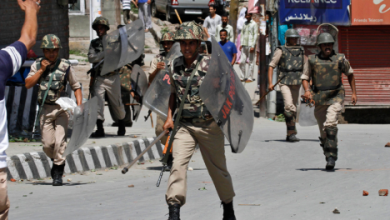
The UN experts expressed deep alarm over India’s sweeping crackdown following the April 2025 Pahalgam attack in which authorities detained around 2,800 people across Srinagar, Budgam, Kupwara, Pulwama, and Shopian, including journalists, students, and human-rights defenders. Many were held under the Public Safety Act and Unlawful Activities (Prevention) Act—laws infamous for their vague definitions of terrorism and their power to detain individuals without trial. Reports of torture, incommunicado detentions, suspicious custodial deaths, lynchings, and discriminatory treatment of Kashmiri Muslims further illustrated a climate of impunity. In addition, nearly 8,000 social media accounts, many belonging to independent journalists, students, and media organisations, were blocked, violating the core freedoms of expression, association, and peaceful assembly protected under Articles 19 and 20 of the UDHR. India also enforced communication blackouts and surveillance measures that extended to Kashmiri students across India, contributing to a hostile environment fuelled by hate speech and incitement to violence.
These observations resonate with decades of recorded abuses. According to extensive rights-monitoring data, since 1989 India has been responsible for 96,480 killings, including 7,408 custodial deaths, as well as 179,759 arrests. More than 110,562 homes and structures have been destroyed, while 11,269 cases of sexual violence have been documented and over 8,000 people have been subjected to enforced disappearances. The human loss is staggering, with 22,991 women widowed and 108,007 children orphaned during this period. These statistics reflect not spontaneous incidents but a structure of violence maintained under laws such as AFSPA, which provide sweeping impunity to Indian forces.
The revocation of Articles 370 and 35A in August 2019 intensified this repression. During the years since the abrogation, Indian forces have killed 1,047 Kashmiris, including women and children, while 32,816 individuals have been arrested in a series of crackdowns and raids. At least 284 people have died in custody, 2,657 have been tortured or critically injured, and 1,168 houses and shops have been burned or destroyed. The consequences for women have been particularly severe, with 139 incidents of molestation or assault documented since 2019, and more than three dozen Kashmiri women currently imprisoned in jails across India on fabricated charges.

India’s policies in IIOJK also extend to demographic and economic manipulation. The opening of land ownership to non-Kashmiris, combined with widespread home demolitions and the seizure of 192 properties in 2025 alone, signals a clear attempt to alter the region’s Muslim-majority character. Economically, Kashmir faces crippling unemployment, with joblessness among youth aged 15–29 reaching 32% and nearly 48.6% among young women, making it one of the most economically distressed regions in South Asia. Industrial stagnation, loss of agricultural output, the suspension of cross-LoC trade, and targeted dismissals of Muslim government employees further illustrate a deliberate strategy aimed at undermining economic stability and suppressing dissent.
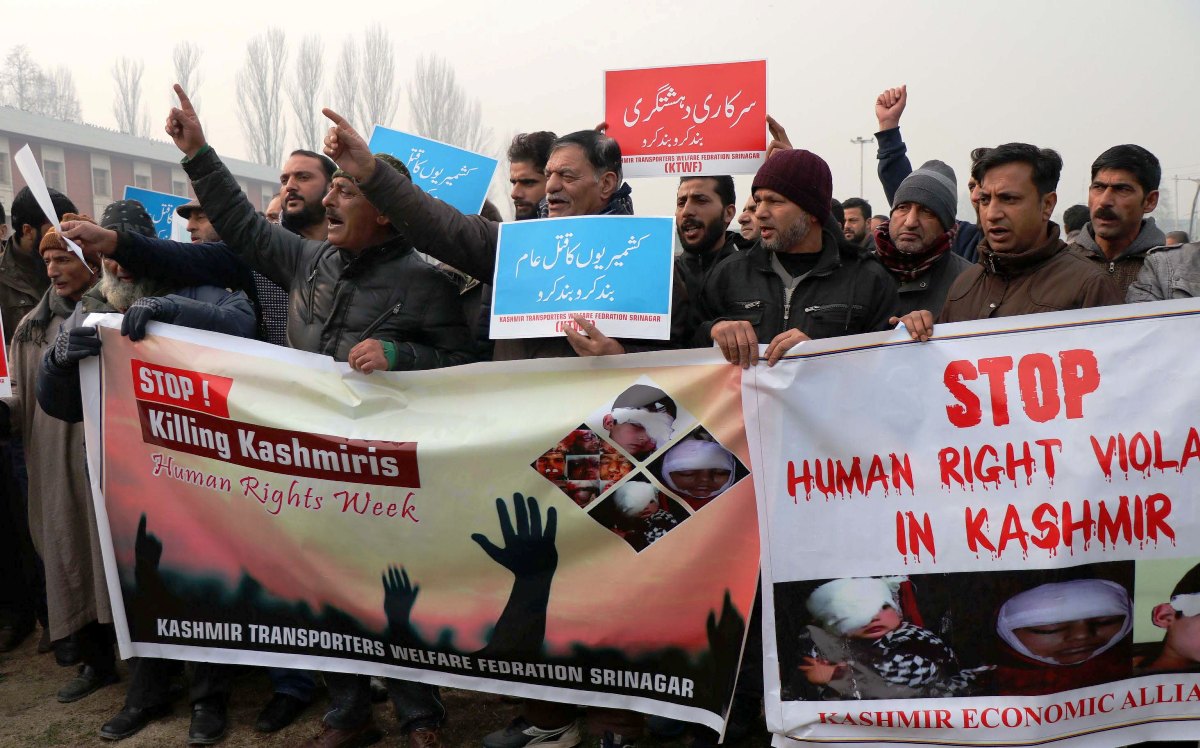
Meanwhile, political repression remains pervasive. Over 4,000 political prisoners, including Hurriyat leaders such as Masarrat Aalam Butt, Shabbir Shah, Yasin Malik, and Aasiya Andrabi, and human rights activist Khurram Parvez, and journalist Irfan Mehraj, remain incarcerated in various Indian prisons under draconian laws. Media freedom has also come under direct attack, exemplified by the raid on the Kashmir Times office and the ongoing harassment of its executive editor, Anuradha Bhasin, whose principled journalism has consistently challenged state repression.
The international community can no longer ignore the scale of this crisis. The UN experts’ report makes clear that India’s actions violate the UDHR, the ICCPR, the Geneva Conventions, and multiple UN Security Council resolutions guaranteeing Kashmiris the right to self-determination. For 78 years, India has resisted accountability, blocked international observers, and undermined calls for a plebiscite. But no state that claims to uphold democratic values can deny an entire population their most basic human rights.
The crisis in occupied Jammu and Kashmir is not an internal issue nor a bilateral irritant—it is a humanitarian catastrophe unfolding over generations. The world must recognise that silence in the face of such systematic suffering amounts to complicity. The people of Kashmir are not asking for pity nor charity; they are demanding justice, dignity, and the right, promised under international law, to determine their own future.