Mexico’s tariff hike to hit 75pc of India’s exports from Jan 1
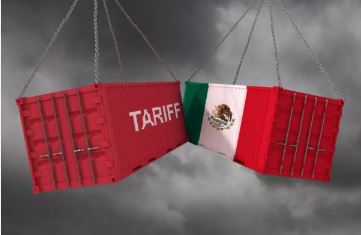
New Delhi: India’s exports to Mexico face a significant blow from January 1, 2026, as Mexico imposes steep tariffs of up to 50 percent on non-FTA partners.
According to Kashmir Media Service, nearly 75 percent of India’s $5.75 billion shipments, including autos, smartphones, and steel, will face sharply higher duties, potentially pricing them out of the market. Pharmaceuticals remain largely unaffected.
Mexico’s steep tariff increase on imports from countries without a free-trade agreement will significantly disrupt India’s exports from January 1, 2026, the Global Trade Research Initiative (GTRI) has said, warning that nearly three-quarters of outbound shipments will come under sharply higher duties.
Mexico has decided to impose duties of up to 50 percent on goods from non-FTA partners, a move that GTRI estimates will affect around 75 percent of India’s $5.75 billion exports. “Nearly 75 percent of India’s $5.75 billion exports to Mexico will be affected as tariffs jump from 0-15 percent to around 35 percent,” the think-tank said.
Under the revised structure, Mexico will levy tariffs ranging from 5% to 50%. Automobiles and auto components — India’s largest export categories to Mexico — will be among the hardest hit. Passenger vehicles worth $938.35 million will see duties rise from 20 percent to 35 percent, while auto components worth $507.26 million will face an increase from 10-15 percent to 35 percent. Motorcycle exports of $390.25 million will also attract 35 percent duty. Smartphones, which currently enter duty-free, will face a 35 percent tariff, a move GTRI says will “effectively shut” the Mexican market. Steel exports — particularly flat products — will confront a prohibitive 50 percent duty, likely pricing Indian shipments out entirely.
Industrial machinery worth $547.99 million will see levies rise to 25-35 percent, substantially raising landed costs. Garments and made-ups worth $245.90 million will see duties rise from 20-25 percent to 35 percent, textiles from 10-15 percent to 25 percent, and ceramics to 25-35 percent, sharply eroding India’s price competitiveness. Pharmaceuticals, however, will be “largely unaffected,” with duties moving only from 0-5 percent to 0-10 percent, keeping India’s generics competitive.