Witnessing Kashmir: Experiencing Freedom in Azad Kashmir and Learning About the Sufferings of IIOJK
Muhammad Raza Ellahi
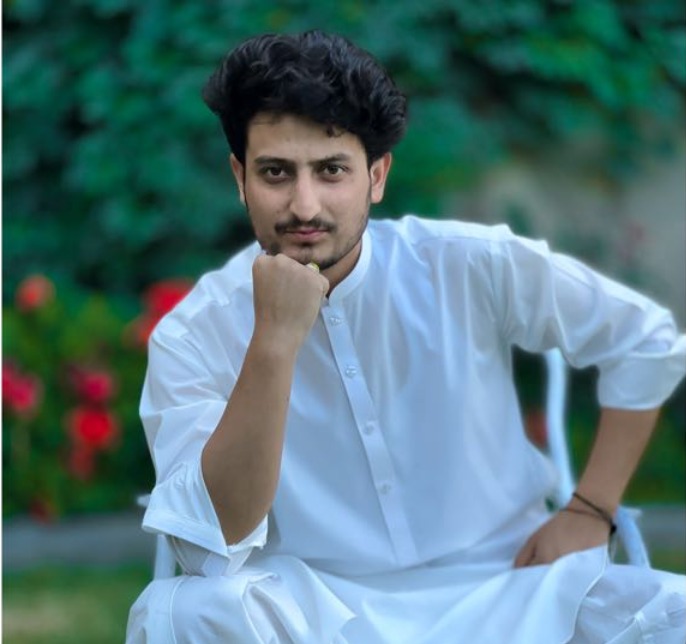 The Muzaffarabad study tour between 21st and 23rd of November 2025, arranged by Kashmir Institute of International Relations, was not just another academic trip but a journey which had a lasting effect on each one of us. We, as young researchers, had not only been exposed to the organizations influencing the discourse on Kashmir but had been given an opportunity to witness the human aspect of a conflict, which has remained alive for over several generations. This trip, full of learning, laughter, and soul-searching, is a reminder of the responsibility attached to the understanding of such a complex and such a vulnerable conflict. And, of course, none of us would have been able to make the best out of the trip without the guidance and support of Chairman KIIR, Sir Altaf Hussain Wani and Ma’am Mehar-un-Nisa, Director of Research at KIIR, whose endeavors made sure that it remained a memory, which none of us would ever forget.
Since the moment we stepped foot in the land of Muzaffarabad, we were able to feel the warmth and hospitality of its people, the peaceful environment, beautiful valley and the warmth of friendship was also increasing within our group. As we were together, sharing a room, exploring the gorgeous sights around us, and having night-long discourses about our projects, we were also bringing a happy element to our otherwise serious and educational journey. As we were laughing in the van, esteeming the spots around us, capturing moments , and agitating our systems at night, the group- feeling was adding extra shimmer to our trip. These spots were a memorial thatthe land of Azad Kahmir was full of life but on the other hand if we talk about IIOJK, life there is completely opposite, peoples are suffering, humanity is compromised it’s like Two Kashmir’s, Two Realities. This trip realized us that the people of Indian Illegally occupied Kashmir also deserve a life full of happiness, independence and joy.
Our academic odyssey began with a visit to the Centre for International Strategic Studies AJK(CISS), where Executive Director CISS, Dr. Asma Shakir Khawaja gave us a briefing on the strategic environment girding the disagreement in Kashmir.What came through was how this dispute transcends the issue of boundaries; this is a dispute about narratives, power, and people living in the middle of political aspirations. To hear from academics about India’s approach through the use of hard power, demographic politics, communication blockades, and legal tactics was informative, as we gained a better understanding of how life was being made more difficult for people in Indian Illegally Occupied Jammu Kashmir (IIOJK) through the application of power, through intimidation and constitutional manipulation.

At the Kashmir Policy Research Institute, KIPRI, where we had our internship certificate distribution ceremony latterly, these conversations took an indeed deeper turn. Analysts there refocused out how effects seriously deteriorated after the invalidation of Article 370 in August 2019. They reminded us that behind every statistic, there’s a story of a torn family piecemeal, a child grown seeing soldiers rather of a playground, an intelligencer arrested for chronicling the verity, or a disappeared person whose family was never told about his fate. These exchanges left numerous of us silent, realizing how privileged we were to hear and learn, while millions across the border could not indeed speak freely about their introductory rights.
The meeting with the Prime Minister of AJK added a political and moral tinge to the trip. He spoke candidly about the philanthropic extremity, the demographic engineering proceeding in IIOJK, and the obligation of the youth to be the voice of the speechless. His message lingered in our ears long after we left his office impartiality in the face of injustice is a treason of humanity. It is moments like these that make the journey transformational rather than mere information.
However, the more we learned, the more impossible it was to ignore the crisis in IIOJK, Today, the region is one of the most militarized places on the planet, with nearly 900,000 Indian soldiers patrolling a small valley, living here is characterized by military checkpoints, midnight raids, arbitrary arrests, and laws like AFSPA, which provide soldiers virtually unconditional impunity. Fear is a permanent guest at Indian Illegally occupied Kashmiri homes. Digital oppression is yet another dimension of suffering. Since the revocation of Article 370, which was unconstitutional, India has imposed the longest internet shutdown on a democracy in the world. Today, digital surveillance, intimidation, and criminalizing speech on social media platforms have ensured technology is utilized as a control mechanism rather than an empowerment tool.
In reflecting upon our Muzaffarabad experience, I understood that learning about IIOJK is not simply an academic duty; it is an ethical one. The experience was filled with happiness, friendship and learning, but it also widened our understanding of the suffering that exists beyond the range of mountains. And for that, I am very grateful to Chairman Altaf Hussain Wani and Ma’am Mehar-un-Nisa, Director of Research at KIIR, without whom we might never have had that profound experience.
The writer is a student of BS International Relations at International Islamic University Islamabad & is currently a research intern at the Kashmir institute of International Relations (KIIR)