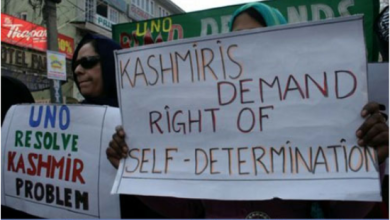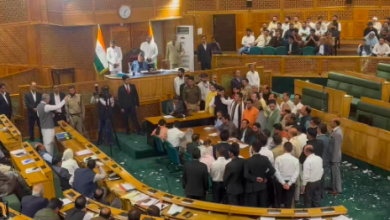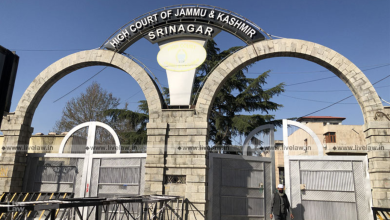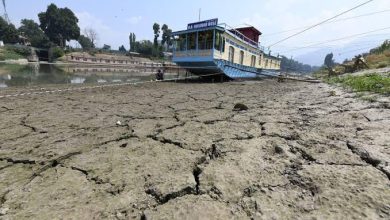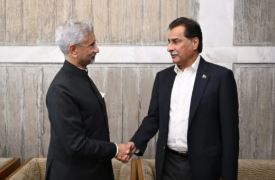
 A perfunctory handshake between Indian External Affairs Minister S. Jaishankar and Pakistan’s National Assembly Speaker Ayaz Sadiq in Dhaka has been breathlessly interpreted as diplomatic breakthrough. Such theatrical optimism ignores a brutal reality: while officials exchange courtesies, occupied Jammu and Kashmir remains under a military siege that makes any dialogue meaningless without addressing its core—the right of Kashmiris to determine their own future.
This is not the first time symbolism has substituted for substance. The 2002 Musharraf-Vajpayee handshake, celebrated as heralding peace, delivered nothing for Kashmiris. The “comprehensive dialogue” that followed systematically excluded Kashmiri voices while India consolidated its occupation. The current gesture, initiated by a government that forbade its cricket captain from shaking hands with a Pakistani counterpart, reeks of the same cynicism—a temporary tactical adjustment, not a strategic shift.
India’s apparent recalibration stems not from moral awakening but from strategic failure. Its military adventurism last year backfired, leaving it diplomatically isolated while exposing the limits of its regional hegemony. The Modi government, having weaponized hyper-nationalism and anti-Pakistan sentiment for domestic consolidation, now finds its own rhetoric constraining. But these calculations have nothing to do with Kashmir’s plight.
For Kashmiris, India’s “no-talk” policy never ended. It manifests daily through:
•900,000+ soldiers enforcing a territorial occupation
•Extrajudicial killings, mass blindings with pellet guns, and systematic torture
•Communication blackouts and collective punishment
•Demographic engineering through settler-colonial laws that allow non-Kashmiris to purchase land and obtain residency
•The criminalization of political dissent and mourning
The revocation of Article 370 in 2019 was not merely a constitutional change but the final act in India’s long war against Kashmiri identity. It transformed an internationally recognized dispute into an internal matter to be managed through force. Any dialogue that does not begin with acknowledging this crime and restoring Kashmiri sovereignty is simply a negotiation over the terms of occupation.
Pakistan’s position, while rhetorically consistent, has achieved little beyond managing its own optics. Islamabad’s insistence on Article 370’s restoration as a precondition, while politically necessary, risks reducing the Kashmir issue to a procedural matter rather than the fundamental question of self-determination. The 1948 UN resolutions, which India systematically violated, did not call for restoration of autonomy within the Indian Union—they promised a plebiscite allowing Kashmiris to choose their destiny.
The international community’s role has been equally performative. Trump’s occasional tweets and friendly nations’ platitudes change nothing on the ground. They treat Kashmir as a dangerous flashpoint between nuclear powers, not as a human rights catastrophe where an entire population’s fundamental rights are being erased. The economic arguments about defense spending and poverty are irrelevant to Kashmiris who live under a military occupation that makes daily survival a struggle.
India’s democratic pretensions ring particularly hollow in Kashmir. The world’s “largest democracy” maintains its control through:
•The world’s highest concentration of armed forces per capita
•Laws like AFSPA ,that grant soldiers immunity for the crimes they commit against humanity in Occupied Kashmir.
The laws like UAPA, PSA other are used for systematic persecution of journalists, human rights defenders, and civil society
•The imprisonment of pro-freedom leaders and even those advocating for dialogue within the Indian constitutional framework are detained under UAPA thus criminalising dissent of any kind.
The Dhaka handshake, if history is any guide, will likely follow the pattern: initial excitement, quiet back-channel talks that exclude Kashmiri representation, eventual breakdown, and renewed repression. India’s past “peace processes” have functioned as pressure-release valves, allowing temporary de-escalation while buying time to deepen the occupation.
For any dialogue to be meaningful, it must:
1.Recognize Kashmiris as the principal party, not a territorial dispute between two states
2.Acknowledge India’s occupation as illegal under international law
3.Commit to demilitarization and an end to human rights violations
4.Accept the UN resolutions as the framework for resolution
The Modi government is unlikely to meet these conditions. Having built its political identity on the abrogation of Article 370 and the subjugation of Kashmir, meaningful engagement would constitute political suicide for the BJP. The handshake is more likely a temporary maneuver to ease international pressure and manage Pakistan’s growing regional confidence.
Kashmir remains the test case for whether South Asia will see genuine peace or continued cycles of managed conflict. Without addressing the fundamental injustice inflicted upon Kashmiris—all 8 million of them, whose voices are silenced by bullets and barbed wire—any diplomatic gesture remains an insult to their decades-long struggle for freedom. The Dhaka handshake changes nothing on the ground in Srinagar, where young men are still being disappeared, where mothers still search for their sons in unmarked graves, and where the fundamental question remains unanswered: by what right does India occupy Kashmir?
Writer is Director media and communications Kashmir institute of International Relations and can be reached at:- [email protected]