Kashmir: The UN’s Broken Covenant : A Human Tragedy Spanning Seven Decades
Najeeb-ul-Ghafoor Khan
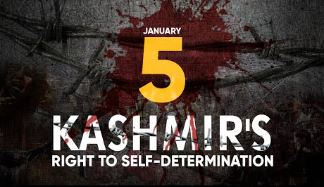
January 5th marks a poignant reminder to the global conscience, a stark knock on the door, as it were, of the United Nations’ unfulfilled promise to the people of Kashmir, made seven decades ago. This day is not merely a calendar event; it is a test of the international community’s moral and legal obligations that remain unaddressed. The sacrifices made by generations of Kashmiris bear witness to the truth that until the people of occupied Jammu and Kashmir are granted their fundamental right to self-determination, the dream of sustainable peace in the region will remain elusive. In political and legal terms, the Right to Self-determination refers to the inherent and inalienable right of any nation to decide its own political future and determine its economic, social, and cultural development without external pressure, coercion, or interference. According to international law and the UN Charter, this right is the pillar of human dignity and global stature upon which the modern world is built.
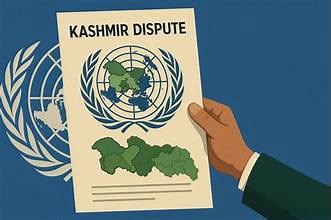
The strongest legal foundation for this right lies in the historic resolution passed on January 5, 1949, by the United Nations Commission for India and Pakistan (UNCIP), which accorded the Kashmir issue the status of a globally recognized dispute. The significance of this resolution is twofold: it not only mentions the principle of self-determination but also explicitly outlines the mechanism for its realization. The resolution stated in unequivocal terms that the accession of the State of Jammu and Kashmir to either India or Pakistan would be decided through the democratic method of a “free and impartial plebiscite” conducted under the auspices of the UN. It clarified that creating conducive conditions for the vote was the responsibility of the UN Administrator. This was a document signed by both Pakistan and India, with the international community acting as a guarantor; yet, regrettably, the apathy of global institutions has reduced this resolution to a mere piece of paper.
The double standards of global powers become even more apparent when international human rights organizations and the UN’s own subsidiary bodies expose Indian atrocities in their reports, yet refrain from taking practical action. The UN High Commissioner for Human Rights (OHCHR) has expressed grave concern in detailed reports regarding serious human rights violations, extrajudicial killings, and the arrest of innocent civilians under draconian laws in occupied Jammu and Kashmir. Organizations like Amnesty International and Human Rights Watch have repeatedly highlighted that Indian security forces use laws such as the Public Safety Act (PSA) and the Armed Forces Special Powers Act (AFSPA) to stifle the voice of Kashmiris.

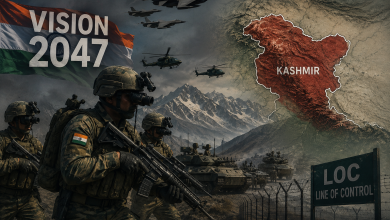
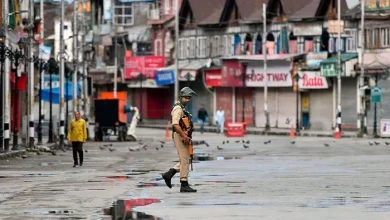
The presence of over one million Indian troops in the occupied valley has turned Jammu and Kashmir into the world’s largest militarized zone, resulting in a humanitarian crisis and pushing the Kashmiri economy to the brink of collapse. Economic blockades and a climate of fear have severely impacted local trade, agriculture, and tourism, resulting in a surge in unemployment. According to recent reports, the number of registered unemployed youth reached 357,328 by November 2025, evidence of systematic economic exploitation. This massive military presence is, in fact, an admission of failure by Indian forces to defeat the Kashmiri spirit of freedom.
This cycle of atrocities continued with full intensity last year. According to Kashmir Media Service, in the year 2025, 84 innocent Kashmiris were martyred as a result of Indian state terrorism, including 3 women and 7 young boys. Out of these, 34 individuals were killed in staged encounters or during custody. These actions left 11 women widowed and 33 children orphaned, while 41 properties were set ablaze to economically cripple the citizens. Since the repressive measures of August 5, 2019, 1,048 Kashmiris have been martyred, bringing the total to 96,481 martyrs over the last 37 years. Leadership, such as Musarat Alam Butt, Yasin Malik, and Shabbir Shah, remains imprisoned in Tihar Jail, standing as a massive question mark over the cold indifference of the international community.
Today, it is imperative that the United Nations uses these reports from global institutions as a basis to restore its credibility by implementing its own resolutions, particularly the resolution of January 5, 1949. The solution to the Kashmir issue is not just a regional necessity but a guarantee for global peace, as this dispute between two nuclear powers could escalate into a major conflict at any time. January 5th is a day to prick the conscience of the UN and the claimants of global peace, urging them to rise above the nexus of India, the US, and Israel to grant Kashmiris their birthright, so that a new chapter of peace, security, and prosperity can begin in South Asia.